

-

Applications

Industries

 OEM & ODM Service
 Development Service
 Download
 Technical support
 Warranty & RMA
 FAQS
FAQS
 My Community
 Who Is CIVINTEC
 Why CIVINTEC
 News & Express
 Cooperation





 Jun 11, 2026
The continuous expansion of modern industrial infrastructure has dramatically transformed how global production compounds, supply chains, and manufacturing facilities manage their perimeters. Today's global production footprint is no longer concentrated within a single corporate building. Enterprises operate across multiple sites, encompassing localized production units, regional logistics hubs, advanced research centers, and off-site corporate headquarters across different regions and time zones.
Managing security across a decentralized operational landscape introduces significant administrative challenges. Operations managers, security directors, and IT executives are tasked with protecting high-value industrial assets, corporate property, and proprietary networks, all while ensuring a smooth daily experience for thousands of full-time employees, shift workers, and external contractors.
Relying on separate, unlinked security systems for individual locations creates dangerous operational siloes, compromises administrative control, and limits long-term scalability. To protect modern multi-site infrastructure, organizations must move away from isolated security models and adopt a centralized, unified enterprise access control architecture.
For large-scale, multi-site industrial enterprises, relying on legacy physical security setups introduces a range of operational risks and hidden management costs.
Manufacturing plants often operate with complex shift patterns, temporary contractor networks, and highly mobile service teams. When an enterprise relies on fragmented, site-specific access methods, managing permissions becomes an administrative burden. An engineer traveling between a component factory, a regional warehouse, and a corporate office shouldn't have to carry multiple physical credentials or wait for local teams to verify their access rights manually.
This friction slows down maintenance routines, complicates supply chain workflows, and strains administrative resources.
When a facility relies on standalone enterprise door access control systems that operate independently at each site, the central IT department lacks real-time visibility into the organization's overall physical security status. If an employee is terminated or a contractor's agreement ends at one regional plant, their permissions may remain active in the database of another distant warehouse for days or weeks.
These "orphaned" access rights present an ongoing insider threat and expose the organization to physical breaches, equipment tampering, and regulatory compliance issues.
Expanding an enterprise network by adding a new production line, opening a localized warehouse, or acquiring an existing manufacturing hub often reveals the limitations of legacy hardware. Many commercial systems lack the scaling capacity required for enterprise operations, forcing organizations to completely replace their local infrastructure to match corporate standards.
Furthermore, maintaining disparate systems from multiple vendors increases ongoing software licensing costs, complicates security patching, and leaves the organization vulnerable to edge device failures.
[block1]
To overcome the vulnerabilities of fragmented infrastructure, organizations must implement a unified access control platform for enterprise facilities. This centralized architecture coordinates multi-site operations by managing access privileges, monitoring edge devices, and compiling system logs into a single, cohesive dashboard.
A modern, scalable enterprise access control system uses a decentralized processing model over a centralized management framework. While all user profiles, access rules, and security policies are managed from a central directory, individual local access control terminals retain an offline cache of the credentials relevant to their specific facility.
This hybrid architecture ensures constant reliability: if a regional network outage breaks the connection between a local factory and the central server, the entry points remain fully operational. The edge access control terminals continue to validate local staff and log entries offline, automatically syncing the data back to the central server once the network connection is restored.

In modern industrial environments, physical perimeters and digital assets are deeply interconnected. An intruder who gains physical access to a factory server room or an unguarded operator terminal can easily plug in a malicious device, compromise local networks, and disrupt critical production processes.
Therefore, an effective enterprise access control solution must manage physical entrances while integrating with the organization's broader data protection frameworks.
Modern manufacturing reliance on interconnected industrial control systems means that an unauthorized physical entry can lead directly to a cyber security incident. Integrating a physical enterprise access control system with data access control for enterprise applications ensures that only certified, on-duty technicians can access the terminals controlling localized production machinery, automated assembly systems, and chemical processing pipelines.
To maintain a high-security posture, an access control enterprise and corporate platform must synchronize automatically with the organization's core HR directories and IT databases. By connecting the enterprise access control software with systems like cloud-hosted identity tools via secure APIs, employee access rights remain consistent across all systems.
When an employee changes roles, transfers to a different facility, or leaves the company, their physical access privileges across all sites and their logical access to data access control for enterprise applications in cloud computing are updated or revoked simultaneously from a single administrative action. This automation eliminates human error, simplifies user onboarding, and ensures the enterprise maintains a constant state of audit readiness.
Implementing an effective multi-site security strategy relies heavily on the capabilities of your access control hardware. The terminals installed at your gates, turnstiles, and equipment cages must be durable enough to withstand harsh industrial environments while remaining versatile enough to process multiple credential formats for a diverse workforce.
CIVINTEC designs and manufactures advanced access control terminals that serve as highly secure gatekeepers for complex enterprise environments, allowing organizations to deploy tailored enterprise-level user and access control solutions across all facilities.
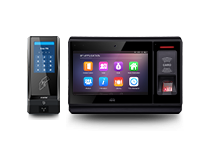
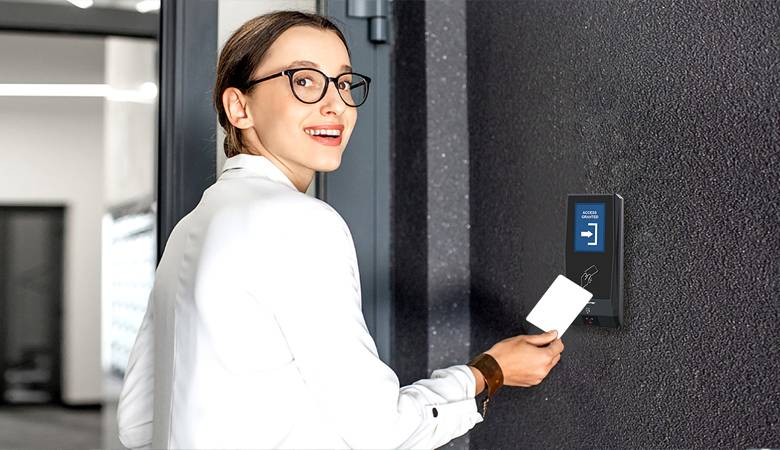
The CIVINTEC CT10 access control terminal is an advanced access control device designed for main entrances, corporate lobbies, and high-traffic factory turnstiles.
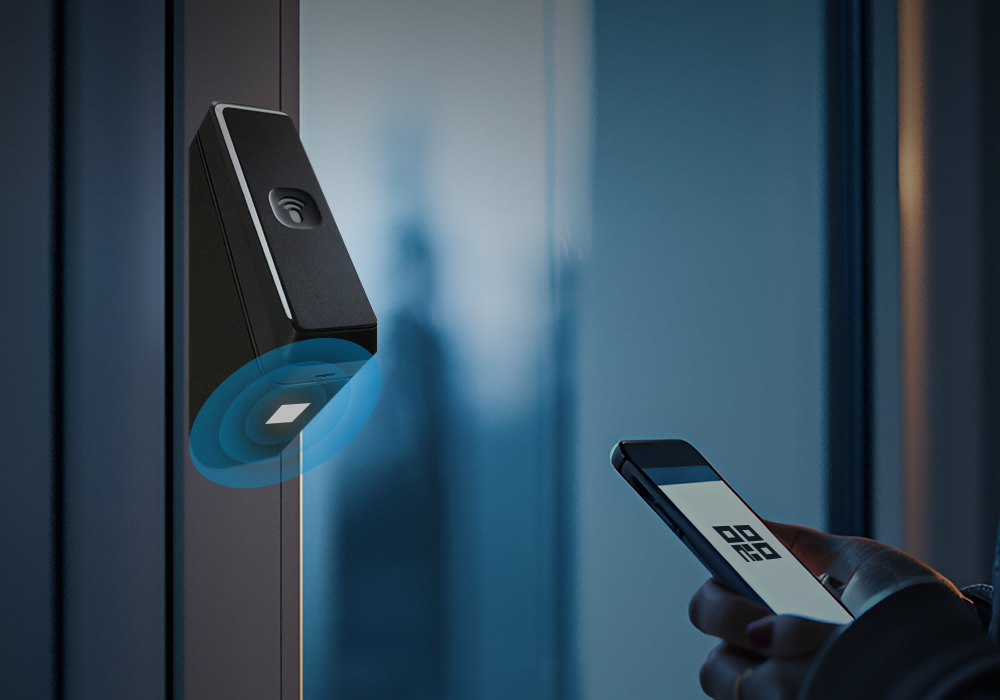
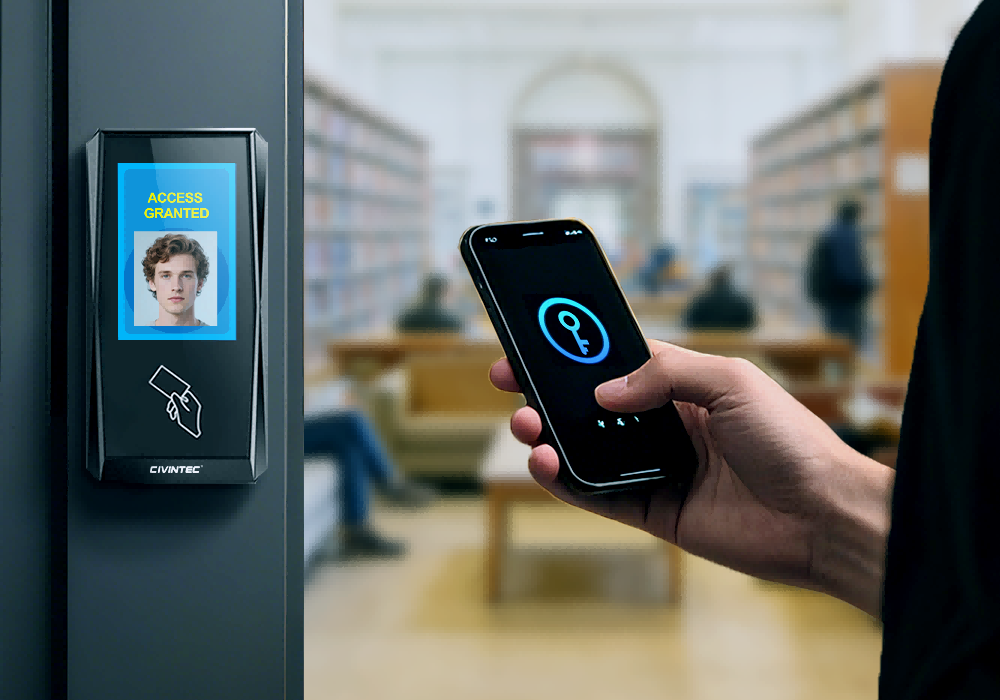
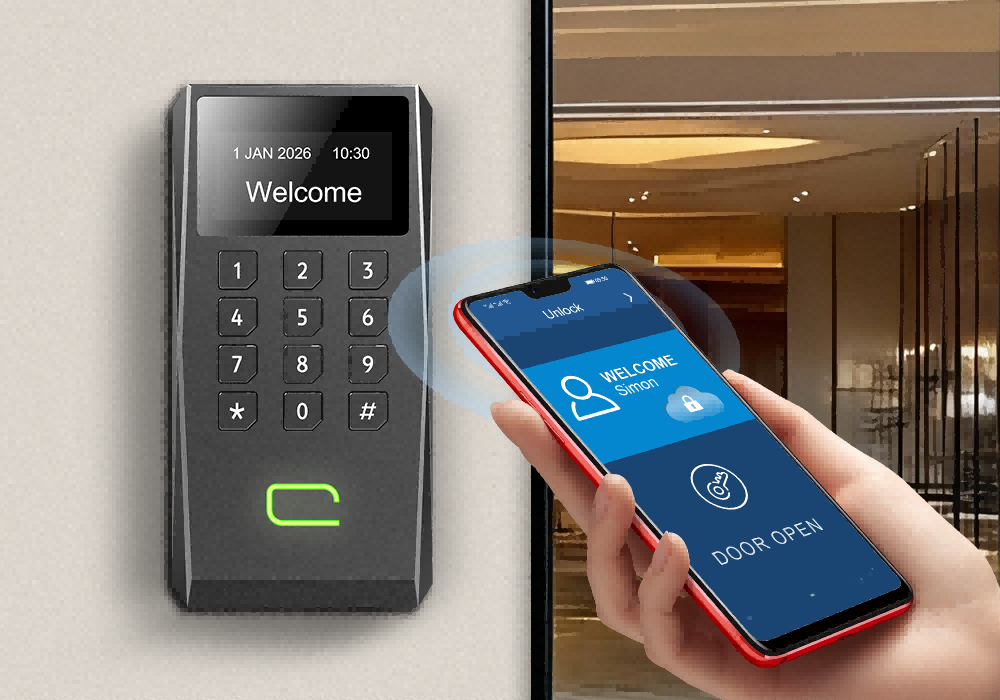
Multi-tech Credentials Engine: The CT10 natively processes multiple credential types simultaneously: high-frequency 13.56MHz smart cards (including MIFARE® DESFire®), smartphone digital wallets via NFC and BLE, dynamic QR codes, and PIN codes. This versatility allows organizations to manage diverse user profiles—such as long-term staff, temporary contractors, and unexpected guests—through a single, unified entry point.
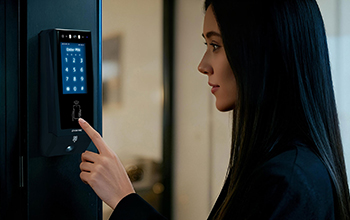
Interactive Graphical Feedback: The terminal's bright, high-resolution touch display provides immediate visual feedback and step-by-step instructions for incoming staff, reducing entry confusion and optimizing traffic flow during peak shift changes.
Cloud Centralized Management: Support wire/wireless connectivity Ethernet(PoE), Wi-Fi, LoRaWAN, 4G LTE and enables cloud-based remote management, allowing door access control and real-time entry monitoring from anywhere to ensure efficient, centralized supervision across zones.
The CIVINTEC CT9 Pro access control terminal is a rugged, reliable device built specifically to protect internal high-value assets, secure inventory cages, and demanding outdoor environments.
Heavy-Duty Industrial Resilience: Built with an IP65 ingress protection rating, the CT9 Pro is completely sealed against conductive industrial dust, moisture, ensuring consistent performance in challenging factory-floor environments.
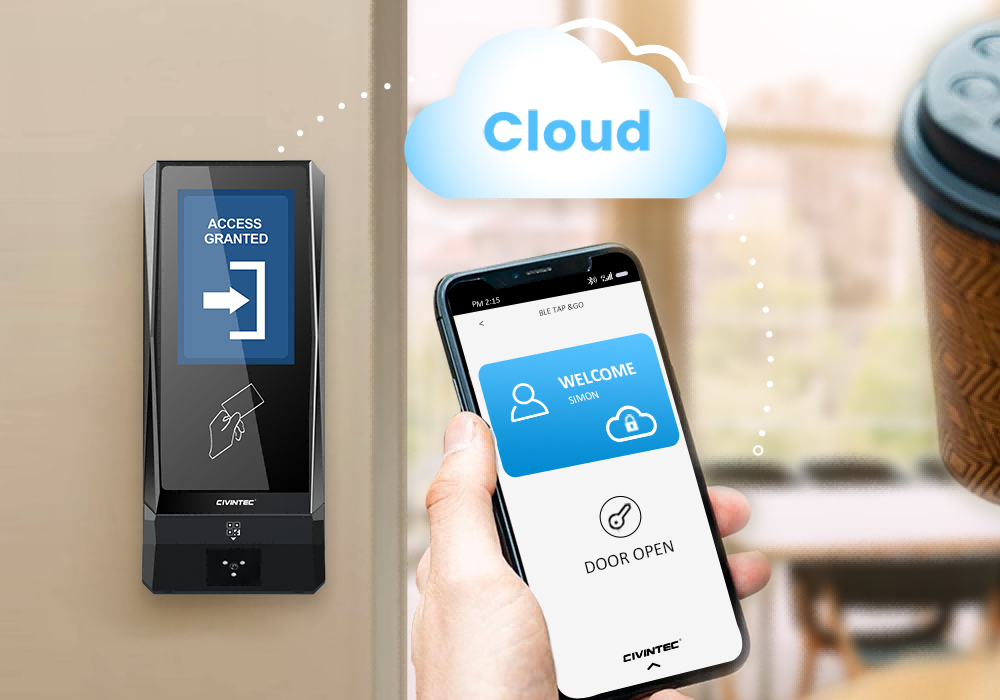
Seamless Mobile Integration:The access control terminal features integrated long-range BLE and short-range NFC modules. This combination allows for precise "tap-to-go" access at secure internal doors alongside hands-free entry at logistics bays, where warehouse personnel carrying goods or operating vehicles can unlock doors automatically as they approach.
Customization and Flexible Interface Deployment: The CT9 Pro's adaptive interface allows system integrators to load custom branding, specific security warnings, and localized information directly onto the device, making it highly adaptable for global multi-site installations.
Beyond perimeter defense, integrating advanced edge hardware allows multi-site enterprises to combine security management with workforce optimization. By linking edge terminals to a centralized database, organizations can transition from fragmented physical keys to an automated, auditable environment that syncs with corporate payroll and shift scheduling platforms.
Review the system architecture in the comprehensive CIVINTEC case study on deploying a keyless door access system and time attendance model to see how multi-site manufacturing hubs streamline workforce management while maintaining an unalterable security record.
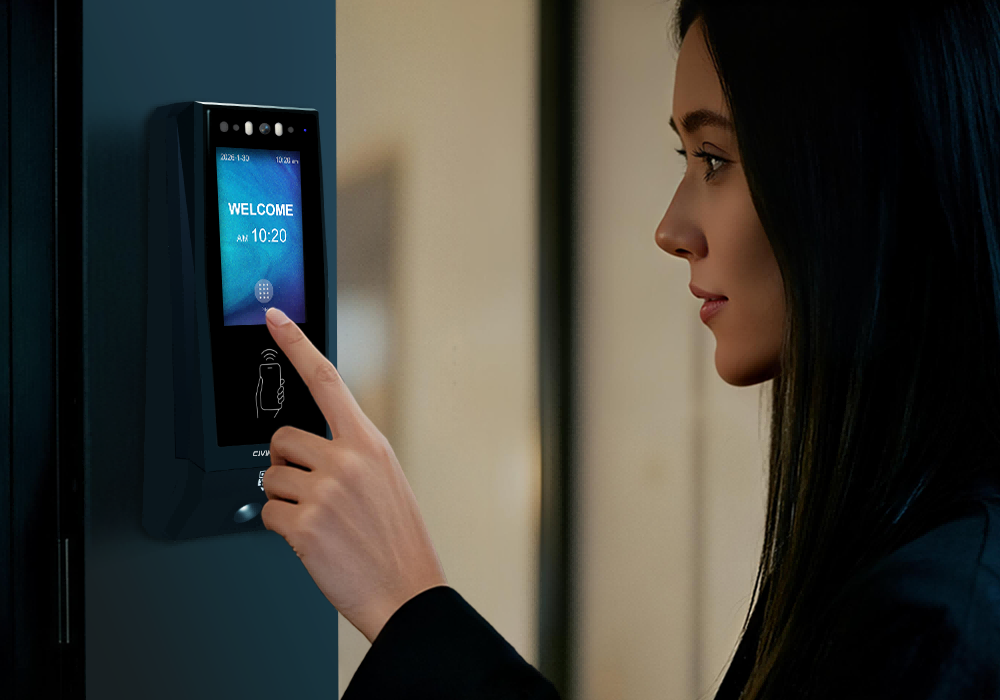
Among modern biometric modalities, facial recognition delivers the decisive advantage of being completely touchless, frictionless, and biologically bound to the authenticated individual. Traditional contact-based fingerprint sensors suffer from mechanical surface wear, hygienic concerns, and frequent false rejections caused by dirty, sweaty, or improperly placed fingers, which inevitably creates severe morning entrance bottlenecks. Facial recognition transforms unique facial geometry into an uncopyable, non-transferable credential, completely eliminating the heavy administrative overhead and recurring costs of purchasing, encoding, mailing, and replacing physical plastic access badges across geographically distributed branch locations.
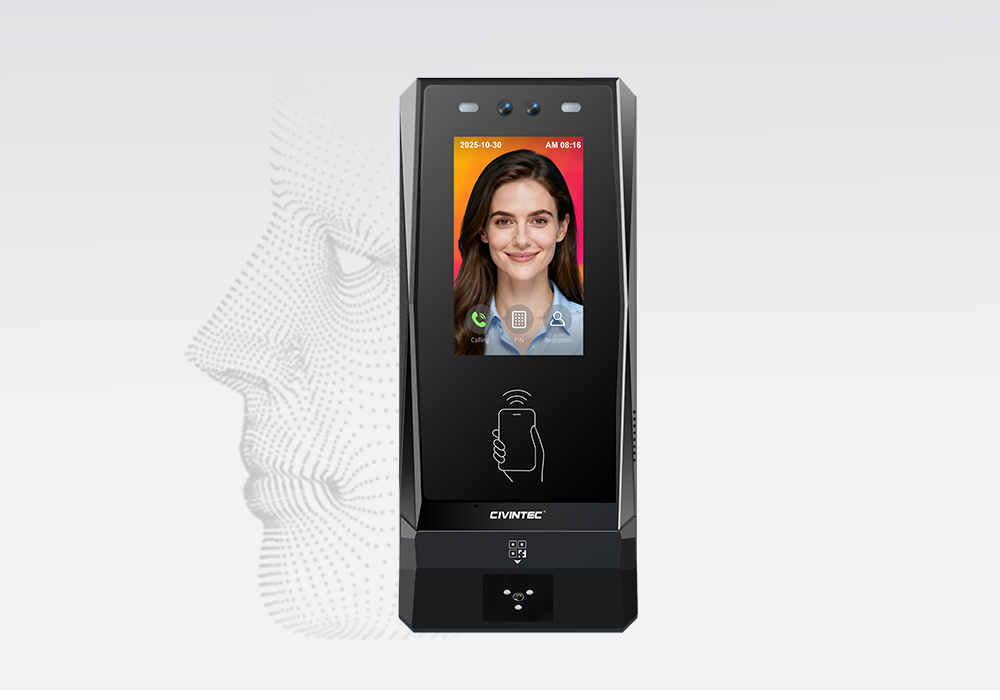
To support high-throughput corporate headquarters and regional enterprise facilities, CIVINTEC integrates an enterprise-grade biometric facial recognition engine directly into its flagship access control terminal. The access control hardware incorporates a dual-camera array capturing visible RGB spectral data and infrared light profiles simultaneously, performing real-time multi-dimensional depth and surface texture verification directly at the device level to instantly block printed photographs, smartphone video replays, and 3D silicone masks. Operating with an ultra-low 0.015s verification latency across a dynamic detection range of 30 to 150 centimeters, the access control system enables personnel to transit through speed gates, lobby portals, and turnstiles at a continuous walking pace without pausing or aligning their heads toward the lens. Furthermore, the access control terminal stores up to 50,000 local biometric templates in non-volatile flash memory, maintaining autonomous offline door operation during branch network dropouts before automatically synchronizing cached transaction records to the client's cloud system once connectivity is restored.
Deploying biometric facial recognition directly resolves critical operational vulnerabilities across multi-site enterprise networks. By binding physical access control permissions strictly to the biological person, the access control system completely eliminates cross-branch credential sharing, unauthorized zone crossover, and time theft such as buddy punching among staff and contractors. Enterprise administrators can enroll an employee's facial profile once in their central software and distribute the biometric template across regional branch access control systems worldwide via secure HTTP/HTTPS communication protocols, streamlining credential issuance without requiring local badge logistics. Concurrently, the sub-0.015s verification speed eliminates peak-hour lobby congestion during major shift changeovers, maintaining fluid pedestrian traffic flow while enforcing rigorous perimeter security across every connected facility.
Among biometric authentication modalities, facial recognition provides the decisive operational advantage of delivering a 100% touchless, frictionless user experience while binding physical access permissions directly to the verified person. In multi-site enterprise environments, conventional contact-based biometrics such as optical fingerprint scanners frequently suffer from surface degradation, hygiene hesitations, and high false-rejection rates caused by worn, wet, or dirty fingertips. Furthermore, traditional physical credentials like unencrypted proximity cards or shared PIN codes expose distributed campuses to buddy punching, unauthorized badge swapping, and ghost-worker payroll fraud. Biometric facial recognition transforms biological geometry into a permanent, non-transferable credential, ensuring undeniable proof of presence across all regional facilities.
To meet the throughput demands of enterprise turnstiles and perimeter gates, CIVINTEC integrates an enterprise-grade biometric facial recognition engine into its flagship access control hardware, led by the CIVINTEC CT11 access control terminal. The access control terminal incorporates a dual-camera array that captures visible RGB spectral profiles and infrared (IR) light data simultaneously. By analyzing live human skin, surface textures, and multi-dimensional depth directly at the hardware edge, the system verifies live human presence in real time, immediately blocking printed photographs, high-definition digital screen loops, and 3D silicone mask spoofing attempts. The recognition algorithm isolates invariant skeletal facial landmarks around the eyes and upper nasal bridge, accurately authenticating personnel wearing personal protective equipment (PPE)—including hard hats, safety glasses, and medical face masks—without requiring workers to remove protective gear. Operating with an ultra-low 0.015s verification latency across a dynamic detection range of 30 to 150 centimeters, the access control terminal enables large shifts of personnel to transit through speed turnstiles at a continuous walking pace. Additionally, the access control terminal stores up to 50,000 local biometric templates in non-volatile flash memory, maintaining autonomous offline door and turnstile operations during wide-area network (WAN) disruptions before automatically synchronizing encrypted event records to the client's cloud system via secure HTTP/HTTPS communication protocols once connectivity is restored.
Deploying biometric facial recognition directly eliminates the primary security blind spots and compliance risks of multi-site enterprise management. It prevents credential sharing and time theft across remote satellite hubs, guaranteeing that only authorized, verified employees and contractors enter sensitive operational zones. By combining rapid edge matching with unalterable access transaction logs, enterprise security directors maintain centralized, cross-facility visibility, reduce administrative badge-issuance overhead, and establish a verifiable security foundation across all enterprise properties.
An enterprise security system is only as strong as its weakest link. Securing the data transmitted between the physical edge readers, local door controllers, and the central server is critical for protecting the network from manipulation and unauthorized entry.
Historically, the commercial security industry relied on the Wiegand interface to connect card readers to door controllers. Wiegand is an outdated, simplex protocol that transmits credential data in unencrypted binary pulses over standard copper wiring. Anyone with physical access to the wiring behind a reader can attach a low-cost microprocessing tool, capture transmitted card numbers, and replay them later to bypass the lock entirely.
To eliminate this vulnerability, CIVINTEC hardware uses the Open Supervised Device Protocol (OSDP v2), establishing a more secure connection standard:
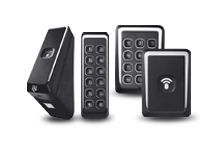
Secure Channel AES-128 Encryption: All data moving between a CIVINTEC OSDP access control reader (such as Cidron family reader, CT5/CK5 family reader) and the door controller is fully encrypted, making data sniffing and signal capture attempts useless.
Continuous Bi-Directional Supervision: OSDP enables the controller to actively monitor the health and status of the edge reader in real time. If a reader is disconnected from the wall or a communication line is cut, the controller instantly registers the drop in communication and triggers a high-priority system alarm.
In a cloud-centric world, the performance of a security system is measured by the milliseconds between a user's request and the door's response. At CIVINTEC, security and speed are not competing interests; they are the dual pillars upon which our hardware architecture is built. We provide a secure, high-speed tunnel that allows your cloud commands to reach the edge with zero compromise in integrity, ensuring the physical entry point feels like a natural extension of your software.
Data is the new currency, and protecting it is our highest priority. All data transmission between the CIVINTEC access control terminal and your management platform is protected by bank-grade HTTPS TLS 1.3 encrypted communication, ensuring that full-site data is SSL/TLS encrypted to prevent interception, tampering, or forgery. This end-to-end ciphertext transmission protects authentication, event logs, and cloud sync data from man-in-the-middle (MITM) attacks and traffic hijacking, even if the network is monitored.
Traditional access control often relies on local, static databases that can quickly become outdated. CIVINTEC terminals facilitate a sophisticated Real-Time "Cloud Handshake." When a user presents a credential—be it a card, a mobile credential, or a QR code — CIVINTEC access control terminal doesn't just look for a local match; it initiates an instantaneous verification request to your cloud software. Your platform validates the data against its master database and issues a real-time unlock command. This centralized logic enables real-time control over temporary visitor access and allows for instantaneous global policy updates, meaning a permission change made in your dashboard is reflected at the physical door in milliseconds.
Upgrading legacy security infrastructure across a distributed global footprint requires a structured implementation plan that balances technology upgrades with daily operational workflows.
Avoid hardware that relies on legacy, unencrypted 125kHz proximity cards or easily duplicated barcodes. Mandate that all physical badges use high-frequency 13.56MHz smart cards with built-in AES encryption.
Require that all newly installed edge devices communicate with local control panels via an encrypted OSDP v2 secure channel, closing physical wire-tapping loopholes.
Ensure all edge terminals, including options like the CIVINTEC Cidron and Smart-Terminal Families, match the physical space constraints and environmental demands of each specific location.
Connect your physical security platform with your core enterprise identity management systems, as centralized HR software.
Apply the principle of least privilege: assign employee access permissions based on their current role, shift schedule, and required location, ensuring no user has unnecessary access rights.
Set up automated expiration rules for temporary credentials, ensuring that contractor codes and visitor tokens automatically deactivate when their scheduled time window closes.
Ensure all deployed edge terminals possess sufficient internal memory to cache employee credential databases locally, allowing doors to function normally during unexpected network outages.
Configure secondary communication paths, such as encrypted 4G/5G cellular backups, to maintain real-time monitoring and reporting during primary WAN failures.
Establish a routine firmware update schedule for all connected edge devices to protect the system against newly discovered vulnerabilities and maintain consistent security compliance.
The table below contrasts the operational differences between legacy standalone installations and a modern, unified multi-site access platform:
Evaluation Criteria | Standalone Legacy Systems | Unified Multi-Site Access Platform |
Database Management | Siloed, site-specific databases requiring manual, individual updates. | Centralized directory with automated, real-time synchronization across all locations. |
Credential Flexibility | Limited to a single format (typically legacy, unencrypted proximity cards). | Multi-modal processing supporting RFID (DESFire), NFC, BLE, and dynamic QR codes. |
Data Transmission Security | Uses unencrypted Wiegand protocol, leaving physical lines vulnerable to sniffing. | Uses Secure Channel OSDP v2 with AES-128 bit encryption from edge to controller. |
Workforce Integration | Separate tracking system requiring manual cross-referencing for payroll. | Integrated framework combining real-time access monitoring and time attendance tracking. |
Vendor & Guest Onboarding | Requires physical badge issuance at the front desk, increasing admin overhead. | Instantly distributes time-restricted, self-destructing QR codes directly to user smartphones. |
Regulatory Compliance | Fragmented logging makes compiling comprehensive, multi-site audit trails difficult. | Generates automated, centralized, and unalterable audit logs that meet ISO 27001 standards. |
[block2]
Modernizing legacy access infrastructure across a distributed multi-site network is a critical investment in your organization's long-term security, efficiency, and compliance posture. In a connected industrial market where operational downtime can disrupt production lines and compromise global supply chains, physical security must evolve alongside digital defenses.
By moving away from siloed, unencrypted legacy hardware and adopting a centralized, zero-trust framework built on CIVINTEC access control infrastructure, organizations can successfully eliminate physical security gaps. Combining the uncopyable security of MIFARE DESFire cards with the modern flexibility of mobile tokens, dynamic QR codes, and biometrics creates an adaptable security network that grows with your business. CIVINTEC provides the heavy-duty hardware foundation—terminals that manage diverse technologies simultaneously—to ensure your facilities remain safe, efficient, and prepared for the security challenges of tomorrow.
Are you ready to eliminate security siloes, secure your distributed infrastructure, and streamline administration across all your locations? Contact our senior engineering team today at the CIVINTEC Inquiry Page to request a customized hardware evaluation blueprint for your multi-site enterprise operations.


 Home >
  Share
Share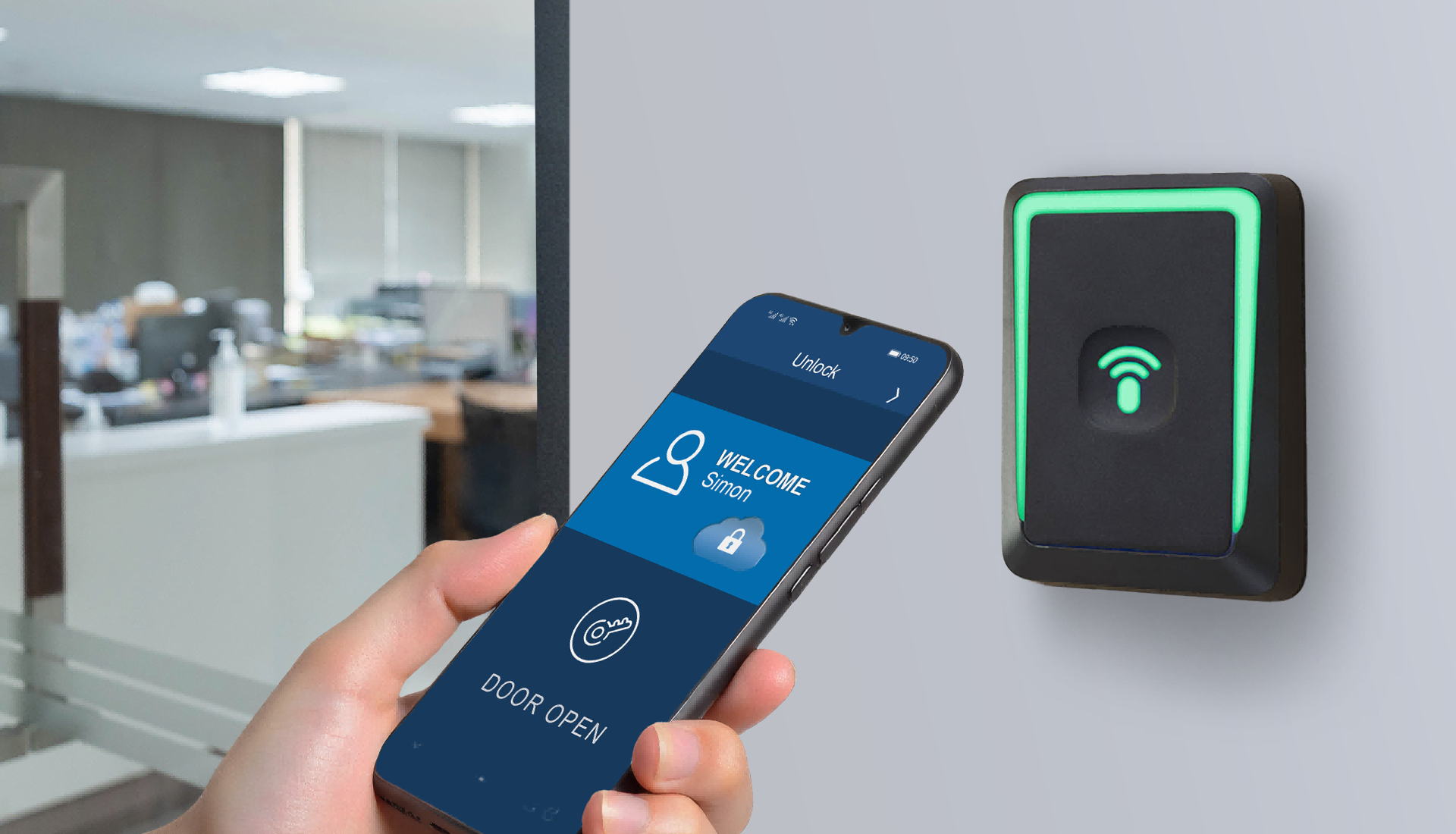




 Contact Us