

-

Applications

Industries

 OEM & ODM Service
 Development Service
 Download
 Technical support
 Warranty & RMA
 FAQS
FAQS
 My Community
 Who Is CIVINTEC
 Why CIVINTEC
 News & Express
 Cooperation




 Aug 10, 2026
Managing a modern facility requires an uncompromised focus on operational security, physical safety, and data precision. Across corporate headquarters, smart residential complexes, industrial manufacturing plants, healthcare facilities, 24/7 fitness centers, and educational campuses, administration teams continuously combat structural workforce access control vulnerabilities. Coordinating high-volume pedestrian traffic through primary entry points while maintaining strict perimeter control presents an ongoing operational challenge.
Legacy security checkpoints frequently introduce frustrating operational bottlenecks. Traditional card-swipe mechanisms and unencrypted proximity card readers create significant security gaps, leaving properties highly susceptible to credential sharing, badge cloning, and unauthorized facility entry. Furthermore, physical fingerprint scanners fail frequently in demanding environments due to dirty, greasy, or gloved hands, causing long queues at main entry turnstiles during peak shift changes.
To eliminate these vulnerabilities, forward-thinking organizations are modernizing their facility frameworks. They are transitioning from siloed, contact-based entry points toward touchless facial recognition time attendance and access control system architectures. As an industry-leading innovator among global access control systems manufacturers, CIVINTEC has engineered next-generation hardware solutions designed specifically to resolve complex enterprise workforce challenges.
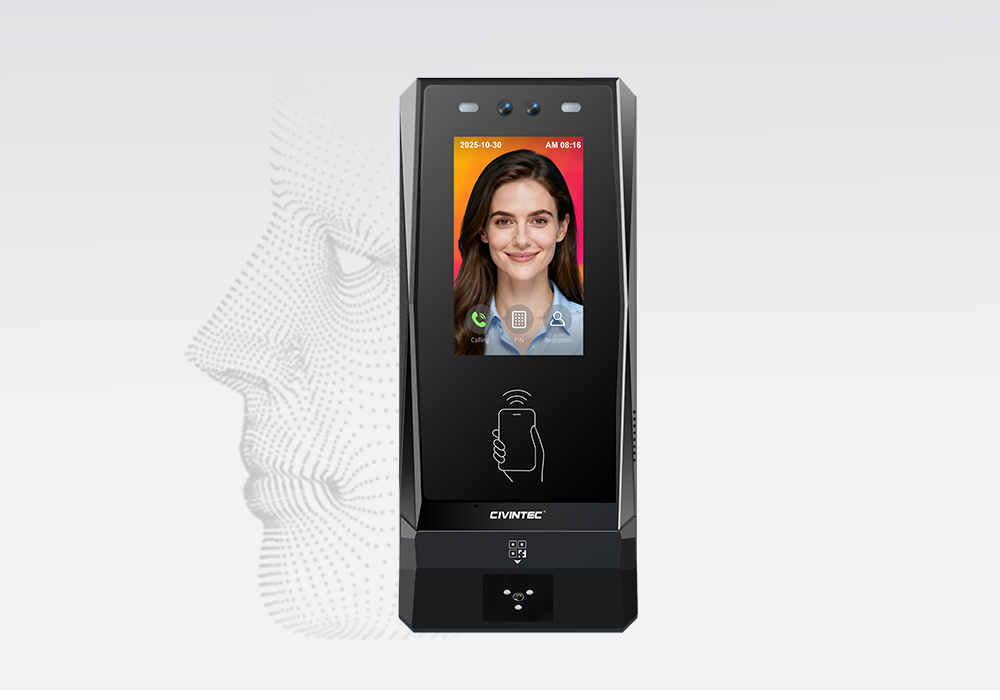
By deploying advanced edge-computing biometrics, multi-protocol card scanning, secure mobile credential processing, dynamic event image logging, and an integrated VoIP audio intercom engine into hardened hardware housings, CIVINTEC provides the ultimate foundation for touchless workforce management. The flagship CIVINTEC CT11 Biometric Facial Access Control Terminal combines these features into a single, hardened enterprise access control terminal. This technical guide explores the application of facial recognition technology in time attendance, key technological innovations, industry-specific deployments, and hardware integration strategies.
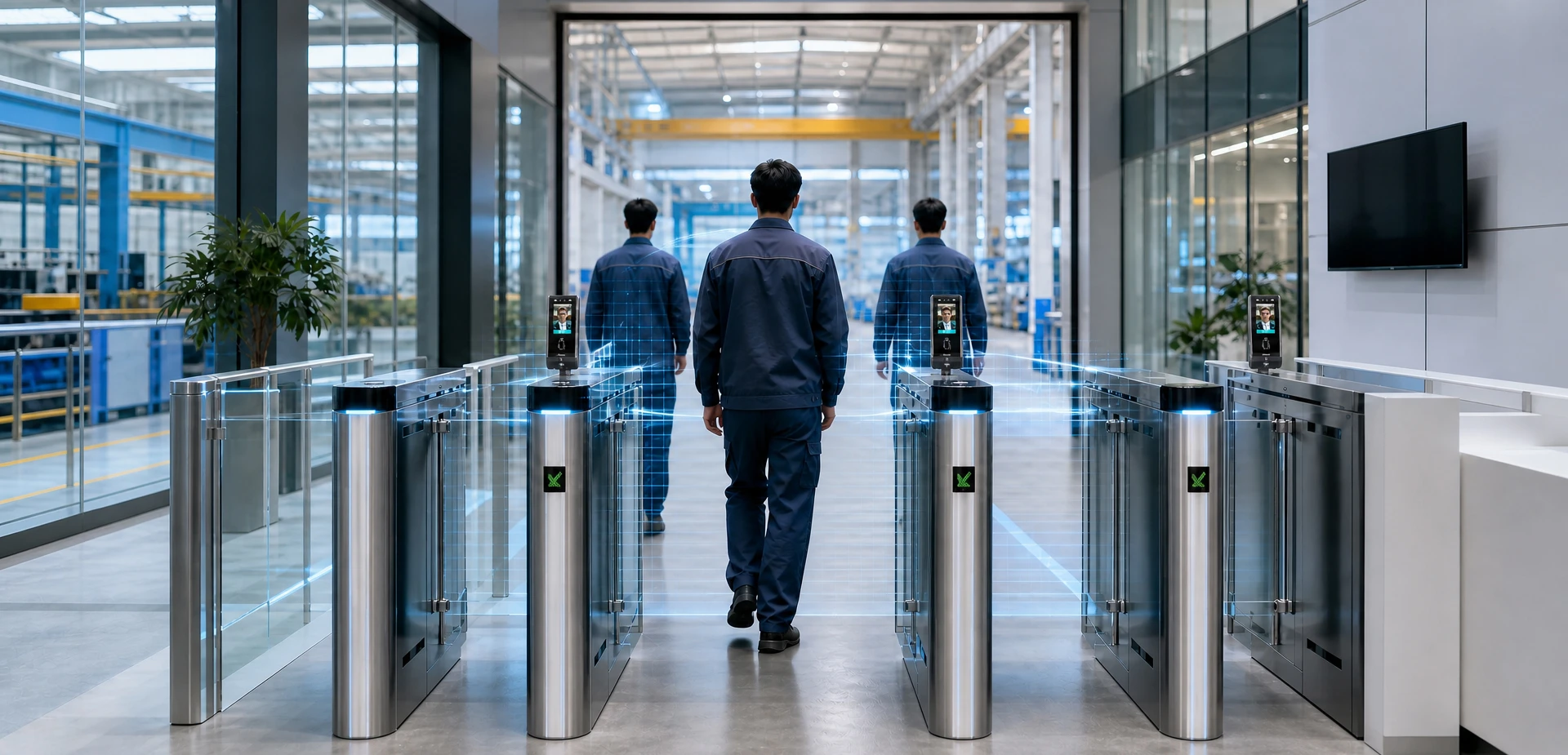
Factory and commercial facility environments present unique physical and operational demands that standard commercial hardware cannot accommodate. To understand the strategic value of touchless workforce entry, enterprise IT directors and operations managers must evaluate how identification technologies perform under heavy daily stress.
Badge Sharing and Buddy Punching: Plastic RFID cards and keyfobs verify the credential, not the individual. In large workforce setups, employees frequently swap cards to clock in absent colleagues, skewing shift data and inflating payroll expenses.
Fingerprint Sensor Degradation: Personnel routinely work with oils, chemical solvents, heavy dust, or protective gloves. Contact-based fingerprint readers suffer from high false-rejection rates, requiring frequent sensor wiping and causing severe bottlenecks at main entry gates.
Hygiene and Cross-Contamination: In food processing plants, pharmaceutical cleanrooms, healthcare centers, and high-density commercial office towers, shared physical touchpoints increase the risk of cross-contamination and illness transmission among personnel.
Mechanical Wear and High Maintenance Costs: Physical swipe mechanisms and exposed pushbuttons experience continuous mechanical stress, resulting in high hardware maintenance costs and constant device replacements.
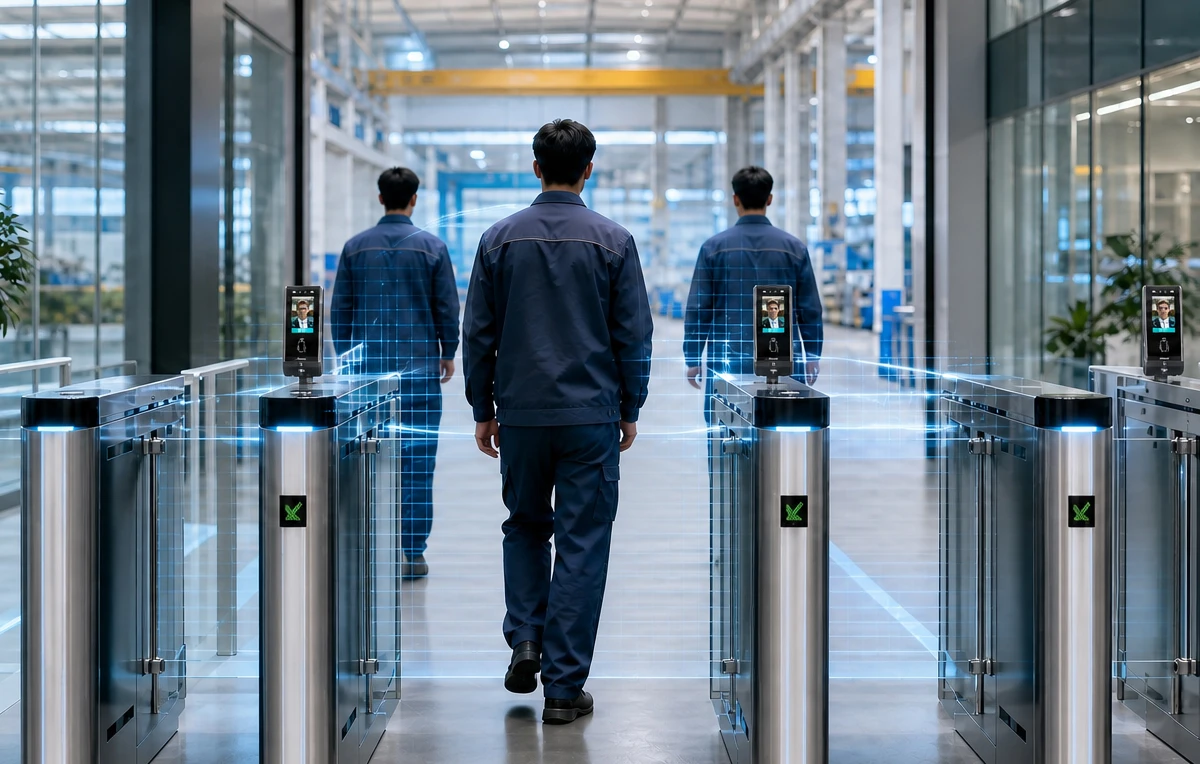
Deploying a touchless facial recognition time attendance access control terminal resolves these structural friction points instantly. By converting visual facial geometry into encrypted biometric templates at the network edge, the system verifies the physical presence of the individual in real time. Workers simply walk past the access control terminal to record their entry timestamp—no stopping, no physical contact, and zero identity fraud.
Performance Metric | Traditional RFID Cards | Contact Fingerprint Readers | CIVINTEC Facial Recognition Access Control Hardware |
Verification Basis | Physical Credential | Biological Fingerprint | Biological Facial Geometry |
Buddy Punching Risk | Extremely High | Very Low | Zero (Eliminated) |
Hygiene Standard | Low (Contact Required) | Low (Touch Surface) | 100% Touchless & Contact-Free |
Performance with Dirty Hands | Normal | High Failure Rate | Unaffected (100% Reliable) |
Verification Speed | 0.5 – 1.0 Seconds | 1.0 – 2.0 Seconds | ~0.015s Matching Latency |
Maintenance Needs | Badge Replacement Costs | Frequent Sensor Cleaning | Zero Physical Wear Parts |
At the core of CIVINTEC's touchless workforce entry hardware is an advanced edge-computing biometric engine designed specifically for fast-paced, high-security environments.
Low-cost facial readers can often be tricked using printed photos or digital video loops displayed on a smartphone screen. CIVINTEC eliminates these security vulnerabilities by incorporating an dual-camera array equipped with autofocus and an integrated LED illumination flash. It instantly blocks flat photographs, digital displays, and 3D molded masks, ensuring elite identity verification across all access control points.
Busy entry zones require high throughput capacity to prevent pedestrian queuing during peak shift changes or morning arrival hours. CIVINTEC's facial matching algorithm processes biometric templates locally at the device layer, completing verification handshakes in an astonishing 0.015s.
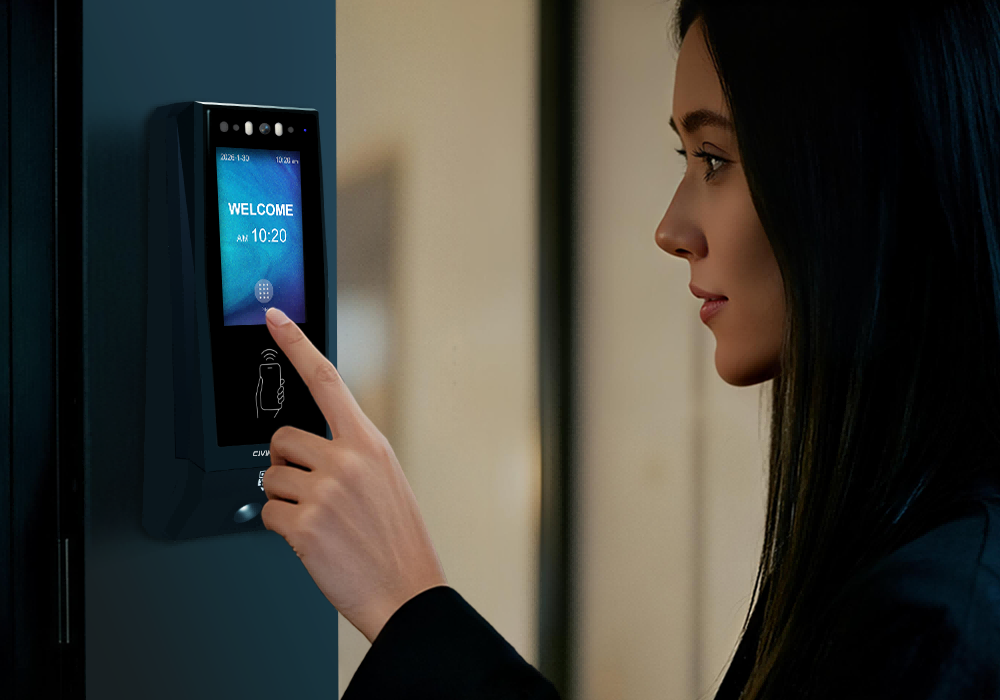
With an extended dynamic reading range of 30 to 150 centimeters, personnel can maintain a natural walking pace through turnstile lanes or entryway portals without stopping or repositioning their heads toward the terminal lens.
Personnel wear diverse personal items, including glasses, hats, high-visibility gear, or protective gear. CIVINTEC's biometric algorithm isolates invariant skeletal facial landmarks, maintaining accurate verification even when personnel present daily appearance variations:
Corrective eyeglasses, fashion sunglasses, and industrial sunshades.
Hard hats, bump caps, hairnets, and headwear.
Heavy facial hair, cosmetics, makeup, or daily facial shifts.
To understand why multi-credential flexibility is vital when deploying biometrics across multi-shift workforce environments, review CIVINTEC’s technical architectural guide on why CIVINTEC uses multiple identification technologies for time attendance.
[block1]
Facial recognition time attendance and access control hardware transforms administrative operations by adapting its technological features to the specific security, hygiene, and operational needs of different industries:
Industry Challenges: Managing thousands of corporate employees and visitors entering simultaneously during morning rush hours; maintaining modern, sleek interior aesthetics; ensuring strict audit trails for tenant safety.
Facial Recognition Application Features:
Walking-Pace Pedestrian Flow: The sub-0.015s facial recognition engine allows employees to pass through speed gates or turnstiles continuously without stopping, preventing lobby congestion.
Contactless Visitor Integration: Temporary guests present dynamic QR codes to the QR code module or use facial recognition pre-registration via self-service cloud portals for seamless entry.
Context-Aware Event Logging: Embedded function keys allow staff to log specific activity contexts (e.g., General Entry, Visitor Registration, Executive Access) directly at the access control terminal interface.
Industry Challenges: Tracking accurate shift schedules and time attendance for distributed property management teams, security guards, maintenance technicians, and cleaning crews across multi-building residential complexes; eliminating time fraud and "buddy punching" during overnight shifts or roaming patrols.
Facial Recognition Time Attendance Features:
Touchless Staff Shift Clock-In: Property management personnel and maintenance teams clock in and out for their assigned shifts effortlessly as they enter staff portals or service hubs, ensuring accurate time attendance records without physical contact.
Anti-Spoofing Shift Verification: The dual-camera facial recognition engine prevents buddy punching during shift rotations or night duty; every time attendance event captures a photo snapshot for transparent attendance auditing.
Context-Aware Attendance Logging: Embedded function keys allow property staff to select explicit shift modifiers (e.g., Shift Start, Patrol Duty In, Break Out) before facial scanning, pushing structured time attendance data directly to central cloud software.
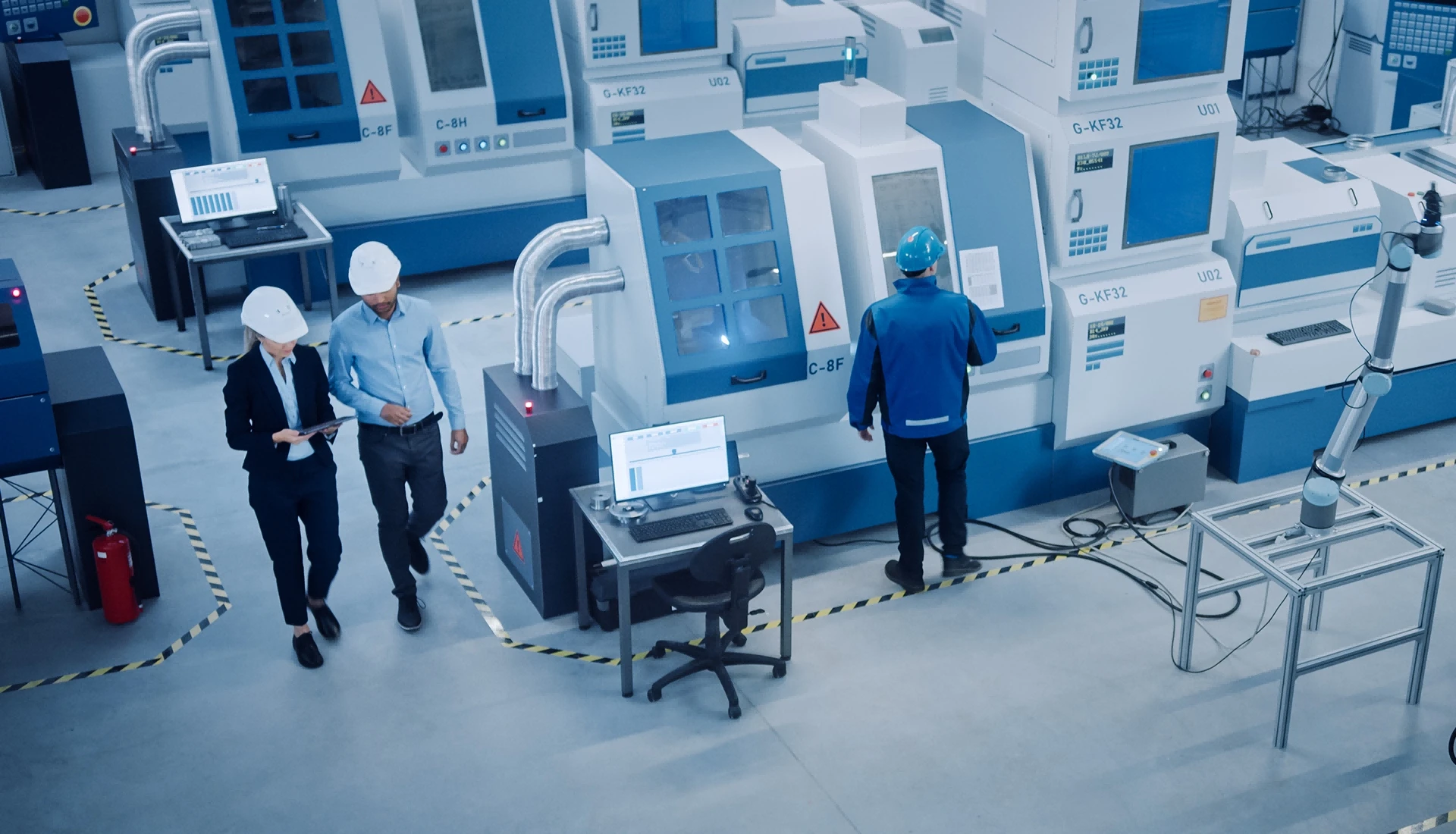
Industry Challenges: High ambient dust, metallic oil, airborne grease, and workers wearing heavy protective gloves; severe financial losses from buddy punching and shift time fraud.
Facial Recognition Application Features:
Elimination of Sensor Failure: Facial recognition requires zero physical contact, completely bypassing the high failure rates of fingerprint scanners caused by dirty or oil-stained hands.
Shift & Overtime Context Tracking: Programmable function keys let workers select explicit shift modifiers (e.g., Shift Start, Overtime In, Break Out) before facial scanning, transmitting structured data directly to the cloud.
Rugged Environment Protection: IP65 waterproof sealing, IK07 mechanical impact resistance, and UV-resistant housing ensure continuous operation in non-climate-controlled factory halls and exterior gates.
Industry Challenges: Strict infection control mandates; zero tolerance for cross-contamination; personnel wearing protective face masks, surgical caps, and cleanroom garments.
Facial Recognition Application Features:
100% Touchless Hygienic Transit: Completely eliminates shared physical touchpoints at airlocks, laboratory entryways, and processing rooms, maintaining sterile environments.
PPE Feature Tolerance: The advanced biometric core identifies staff accurately even when they wear surgical caps, hairnets, cleanroom hoods, and protective eyewear.
Smooth Sanitization Surface: The smooth glass touchscreen face allows for frequent chemical wiping and disinfection without degrading the camera or touch responsiveness.
Industry Challenges: Managing flexible work schedules, shift verification, and accurate attendance tracking for personal trainers, group class instructors, and maintenance staff across 24/7 unstaffed or multi-branch fitness centers; eliminating time fraud and unverified shift claims during overnight hours.
Facial Recognition Application Features:
Accurate Trainer & Staff Clock-In: Personal trainers and floor staff verify their time attendance seamlessly upon arriving for coaching sessions or shift rotations, binding attendance records directly to the specific individual.
Flexible Shift & Payroll Tracking: Embedded function keys allow fitness personnel to log specific activity contexts (e.g., Group Class Shift, Personal Training Session, Facility Maintenance) before facial scanning, sending structured time attendance data directly to the cloud.
24/7 Unattended Attendance Logging: Enables continuous, automated attendance recording around the clock without requiring physical front-desk supervisors, ensuring transparent records for overnight cleaning crews and on-call managers.
Industrial and high-traffic environments subjected to extreme temperatures, severe mechanical vibration, and airborne contaminants demand hardened physical construction. CIVINTEC access control terminals are built to industrial-grade manufacturing standards.
To ensure long-term durability in outdoor perimeter gates, open loading bays, and high-density public entrances, CIVINTEC terminals comply with three rigorous protection standards:
Waterproof and Dustproof Rating (IP65): The internal electronics are fully encased in an electrically potted epoxy compound, sealing delicate circuitry against driving rain, high humidity, chemical sprays, and conductive metallic dust.
UV-Resistant Enclosure Coating: Both the outer casing and touch screen feature specialized UV-resistant protection. This prevents housing yellowing, structural cracking, and display degradation when installed in areas exposed to direct, intense sunlight.
IK07 Mechanical Impact Resistance: Reinforced structural housing enables the hardware to withstand accidental physical impacts, heavy tool strikes, and daily wear in high-traffic loading zones.
To streamline facility security audits and provide tamper-proof evidence for management, CIVINTEC hardware incorporates an automated data capture engine:
Automated Event Photo Snapshots: Every time a user presents a credential—whether access is granted or denied—or triggers a system alarm (such as a forced-door or tamper switch event), the access control terminal automatically snaps a real-time photo of the user via its integrated camera.
Intelligent Real-Time Cloud Synchronization: When operating online, all encrypted transaction text logs, alarm states, and image capture files transmit immediately over the network to your central server or cloud database.
Fail-Safe Offline Storage: If a network switch fails or physical wiring drops, the access control terminal automatically switches to autonomous local mode. The device continues validating workers against its local memory cache, storing up to 200,000 text event logs and 7,000 visual photo logs locally. Once network connectivity is restored, the terminal automatically flushes cached data up to the cloud database with zero human intervention.
For restricted facility areas requiring visitor screening—such as raw chemical vaults, cleanroom entrances, or executive offices—CIVINTEC terminals combine automated access control with an integrated VoIP audio intercom core.
The access control terminal features a high-fidelity internal speaker and microphone array for clear voice communication. When a delivery driver or contractor approaches a locked entrance, they press the "Call Reception" prompt on the touch screen. The access control terminal initiates a real-time voice call while streaming live video telemetry over standard RTSP (Real-Time Streaming Protocol) to the central security station. Security staff can visually verify the visitor via their live dashboard, communicate via duplex audio, and issue a cloud release command to unlock the door.
To explore the detailed technical capabilities of integrated audio intercom telemetry and multi-modal edge processing, read CIVINTEC’s release on the CIVINTEC CT11 Smart Facial Recognition Access Control System with VoIP Intercom.
While facial recognition serves as the primary authentication technology for permanent workforce members, facilities host diverse temporary personnel who require alternative entry formats. CIVINTEC terminals function as 5-in-1 multi-modal authentication hubs, processing biometrics, smart cards, mobile credentials, barcodes, and PIN codes within a single physical housing.
Replacing plastic physical badges with mobile identity credentials reduces administrative overhead costs significantly. CIVINTEC hardware incorporates dual short-range wireless communication modules:
NFC Access Control System Integration: Operating on standard high-frequency NFC stacks, the access control terminal supports direct NFC communication for Android smartphones. Users place their device in close proximity to the terminal face to trigger entry—ideal for cleanrooms and inventory lockers where background card reading must be avoided.
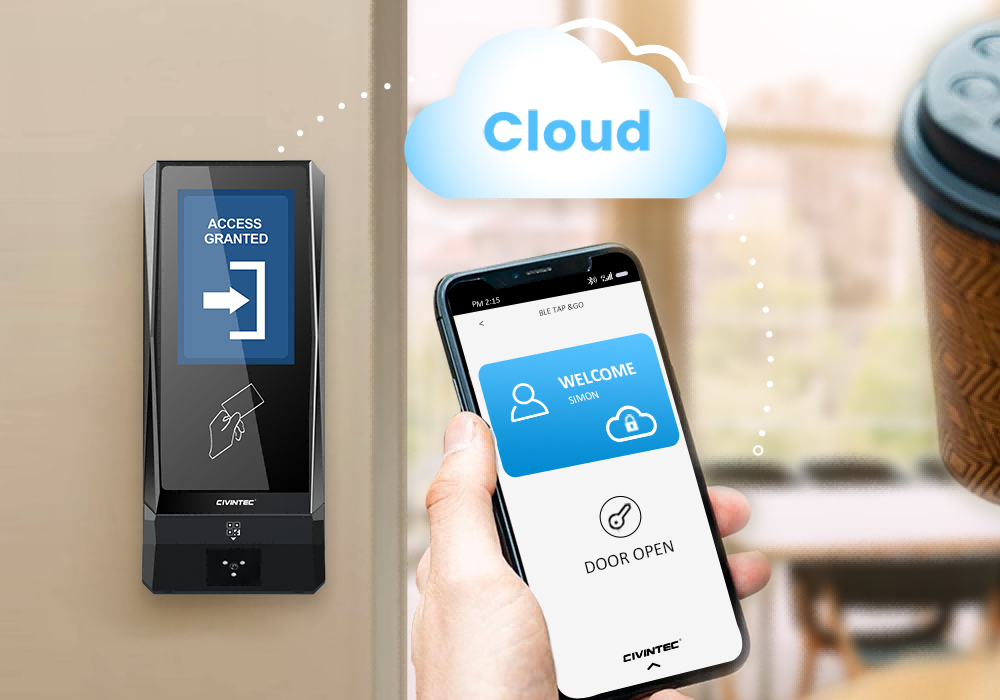
BLE 5.3 Hands-Free Transit: For perimeter turnstiles and vehicle barriers, an integrated BLE 5.3 module enables long-range, hands-free entry across iOS and Android devices. System developers can adjust the terminal's BLE broadcast range, allowing the hardware to detect approaching authorized smartphones and release physical gates without requiring workers to stop or remove their phones from their pockets.
For workers who prefer physical cards, CIVINTEC terminals include a dual-frequency reader processing legacy 125KHz HID Prox/EM cards alongside high-security 13.56MHz MIFARE Classic, Ultralight, and MIFARE Plus credentials.
To protect high-security industrial zones from badge cloning, the hardware provides native support for NXP MIFARE DESFire EV1, EV2, and EV3 smart cards backed by 128-bit AES encryption. Cryptographic key handshakes execute within an integrated, tamper-proof SAM (Secure Access Module) slot certified to EAL5+ standards, ensuring encryption keys remain secure within the device's edge vault.
For logistics couriers, maintenance vendors, and visiting inspectors, administrators can issue time-restricted, encrypted QR codes via email or mobile app. When presented to the terminal's QR code module, the system decodes the credential, captures a photo snapshot of the person scanning the code, records the timestamp log, and grants entry automatically.
Selecting the right hardware configuration requires evaluating terminal capabilities against specific installation points across your facility. Below is a structural comparison of CIVINTEC's prime hardware terminal lineup:
Technical Parameter | CIVINTEC CT11 | CIVINTEC CT10 | CIVINTEC CT9 PRO | CIVINTEC CT9 E |
Primary Design Focus | Touchless 5-in-1 Biometric Facial Recognition Access Control and VoIP Intercom PDF+ 1 | Advanced Touchscreen Hub with Integrated Event Capture Camera and 4G Telemetry | Touchscreen Multi-Credential Access Control Hub | All-in-One Touch Keypad Wireless Cloud Access Control Terminal |
User Interface Hardware | 3.5" Touch Screen Linux OS with SDK | 3.5-inch Interactive Toucher UI display | 3.5-inch Color Touchscreen UI display | 12-digit Touch Digital Keypad with White LED Backlit |
Biometric / Capture Core | 2MP Dual-Camera Visual/IR Engine with Anti-Spoofing | Automated Event-Driven Verification Camera | None (External Hub Format) | None (Keypad Base Format) |
Supported Credentials | Face, RFID (125KHz/13.56MHz), BLE, NFC, QR Code, PIN | RFID (125KHz/13.56MHz), NFC, BLE, QR Code, PIN | RFID (125KHz/13.56MHz DESFire with SAM), BLE, NFC, QR Code, PIN | Touch Keypad PIN, RFID (125KHz/13.56MHz), BLE, NFC, QR Code |
Intercom Core Modality | Native VoIP Intercom Support via RTSP Protocol | Native VoIP Intercom Support via RTSP Protocol | None | None |
Network Interfaces | TCP/IP Ethernet (PoE), Wi-Fi, 4G LTE + GPS, LoRaWAN | TCP/IP Ethernet (PoE), Wi-Fi, 4G LTE + GPS LoRaWAN
| TCP/IP Ethernet (PoE), Wi-Fi, 4G LTE | TCP/IP Ethernet (PoE), Wi-Fi, 4G LTE |
Detailed Product Link |
Integrating new access control hardware into established IT infrastructure requires flexible networking options and open development frameworks.
CIVINTEC terminals support multiple network connection interfaces to accommodate diverse facility layouts:
Wired TCP/IP Ethernet with PoE: Standard RJ45 connection delivering high-speed data transmission for HTTP/HTTPS protocols and electrical power (PoE IEEE802.3af) over a single Cat6 cable, simplifying installation.
2.4GHz Wi-Fi Support: Integrated wireless networking (IEEE802.11 b/g/n) running HTTP/HTTPS protocols for facility areas where running physical Ethernet lines is cost-prohibitive.
4G LTE Cellular & GPS Telemetry: Embedded cellular modems for remote outposts—such as perimeter truck scales and temporary construction sites. Integrated GPS modules provide real-time location tracking for mobile access control terminals.
LoRaWAN IoT Connectivity: Long-range, low-bandwidth wireless connection for expansive storage yards, ports, and railyards spanning several kilometers.
Data Security Standard: All terminal communication executes via encrypted HTTP/HTTPS communication protocols using AES-128 or AES-256 TLS 1.3 encryption. The access control terminal performs mutual authentication handshakes with central servers before transmitting data, preventing interception and ensuring compliance with enterprise data privacy standards.
CIVINTEC operates as an enterprise access control hardware manufacturer. To support custom software development and eliminate vendor lock-in, CIVINTEC provides an open, stable Software Development Kit (SDK) and comprehensive API libraries for its embedded Linux terminals.
Software developers can program directly to the device layer using the SDK to:
Customize touchscreen user interfaces, company branding, and prompt languages.
Transmit real-time transaction telemetry directly to the client's own cloud system via secure HTTP/HTTPS communication protocols.
Issue remote cloud commands to toggle hardware modes (e.g., Lockout Mode, Free-Pass Mode, Normal Access Control Mode).
To learn how to select the ideal hardware configuration and network protocol architecture for cloud-based attendance platforms, read CIVINTEC’s comprehensive guide on choosing the right CIVINTEC terminal for cloud time attendance.
Optimizing workforce entry requires deploying specific terminal configurations tailored to the operational demands of different facility zones:
Operational Challenge: Managing thousands of workers or residents arriving simultaneously during peak changeover windows without generating entrance bottlenecks.
Optimal Hardware Solution: Deploy the CT11-QP-2R-UV access control terminal featuring facial recognition, dual-frequency RFID card scanning, and integrated PoE Ethernet. The 0.015s matching engine moves personnel through turnstiles rapidly, while dual output relays operate turnstile barrier arms and indicator lights directly.
Operational Challenge: Preventing unauthorized entry into controlled spaces while maintaining strict sanitary compliance for staff wearing protective garments.
Optimal Hardware Solution: Deploy the CT11-W-P-UV access control terminal connected via corporate Wi-Fi. Contactless facial recognition enables hands-free entry for personnel in protective suits. For secondary authentication, staff tap authorized smartphones via the nfc access control system reader.
Operational Challenge: Securing outdoor shipping gates and logistics yards where running physical network cabling is impractical.
Optimal Hardware Solution: Deploy the CT11-H-Q-2R-UV access control terminal equipped with embedded 4G LTE cellular connectivity and a high-speed QR scanner. Drivers and temporary contractors scan dynamic QR codes for automated entry, while the cellular modem routes logs securely via HTTP/HTTPS communication protocols to your cloud platform.
[block2]
Modernizing workforce management requires moving past fragile, contact-based legacy hardware. By deploying touchless facial recognition time attendance hardware, enterprises eliminate time fraud, prevent shift change bottlenecks, maintain strict facility hygiene, and collect accurate operational data.
CIVINTEC’s hardened hardware portfolio—led by the flagship CT11 access control terminal—combines edge-computing biometric verification (0.015s match speed), 5-in-1 multi-credential flexibility, triple-hardened physical durability (IP65, IK07, UV-resistant), and open Linux SDK architecture. Whether securing high-volume perimeter turnstiles or remote logistics yards, CIVINTEC provides the physical hardware foundation required for modern enterprise access control systems.
Ready to upgrade your workforce management infrastructure? Contact our technical engineering team today to request hardware evaluation packages, discuss custom SDK integrations, or receive a project quote.
Initiate Technical Consultation: Contact CIVINTEC Project Engineers
Explore Product Specifications: Browse CIVINTEC Access Control Hardware Line


 Home >
  Share
Share



 Contact Us