

-

Applications

Industries

 OEM & ODM Service
 Development Service
 Download
 Technical support
 Warranty & RMA
 FAQS
FAQS
 My Community
 Who Is CIVINTEC
 Why CIVINTEC
 News & Express
 Cooperation





 Jul 09, 2026
Industrial manufacturing operations require precise workforce alignment, operational synchronization, and secure perimeter control. Within modern production facilities, automotive assembly plants, and massive logistics hubs, managing the tracking metrics of a massive, multi-shift workforce represents an ongoing operational hurdle. Plant directors, corporate operations teams, and IT security infrastructure architects face a continuous challenge: how can an enterprise capture clean, unalterable workforce tracking data while maintaining rapid personnel transit flow through main entry perimeters during major shift rotations?
For years, industrial environments have relied on single-credential verification frameworks. Whether deploying standalone proximity swipe cards, basic localized PIN pads, or entry-level biometric scanners, a uniform, single-technology approach consistently introduces distinct operational bottlenecks. A large-scale manufacturing plant does not house a uniform user demographic. Instead, it operates as a layered environment where full-time executive staff, highly skilled machinery engineers, short-term logistical contractors, transport drivers, and specialized maintenance vendors interact with physical spaces concurrently. Forced deployment of a singular credential format results in processing delays, physical congestion at turnstile banks, elevated maintenance overhead, and data gaps within central corporate directories.
To resolve these fragmentation issues, forward-thinking enterprises are executing rapid migrations toward multi-modal verification ecosystems. Implementing multiple identification technologies for time attendance and access control enables an organization to adapt its perimeter data collection layers to match the unique working profiles of different employee demographics. This technical analysis explores the operational logic, security protocols, and hardware architectures behind deploying a multi-credential framework engineered explicitly for complex industrial infrastructure networks.
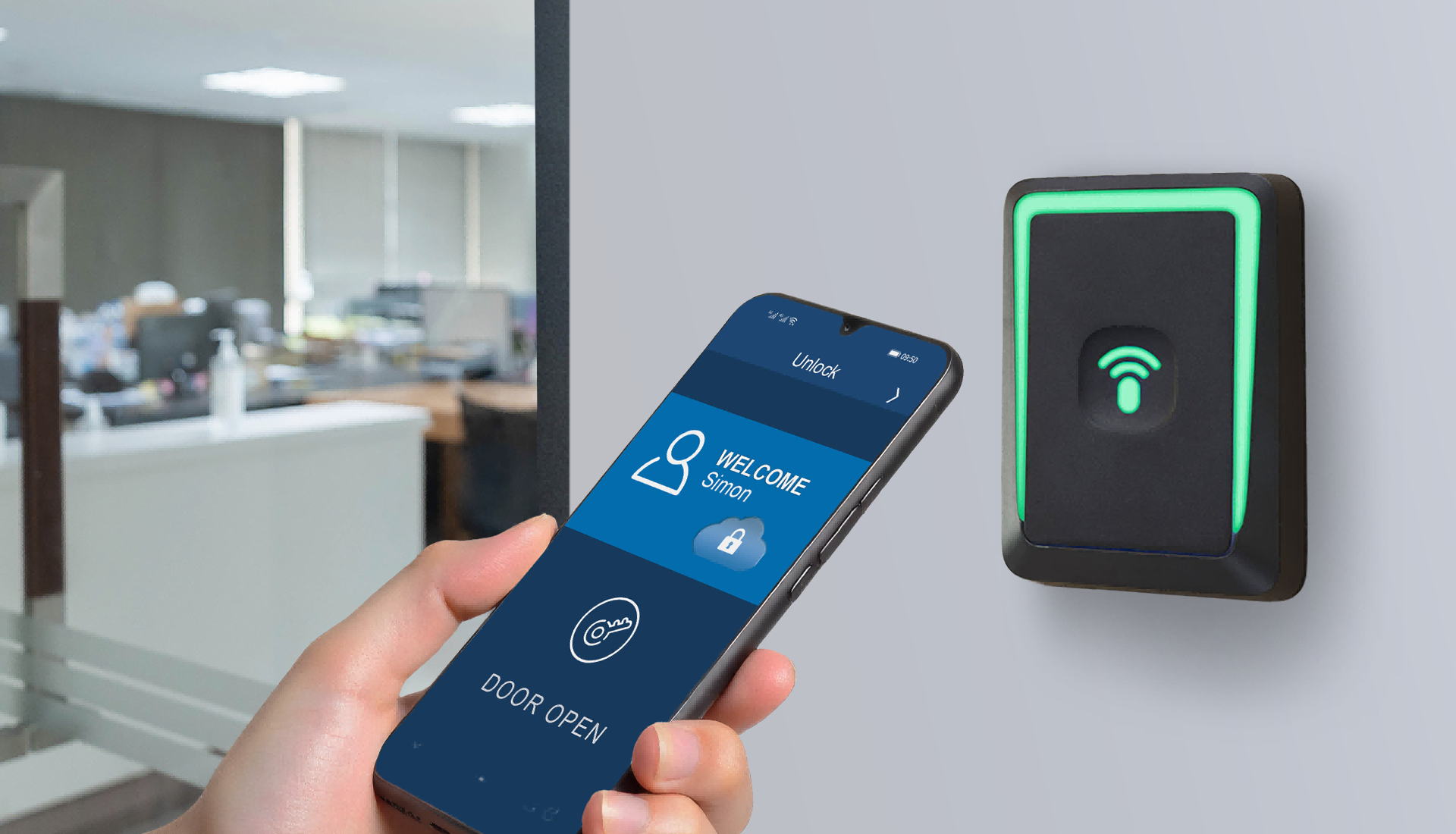
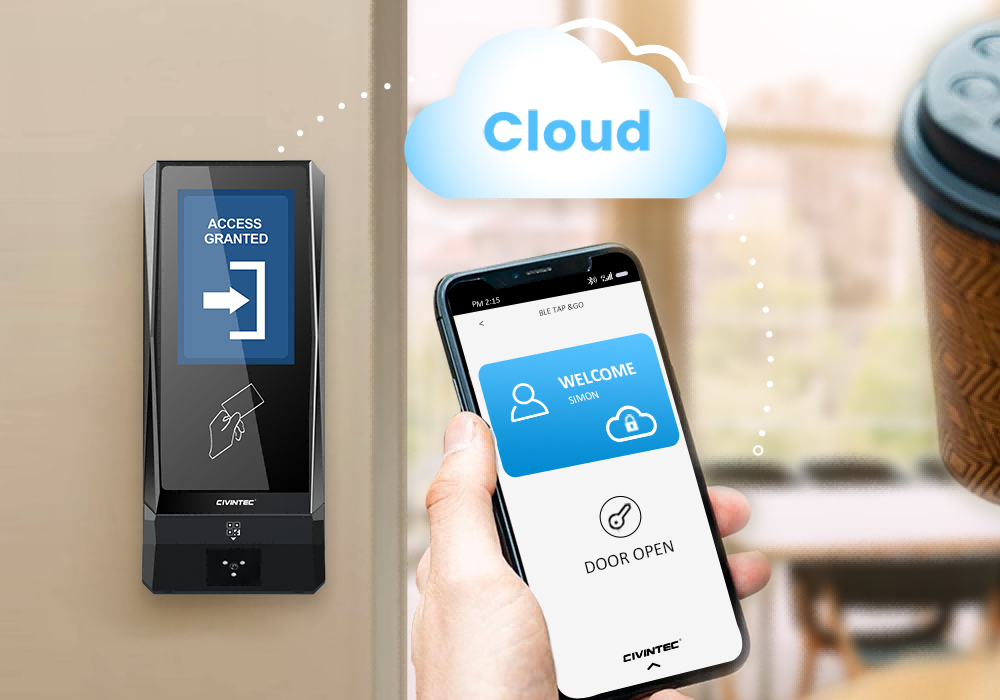
The adoption of consumer smartphones as secure corporate tracking tools has revolutionized industrial personnel transit. By turning a mobile device into an authenticated digital identity token, factories can dramatically reduce the heavy administrative and material overhead associated with printing, tracking, and replacing physical plastic badges. CIVINTEC edge hardware integrates three distinct short-range wireless technologies to support versatile mobile workflows.
Managing high-turnover workforces, external supply-chain couriers, third-party maintenance contractors, and temporary logistics staff is a constant administrative bottleneck for manufacturing facilities. Issuing permanent physical smart badges to personnel who may only require entry for a single afternoon is financially impractical and introduces clear physical vulnerabilities if badges are not recovered.
Integrating a dedicated qr code access control system along production lines and facility perimeters provides a highly flexible solution. Through your custom web software integrated via the CIVINTEC SDK, administrators can generate a time-restricted, single-use QR code and send it directly to the contractor’s mobile device before they arrive on-site.
When the visitor approaches the vehicle gate or reception checkpoint, they present the dynamic token to the integrated qr code door access control scanning lens. The access control reader immediately parses the credential, logs the exact arrival timestamp to the central network access control system, and releases the physical barrier mechanism. This fully automated onboarding pipeline removes administrative burdens from security offices while ensuring that transient personnel movements are tracked with high cryptographic accuracy using advanced qr code access control nodes.
For full-time corporate staff, engineers, and regular floor supervisors, mobile integration utilizes proximity-based wireless engines built directly into modern iOS and Android operating systems:
NFC Access Control System Engines: Near Field Communication (NFC) mimics the intentional, localized interaction of a high-security contactless smart card. Operating at a close-range frequency of 13.56MHz, an employee must bring their smartphone within 4cm of the terminal face to execute a log event. This short reading range makes an nfc access control system highly suited for internal department entries, sensitive data centers, and specific inventory rooms where accidental or background credential detection must be avoided.
BLE Integration: BLE operates across the 2.4GHz wireless spectrum, offering an extended reading capability that can be tuned from a few centimeters up to several meters via software parameters. BLE enables an automated, hands-free verification experience. As an authorized team member approaches a main turnstile bank or warehouse portal, the terminal senses their background mobile app token, completes a secure cryptographic handshake, records the shift-start log, and releases the barrier without requiring the worker to stop, look for a badge, or pull a device from their pocket. This capability speeds up pedestrian transit during high-volume shift turnarounds.
While mobile credentials offer excellent convenience and flexibility, physical proximity cards remain a baseline tracking standard across global industrial facilities. Many large-scale manufacturing campuses operate with a hybrid model where legacy card infrastructure must be supported alongside newer mobile technologies. However, relying on unencrypted, low-frequency proximity tokens (such as legacy 125KHz cards) leaves an enterprise vulnerable to security breaches; these unencrypted cards transmit their unique identification numbers in open text, meaning they can be intercepted, copied, and cloned using cheap tools bought online.
To mitigate this security vulnerability, CIVINTEC terminals are built with multi-frequency reading modules that support advanced, high-encryption smart card architectures. Our systems provide deep compatibility with NXP MIFARE DESFire EV2 and EV3 secure chipsets. Instead of transmitting unencrypted data over the airwaves, a CIVINTEC Mifare NFC reader utilizes strong 128-bit AES or 3DES cryptographic keys to secure all wireless data transfers between the physical card and the reader face.
During a card tap, the credential verification and key exchange occur entirely within this secure hardware environment. This multi-layered approach ensures that even if a malicious actor attempts to tap into the terminal's external data wires or record the wireless signals, the data remains unreadable. This architectural standard allows industrial complexes to maintain high physical tracking integrity, protect employee identity data, and maintain a robust physical defense against sophisticated corporate espionage or unauthorized facility entry.

To completely eliminate time fraud and ensure that the individual logging into a shift is truly who they claim to be, an enterprise architecture must include biological validation layers. Relying solely on cards or mobile tokens creates a loophole where employees can easily swap credentials to clock each other in early. Deploying biometrics provides an unalterable proof of presence that closes this loophole.
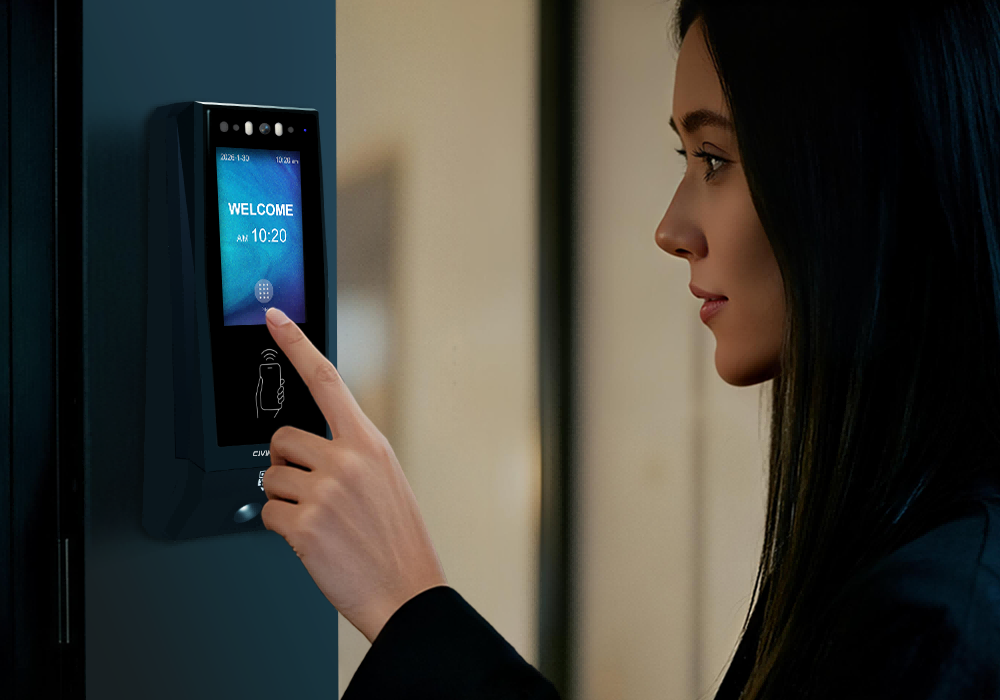
Implementing a high-performance face recognition time attendance machine represents the premier verification standard for busy manufacturing plant environments. High-throughput factory gates require rapid processing speeds to handle hundreds of personnel arriving simultaneously for a new shift. A dedicated face time attendance machine enables a contact-free, seamless tracking process. Employees simply walk past the terminal array; the advanced optical camera core identifies their facial structure, verifies their authorization profile against the internal edge database, logs the arrival timestamp, and unlocks the speed gate within fractions of a second.
This contact-free workflow provides significant benefits on factory floors where employees are required to wear heavy protective garments, cleanroom suits, or safety gloves. Because workers do not need to physically touch a shared sensor or manipulate a badge, transit speeds are optimized, and cross-contamination risks are entirely removed.
[block1]
Successfully deploying multiple credential options across an industrial campus requires access control hardware capable of running diverse processing scripts simultaneously without experiencing performance drops. CIVINTEC answers this demand by engineering heavy-duty edge terminals equipped with multi-modal scanning cores.
The CIVINTEC CT9 Pro Access Control Terminal serves as a rugged, high-performance access control designed to operate reliably on the front lines of demanding production floors and enterprise buildings.
Integrated Multi-Frequency Core: The CT9 Pro combines a high-security smart card reader, an advanced BLE wireless antenna, an active NFC chip, and a high-speed QR code scanning module into a single compact housing. This design allows system integrators to support various workforce demographics simultaneously using a single physical terminal.
IP65 Weather-Proof Hardening: The terminal is fully encased in an IP65-rated, UV-resistant enclosure. This heavy-duty sealing keeps internal electronics protected against fine airborne metallic dust, moisture common in heavy fabrication environments.
For primary facility perimeters, unstaffed material cribs, and administrative checkpoints requiring strict compliance monitoring, the CIVINTEC CT10 Access Control Terminal introduces advanced data-capture technologies.
Event-Driven Image Capture Camera: The key advantage of the CT10 is its built-in wide-angle camera engine. Every time a worker approaches the terminal, selects a shift option, and presents a credential, the CT10 automatically captures a high-resolution photo of the user. This image is linked directly with the tracking event and sent to the cloud, establishing an unalterable audit trail that eliminates badge-sharing and identity fraud.
4G LTE and GPS Wireless Telemetry: Built with integrated 4G cellular modems and GPS global positioning modules, the CT10 can operate outside traditional wired building infrastructure. This cellular design allows operators to deploy secure tracking points in remote equipment yards, temporary expansion zones, or mobile transit fleets while maintaining real-time synchronization with central servers.
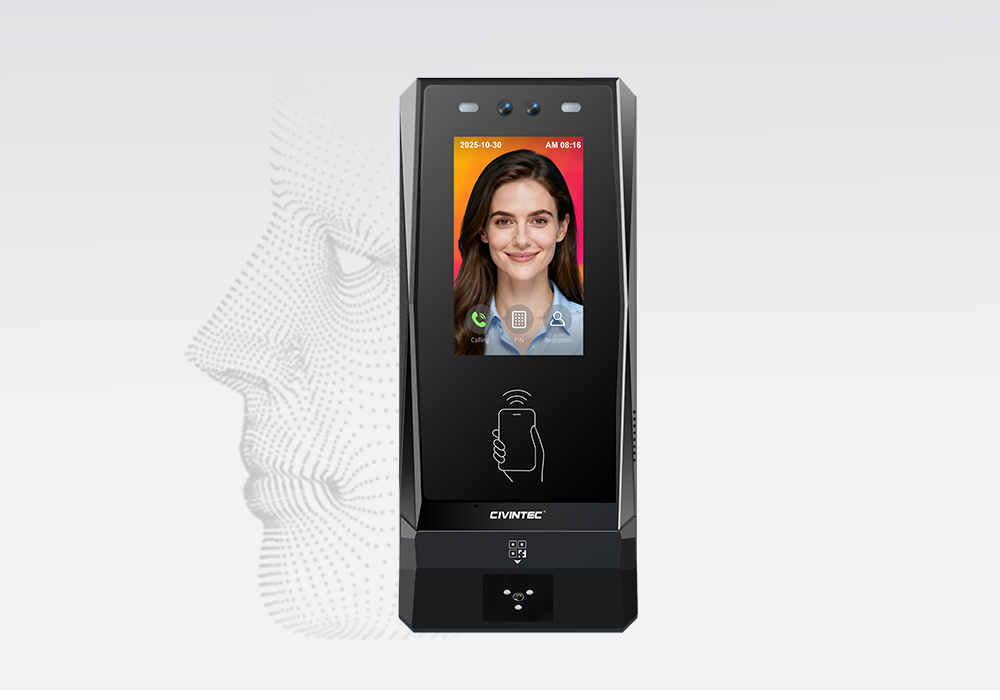
The CIVINTEC CT11 Access Control Terminal is purpose-built for installations requiring absolute identification accuracy and fraud prevention. Operating as both a high-precision face recognition access control and time attendance machine, it serves as an ideal entry-point gatekeeper for large manufacturing complexes.
Touchless Secure Access with Intelligent Facial Recognition
·Anti-spoofing protection distinguishes live human from artificial materials to defend against presentation attacks
·Recognize faces across a wide range of common appearance changes, as makeup, eyeglasses, sunglasses, earrings, hats
·Precisely identify living movement
·Fast matching speed in approximately 0.15s for fluid user flow
·Long range recognition distance supporting a natural and uninterrupted walking pace
Integrated Multi-Frequency Core: The CT10 combines a high-security biometric, smart card reader, an advanced BLE wireless antenna, an active NFC chip, and a high-speed QR code scanning module into a single compact housing. This design allows system integrators to support various workforce demographics simultaneously using a single physical terminal.
Function Keys: Function Keys record different activity as clock in/out, overtime, breaks and other events. Programmable definitions to trigger specific events customizable to expand and add more keys.
4G + GPS Enabled for Outdoor Reliability: CT11 features embedded 4G LTE and GPS technology, designed for reliable outdoor and mobile applications. This rugged IP65-rated system ensures continuous connectivity without WiFi or Ethernet cable dependency, while its GPS capability provides essential location verification - perfect for construction sites, mobile assets, campsite and remote facilities.
IP65 Weather-Proof Hardening: The terminal is fully encased in an IP65-rated, UV-resistance IK07 impact-resistant enclosure. This heavy-duty sealing keeps internal electronics protected against fine airborne metallic dust, moisture common in heavy fabrication environments.
To assist facility directors and IT system integrators in selecting the optimal authentication configuration, the following matrix analyzes different credential formats across key industrial performance metrics:
Face Recognition Biometrics: Personnel Throughput Speed is Very High (Sub-second walk-through). Cryptographic Security Level is Exceptionally High (Anti-spoofing). Administrative Overhead Cost is Very Low (Digital template onboarding). Environmental Resiliency Rating is High (Contact-free lens unaffected by hand dirt). Optimal Target User Demographic involves full-time factory workers, cleanroom operators, and glove-wearing staff.
Encrypted RFID Cards (DESFire EV3): Personnel Throughput Speed is High (Instantaneous physical tap). Cryptographic Security Level is High (128-bit AES). Administrative Overhead Cost is Moderate (Requires badge printing & tracking). Environmental Resiliency Rating is High (Durable plastic card stock). Optimal Target User Demographic involves standard plant employees and long-term technical staff.
Mobile App Tokens (NFC & BLE): Personnel Throughput Speed is High (Hands-free options via BLE). Cryptographic Security Level is High (Rotating single-use tokens). Administrative Overhead Cost is Low (Instantaneous cloud distribution). Environmental Resiliency Rating is High (Protected inside user's phone). Optimal Target User Demographic involves corporate executives, supervisors, and mobile service engineers.
Dynamic QR Codes: Personnel Throughput Speed is fast. Cryptographic Security Level is Moderate (Time-restricted tokens). Administrative Overhead Cost is Very Low (Automated email delivery). Environmental Resiliency Rating is High (Digital smartphone display). Optimal Target User Demographic involves temporary contractors, shipping drivers, and visiting vendors.
[block2]
Deploying an entry network built on a single credential format no longer satisfies the security or throughput demands of modern, multi-tiered industrial facilities. Transitioning to an agile architecture powered by multiple identification technologies for time attendance allows manufacturing enterprises to tailor their data collection infrastructure to match the distinct operational profiles of their entire workforce. By integrating facial biometrics, high-security smart cards, dynamic QR scanning, and mobile app engines onto a single edge computing platform, facility directors can successfully eliminate identity fraud, reduce administrative overhead, and maximize transit speeds through primary perimeters.
Partnering with an industry-recognized hardware pioneer like CIVINTEC provides your business with the rugged, open-architecture hardware foundation required to support sophisticated workforce tracking applications. Our access control terminals, backed by a comprehensive software development environment, allow your IT teams to retain complete software autonomy, avoid vendor lock-in, and build future-proof security systems customized for your precise operational rules.
Are you ready to eradicate buddy punching, eliminate card administration costs, and upgrade your manufacturing plant with advanced multi-modal edge terminals? Contact our expert hardware engineering group today at the official CIVINTEC Contact Page to request a comprehensive hardware evaluation blueprint and developer SDK package tailored for your facility's layout.


 Home >
  Share
Share



 Contact Us