

-

Applications

Industries

 OEM & ODM Service
 Development Service
 Download
 Technical support
 Warranty & RMA
 FAQS
FAQS
 My Community
 Who Is CIVINTEC
 Why CIVINTEC
 News & Express
 Cooperation




 Aug 11, 2026
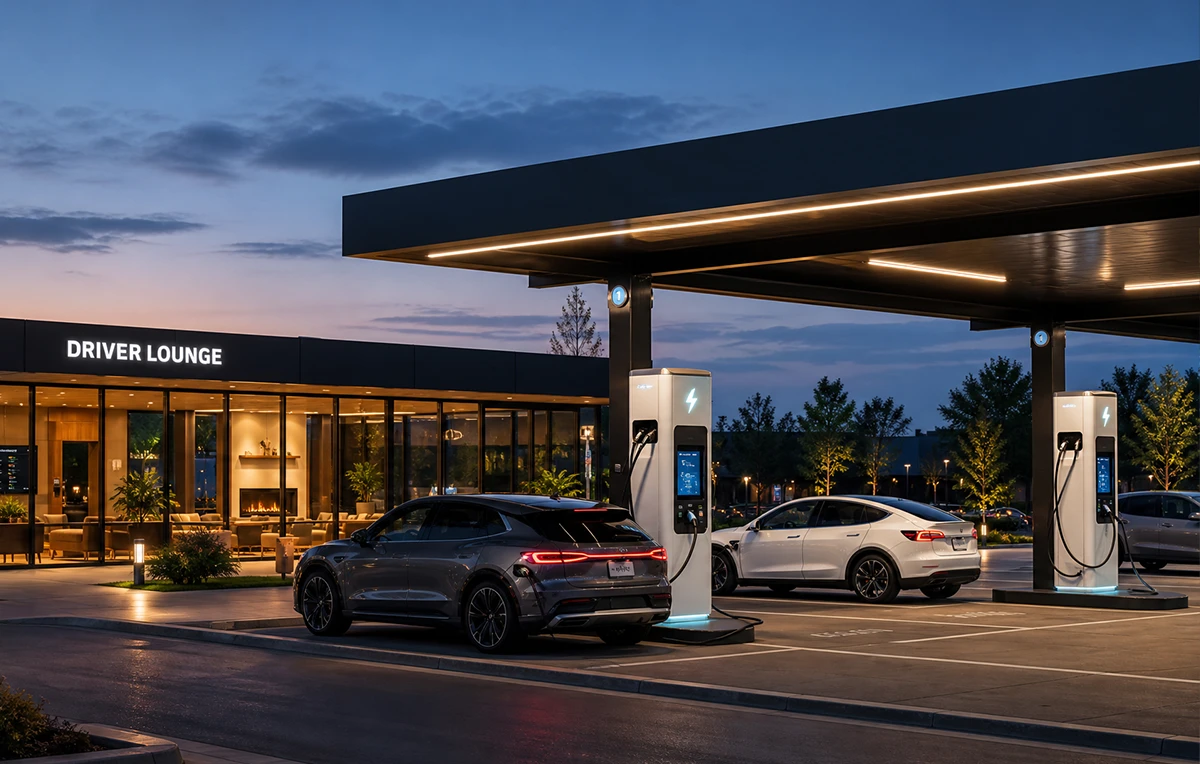
As global electric vehicle (EV) adoption accelerates, commercial EV charging operators, factory facility managers, highway service hub developers, and municipal utility networks are rapidly expanding their charging infrastructure. Modern high-power charging hubs can replenish a vehicle battery in 20 to 40 minutes. To deliver a premium user experience and build customer loyalty, forward-thinking operators are building dedicated, climate-controlled charging rest areas and driver lounges adjacent to their charging plazas.
However, operating these rest areas introduces a critical security paradox. Most EV charging hubs are completely unattended, frequently situated in remote, unmonitored locations, or placed along exposed factory perimeters and commercial parking corridors. An open or poorly secured rest lounge quickly becomes a magnet for non-charging loiterers, unauthorized squatters, physical abuse, and destructive vandalism. Conversely, keeping the rest area locked with mechanical keys or static keypads frustrates paying drivers and creates huge administrative headaches.
To protect site assets while providing a seamless experience for paying EV drivers, station operators require a specialized, Access Control solution. The access system must restrict lounge entry exclusively to active charging customers during their active charging sessions, while offering heavy-duty physical protection against vandalism and harsh outdoor weather.
As an industry-leading innovator among global access control systems manufacturers, CIVINTEC provides purpose-built, enterprise-grade CIVINTEC Access Control Hardware Solutions engineered specifically for unattended commercial and industrial environments. By combining mechanical construction, dynamic time-restricted QR code scanning, multi-role credential verification, 4G LTE wireless telemetry with GPS asset tracking, and real-time cloud synchronization, CIVINTEC enables operators to deploy secure, automated, and resilient charging rest areas anywhere in the world.
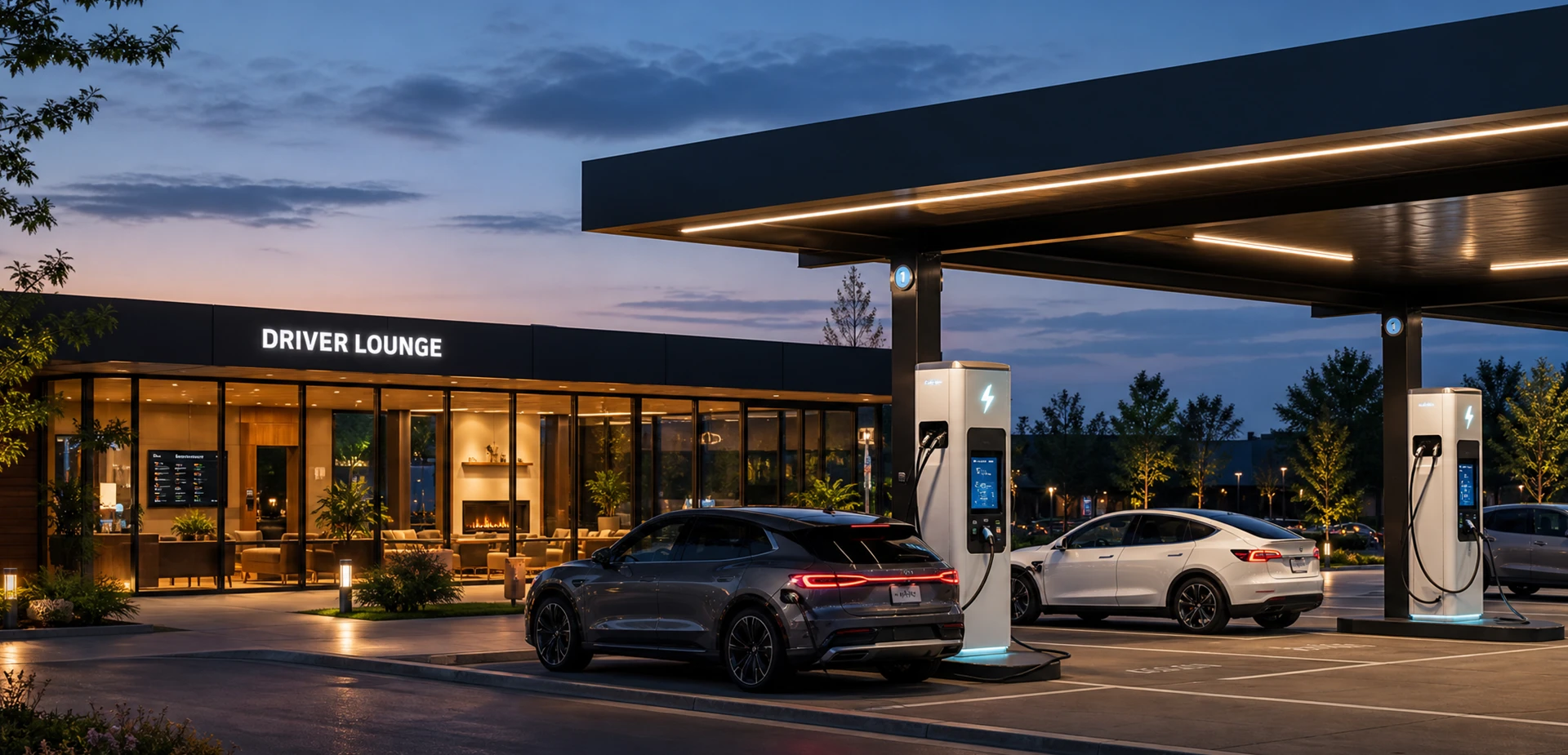
Securing an unattended EV charging rest area differs significantly from managing a standard corporate office or residential building. Facilities teams and charging station integrators face four distinct operational friction points:
Unattended charging plazas operating in isolated industrial areas or along late-night transit corridors are prime targets for physical abuse. Standard commercial access readers built with thin plastic enclosures or exposed pushbuttons are easily destroyed by forced entry attempts, heavy tool impacts, or deliberate pry attacks. Hardware failure leaves the rest area unprotected and results in costly emergency repairs and operational downtime.
A charging rest lounge must function as an exclusive amenity for drivers who are currently paying to charge their vehicles. If non-charging drivers or passersby use the lounge freely, paying customers lose access to clean seating, restrooms, Wi-Fi, and vending facilities. The Access Control system must dynamically link physical door release permissions to live charging session status in real time.
Charging rest area entryways are frequently exposed to direct sunlight, extreme thermal fluctuations, driving rain, snow, and airborne dust. Consumer-grade or basic indoor access readers suffer from housing yellowing, screen cracking, water ingress, and premature circuit failure when installed in unconditioned outdoor environments.
Many highway charging stations and remote industrial parking hubs lack wired TCP/IP Ethernet networks or localized Wi-Fi coverage. Pulling physical network cables to a distant rest area building is often cost-prohibitive. Furthermore, managing software configurations across hundreds of geographically dispersed charging hubs requires remote management tools to avoid sending technicians on-site.
To balance ironclad security with effortless driver convenience, modern charging networks are turning to dynamic QR code technology. By linking mobile charging application billing engines with physical access terminals, operators create a completely automated, touchless driver access workflow.
Charging Session Activation: An EV driver arrives at the charging station, plugs in their vehicle, and initiates a charging session using the operator's mobile smartphone app or web portal.
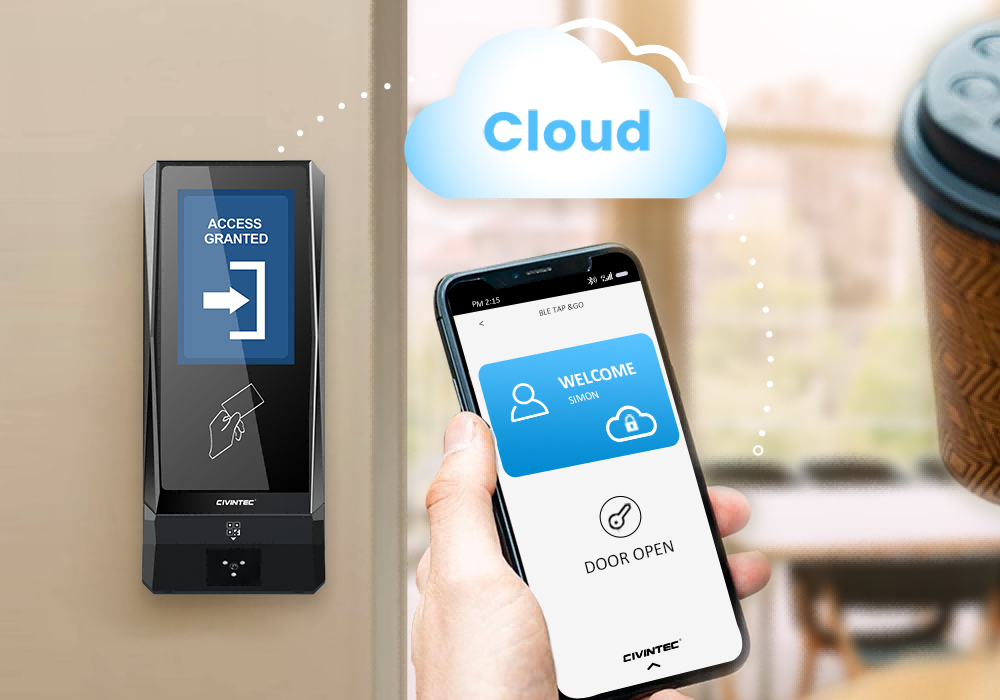
Dynamic Credential Issuance: Upon confirming the active charging session, the client's cloud management software automatically generates a time-restricted, encrypted QR code and displays it on the driver's smartphone screen.
Scan at Rest Area Entrance: The driver approaches the rest lounge entrance and presents their smartphone screen to the terminal's integrated QR code module.
Real-Time Cloud Verification: The terminal decodes the QR credential and instantly transmits a verification data packet—containing the QR payload, terminal device ID, timestamp, and an automated photo snapshot—over encrypted HTTP/HTTPS communication protocols to the client's cloud system.
Instant Door Release & UI Feedback: The client's cloud system confirms the active charging session and sends an encrypted remote unlock command back to the terminal. The terminal's screen displays an intuitive visual message (e.g., "Access Granted – Welcome") and triggers the electric door strike.
This touchless entry architecture eliminates physical keyfobs, plastic cards, and paper tickets entirely. Once the vehicle finishes charging or the driver terminates the session, the cloud software automatically invalidates the QR code, preventing unauthorized re-entry after the vehicle leaves the charging bay.
To explore how touchless scanning transforms facility operations, read CIVINTEC's technical analysis on the top benefits of using QR code door access control in modern buildings and review real-world architectural deployments in our QR code access control system solution case study.
[block1]
While temporary EV drivers authenticate via dynamic QR codes, charging station operators must also grant secure, permanent entry to site maintenance crews, cleaning staff, equipment technicians, and emergency responders. A robust Access Control platform must support multi-role credential validation across a single hardware unit.
CIVINTEC terminals function as versatile multi-credential hubs, allowing operators to configure customized entry permissions based on user roles:
Dynamic Temporary Users (EV Drivers): Validated seamlessly via dynamic QR codes processed by the terminal's QR code module.
Permanent Site Staff & Technicians: Validated via RFID smart cards, mobile credentials, or secure PIN codes entered on the interactive touch keypad.
For facility staff and service vendors who carry physical badges or corporate smartphones, CIVINTEC terminals incorporate dual-frequency card readers alongside short-range wireless communication modules:
High-Security Smart Card Reading: Supports 13.56MHz MIFARE Classic, MIFARE Plus, and NXP MIFARE DESFire EV1, EV2, and EV3 smart card chipsets protected by 128-bit AES encryption.
Tamper-Proof SAM Slot Integration: Cryptographic key handshakes are executed within an integrated, tamper-proof SAM (Secure Access Module) slot certified to EAL5+ security protection standards. Root encryption keys remain protected inside the terminal's hardware vault, preventing card cloning and credential eavesdropping.
NFC Access Control Integration: Staff carrying Android smartphones can tap their device in close proximity to the terminal face using standard high-frequency NFC stacks for rapid authentication.
BLE Mobile Credentials: An integrated BLE module enables hands-free mobile access across iOS and Android platforms. Administrators can adjust the BLE broadcast range via software parameters, allowing technicians to unlock service doors as they approach without pulling their phone from their pocket.
Unattended charging rest areas placed along highway corridors or exposed industrial yards require exceptional physical durability. CIVINTEC designs its access control terminals with heavy-duty structural reinforcement to withstand deliberate violence, severe weather, and continuous public wear.
CIVINTEC access control hardware features reinforced enclosures engineered to absorb heavy mechanical impacts. Certified to IK07 impact resistance levels, the housing resists direct hammer blows, tool strikes, thrown rocks, and heavy physical abuse, ensuring the terminal remains fully operational even after severe vandalism attempts.
To prevent internal electrical shorting caused by driving rain, melting snow, high humidity, or blowing sand, all internal printed circuit boards are protected with an electrically potted epoxy layer. The complete terminal assembly carries an IP65 waterproof and dustproof rating, ensuring flawless performance across outdoor ambient conditions.
Prolonged exposure to intense solar radiation causes standard plastic housings to turn brittle and yellow, while non-treated touchscreens suffer display burn and touch degradation. Both the outer housing and the interactive touchscreen interface of CIVINTEC terminals are treated with a specialized UV-resistant coating, maintaining structural integrity and crystal-clear visual clarity in sun-drenched desert or tropical environments.
CIVINTEC terminals feature bright color touchscreen displays (e.g., 3.5-inch on CT9 PRO). Using open system tools, charging operators can fully customize the user interface to:
Display custom company logos, brand colors, and welcome prompts.
Provide clear visual instructions (e.g., "Please Scan Charging QR Code", "Validating Session", "Door Unlocked", "Invalid Session").
Display digital keypads for staff PIN entry or emergency contact information.
Connecting remote charging rest areas to a centralized cloud management platform requires flexible communication options adapted to varied site infrastructure conditions.
CIVINTEC terminals support multiple network interface stacks to ensure simple, reliable deployment:
Wired TCP/IP Ethernet with PoE: For sites with structured network wiring, a single RJ45 cable delivers high-speed data transmission and electrical power via Power over Ethernet (PoE IEEE802.3af), simplifying installation and reducing wiring costs.
Integrated Wi-Fi Connectivity: Built-in 2.4GHz Wi-Fi stacks (IEEE802.11 b/g/n) allow the terminal to connect wirelessly to localized station routers.
4G LTE Cellular Modem with GPS Asset Telemetry: For remote, unwired charging stations located along isolated highways or distant industrial hubs, CIVINTEC terminals can be configured with an embedded 4G LTE cellular modem. This cellular link routes access transactions directly to the cloud without requiring local network cables. Concurrently, the integrated GPS module automatically transmits the device's precise geographic location coordinates to the client's cloud software upon booting, simplifying remote asset tracking across nationwide charging networks.
Encrypted Communication Protocols: All terminal-to-cloud communication is executed over secure HTTP/HTTPS communication protocols utilizing TLS 1.3 encryption. Data payloads containing credential records, device IDs, timestamps, and image logs are fully encrypted during transit, protecting the network against data tampering and man-in-the-middle attacks.
Visiting hundreds of remote charging stations to perform software maintenance is expensive and inefficient. CIVINTEC terminals support remote software updates directly from the client's cloud management server via TCP/IP, Wi-Fi, or 4G LTE network connections. Technicians on-site can also execute swift BLE OTA (Over-the-Air) firmware updates using a authorized smartphone app, keeping hardware protected with the latest security updates without requiring device disassembly.
Network outages should never leave paying EV drivers locked out in bad weather. CIVINTEC access control hardware features an intelligent offline fail-safe engine. If the cellular or network connection drops, the terminal switches automatically to local authorization mode.
By pre-storing temporary local credentials and white-lists in non-volatile flash memory, the terminal continues validating entry requests and operating door locks locally. The device securely caches up to 200,000 text transaction records and 7,000 photo event logs offline. Once network connectivity is restored, the terminal automatically performs a secure handshake and flushes the cached logs to the client's cloud database, guaranteeing complete data integrity.
For drivers who experience technical difficulties, lose smartphone battery power, or require emergency assistance, CIVINTEC terminals feature an integrated VoIP audio intercom core.
Equipped with a high-fidelity internal microphone and speaker, the terminal allows the driver to press a dedicated "Call Helpdesk" prompt on the touch screen. The terminal instantly initiates a real-time voice call over the network to the operator's central dispatch center, allowing support agents to speak directly with the driver and issue a remote cloud door unlock command.
Unattended facilities require automated safety protocols to respond immediately to fire emergencies, forced break-ins, or doors accidentally left open.
In the event of a fire, power loss, or emergency disaster within the charging rest area or adjacent plaza, the terminal's hardware input interface connects directly to local fire alarm control panels. Upon detecting an active fire alarm signal, the access control terminal overrides locked states instantly, unlocking physical doors automatically to ensure immediate, unhindered emergency egress for occupants.
To defeat unauthorized physical tampering or pry attacks, CIVINTEC terminals feature an internal optical tamper sensor. If an intruder attempts to wrench the terminal housing off its wall mounting plate or force open the casing, the tamper mechanism triggers instantly:
Activates an aggressive local audible alarm siren to deter the vandal.
Transmits an immediate high-priority tamper alert packet to the client's cloud platform, identifying the exact device ID, location name, and GPS coordinates so security personnel can dispatch help immediately.
Loiterers or vandals may attempt to prop the rest lounge door open using rocks or wedge items in the frame to bypass access rules. CIVINTEC terminals incorporate magnetic door position sensor monitoring. If the rest area door remains unclosed past a pre-configured time threshold (e.g., 15 seconds), the terminal logs a "Door Open Timeout" alarm, sounds a local reminder chime, and pushes a real-time notification to the cloud dashboard for remote management intervention.
Whenever a user scans a QR code, presents a card, or triggers an alarm event (such as a pry attempt or forced door entry), the terminal's built-in camera automatically captures a photo snapshot of the individual standing before the device.
This photo log is bundled with the timestamp, credential payload, and device ID, then transmitted to the client's cloud system. These visual image logs provide unalterable, legally binding evidence for incident investigation, dispute resolution, and insurance claims.
To assist charging network developers and system integrators in selecting the ideal hardware foundation, the matrix below details the technical specifications across CIVINTEC's enterprise access control terminal lineup:
Technical Parameter | CIVINTEC CT11 | CIVINTEC CT10 | CIVINTEC CT9 PRO | CIVINTEC CT9 E |
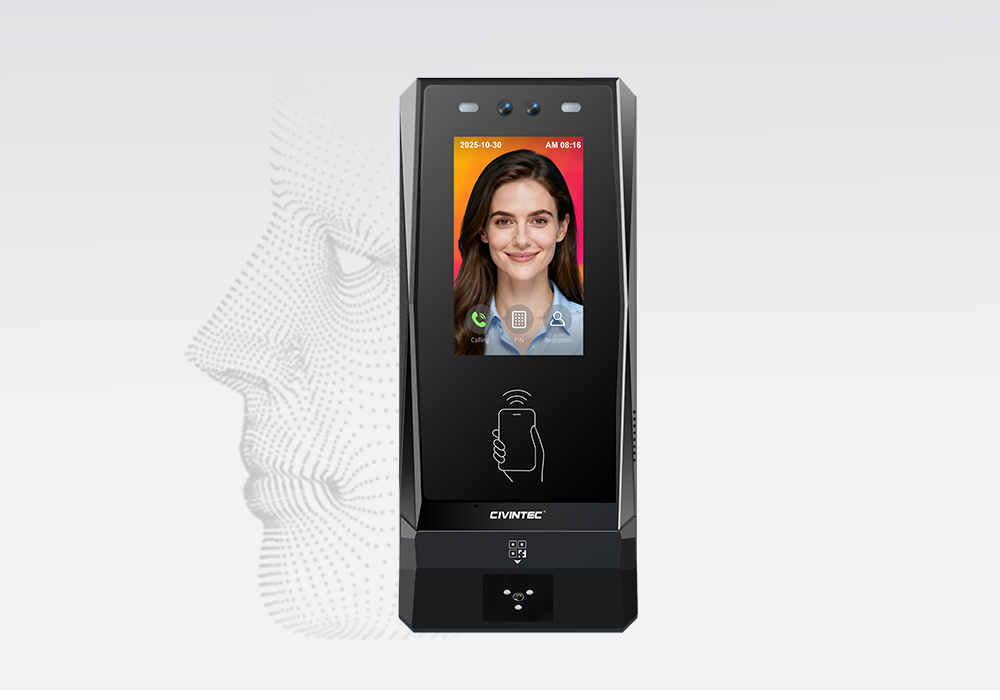
Primary Design Focus | Touchless 5-in-1 Biometric Facial Recognition Access Control and VoIP Intercom PDF+ 1 | Advanced Touchscreen Hub with Integrated Event Capture Camera and 4G Telemetry | Touchscreen Multi-Credential Access Control Hub | All-in-One Touch Keypad Wireless Cloud Access Control Terminal |
User Interface Hardware | 3.5" Touch Screen Linux OS with SDK | 3.5-inch Interactive Toucher UI display | 3.5-inch Color Touchscreen UI display | 12-digit Touch Digital Keypad with White LED Backlit |
Biometric / Capture Core | 2MP Dual-Camera Visual/IR Engine with Anti-Spoofing | Automated Event-Driven Verification Camera | None (External Hub Format) | None (Keypad Base Format) |
Supported Credentials | Face, RFID (125KHz/13.56MHz), BLE, NFC, QR Code, PIN | RFID (125KHz/13.56MHz ), NFC, BLE, QR Code, PIN | RFID (125KHz/13.56MHz DESFire with SAM), BLE, NFC, QR Code, PIN | Touch Keypad PIN, RFID (125KHz/13.56MHz), BLE, NFC, QR Code |
Intercom Core Modality | Native VoIP Intercom Support via RTSP Protocol | Native VoIP Intercom Support via RTSP Protocol | None | None |
Network Interfaces | TCP/IP Ethernet (PoE), Wi-Fi, 4G LTE + GPS, LoRaWAN | TCP/IP Ethernet (PoE), Wi-Fi, 4G LTE + GPS LoRaWAN
| TCP/IP Ethernet (PoE), Wi-Fi, 4G LTE | TCP/IP Ethernet (PoE), Wi-Fi, 4G LTE |
Detailed Product Link |
CIVINTEC operates strictly as an enterprise access control hardware manufacturer. To support custom software development and eliminate vendor lock-in, CIVINTEC provides an open, stable Software Development Kit (SDK) and comprehensive API libraries for its embedded Linux terminals.
Software developers and integrators can program directly to the device layer using the open SDK to:
Customize touchscreen user interface layouts, screen prompts, and brand graphics.
Route real-time transaction telemetry—including QR payloads, device IDs, timestamps, and event photo snapshots—directly to the client's own cloud system via encrypted HTTP/HTTPS protocols (which the client deploys independently).
Issue cloud remote control commands to toggle terminal modes (e.g., Emergency Lockout, Free-Pass Mode, Normal Access Control Mode).
Manage credential white-lists, offline parameters, and remote firmware updates seamlessly.
Deploying Access Control across distributed charging rest areas requires systematic site planning and integration engineering:
Installation Context: High pedestrian density, high turnover, exposed to ambient street sunlight and urban transit.
Recommended Hardware Configuration: Deploy the CIVINTEC CT10 Access Control Terminal mounted directly at the lounge main entrance. Utilize wired TCP/IP Ethernet with PoE for continuous, high-speed cloud telemetry. The bright 3.5-inch touchscreen provides clear visual prompts for drivers presenting dynamic app QR codes to the QR code module.
Installation Context: Heavy vehicle traffic, 24/7 unmonitored access, risk of physical vandalism from late-night loiterers.
Recommended Hardware Configuration: Deploy the CIVINTEC CT10 Access Control Terminal reinforced with IK07 impact protection. The heavy-duty housing resists forced entry attempts, while dual-relay outputs control primary glass doors and secondary restroom barriers simultaneously.
Installation Context: Isolated locations without local internet infrastructure or wired cabling.
Recommended Hardware Configuration: Deploy the CT10 4G LTE Model featuring embedded cellular networking and GPS telemetry. On startup, the terminal automatically registers its GPS coordinates with the client's cloud platform. Drivers scan dynamic QR codes for instant entry, while the terminal routes event logs securely over HTTP/HTTPS protocols without needing local network wiring.
[block2]
Securing an unattended EV charging rest area requires a strategic balance between physical heavy-duty protection and touchless customer convenience. By replacing insecure locks and vulnerable plastic readers with CIVINTEC Access Control hardware, charging network operators eliminate property vandalism, restrict lounge access exclusively to paying drivers, maintain automated event photo audit logs, and simplify multi-site management.
Featuring IK07 mechanical impact resistance, IP65 weatherproofing, UV-resistant screen protection, 4G LTE wireless telemetry with GPS asset tracking, and open Linux SDK support, CIVINTEC hardware provides the ultimate physical foundation for scalable EV infrastructure networks.
Ready to secure your charging rest areas and elevate the driver lounge experience? Contact CIVINTEC's technical engineering team today to request hardware evaluation kits, review open SDK documentation, or receive a project quote.
Initiate Technical Consultation: Contact CIVINTEC Project Engineers
Explore Product Specifications: Browse CIVINTEC Access Control Hardware Line


 Home >
  Share
Share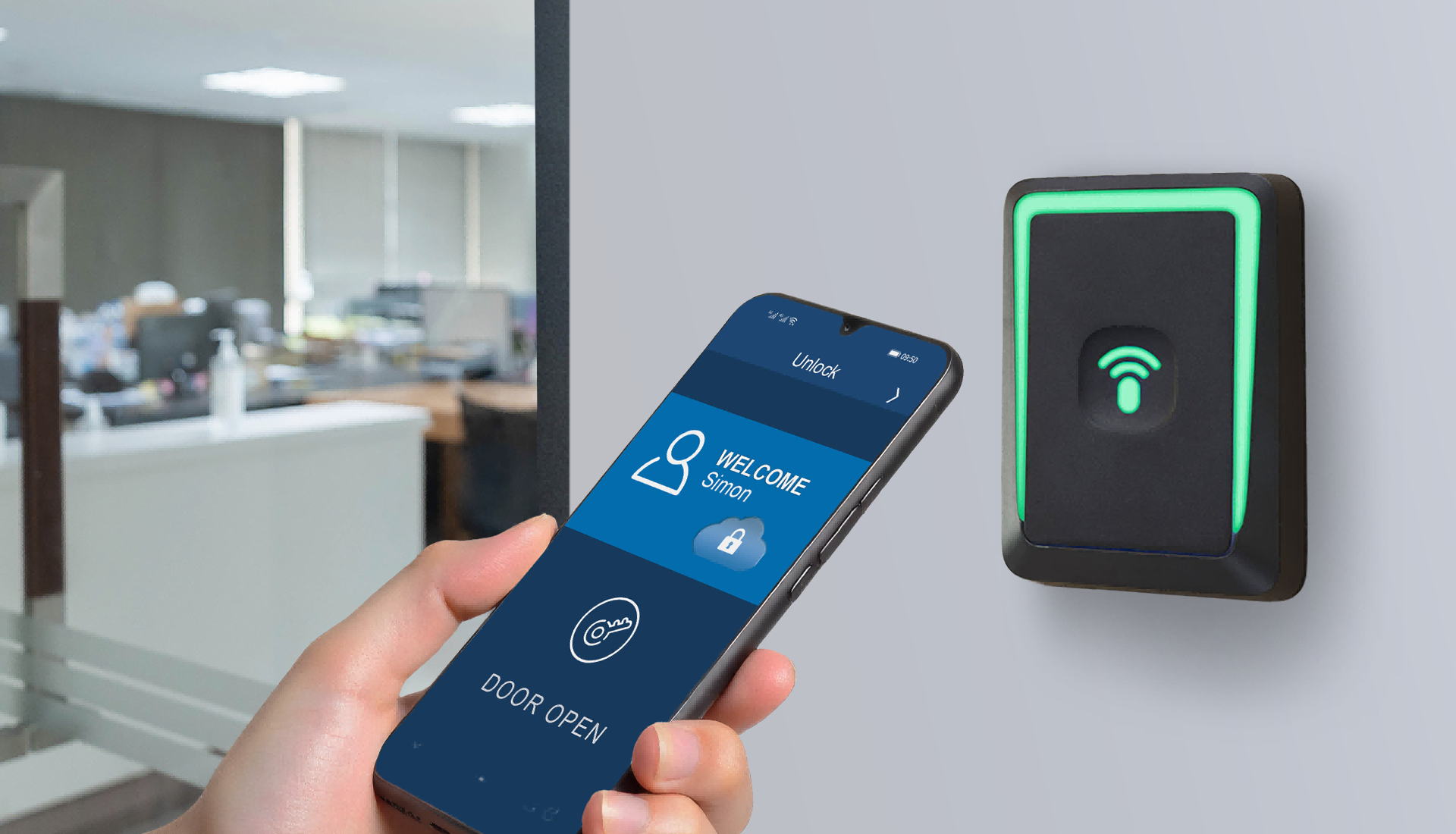



 Contact Us