

-

Applications

Industries

 OEM & ODM Service
 Development Service
 Download
 Technical support
 Warranty & RMA
 FAQS
FAQS
 My Community
 Who Is CIVINTEC
 Why CIVINTEC
 News & Express
 Cooperation




 Oct 14, 2026
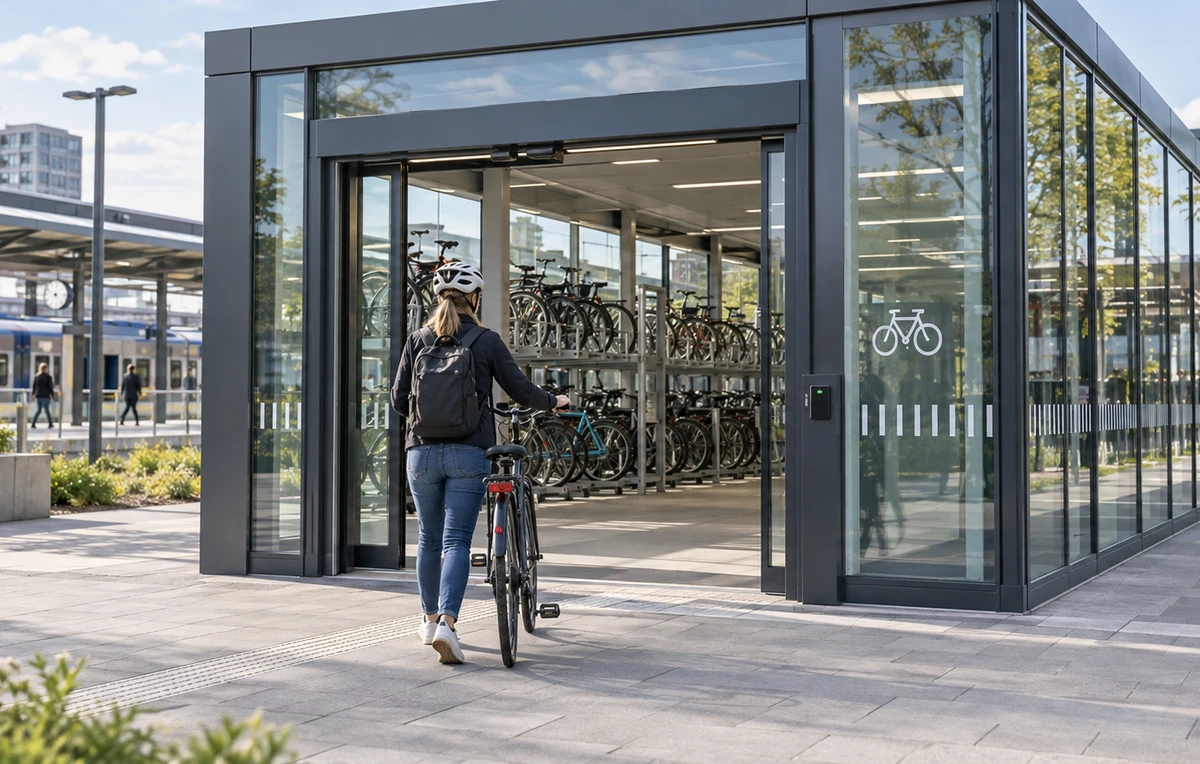
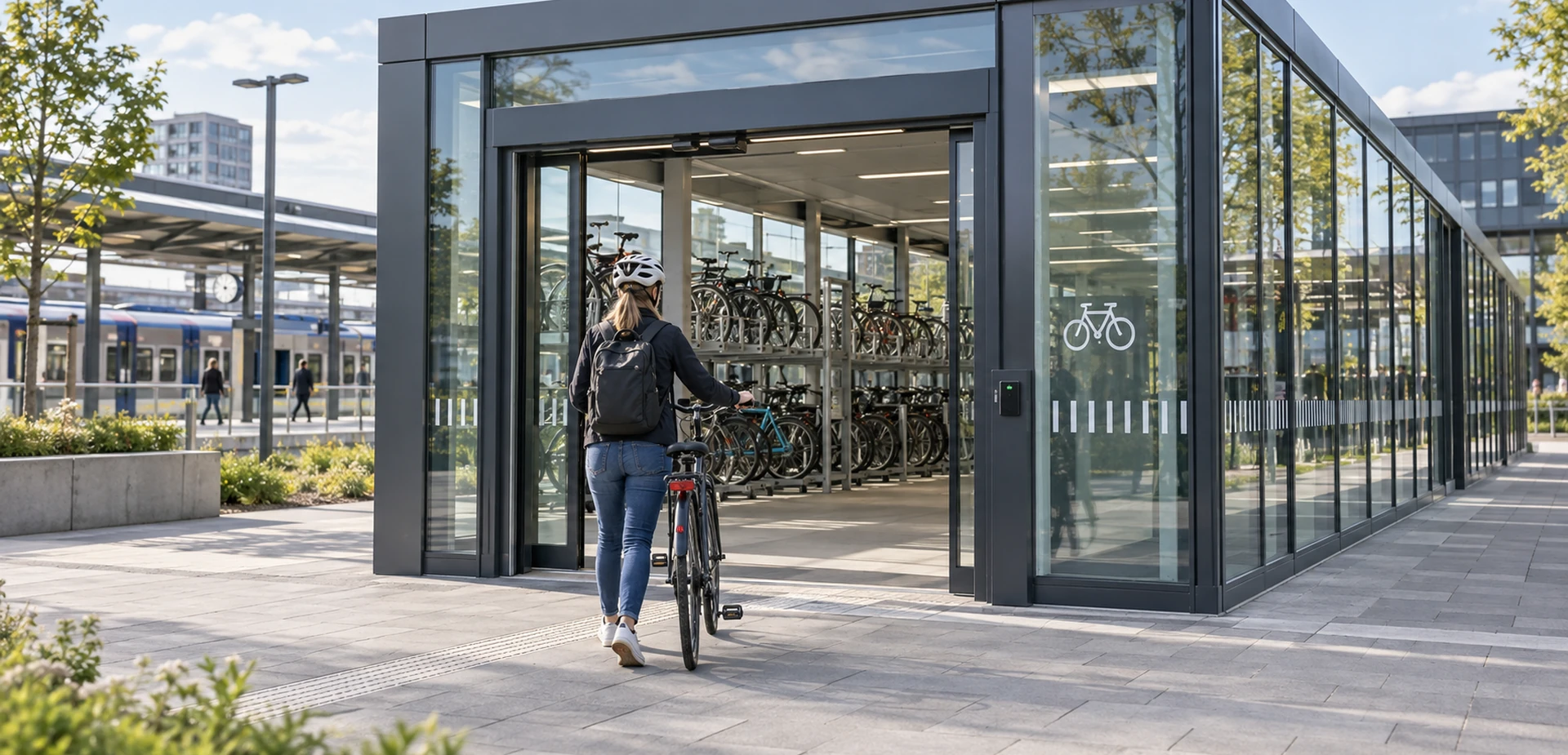
A commuter arriving before the first train, a resident returning late from work and a student collecting a bicycle after an evening class all need reliable access to cycle storage. A locked enclosure provides a physical boundary, but shared keys and permanent entrance codes make that boundary difficult to manage as users change.
Self-service bicycle parking connects an authorised user with the right entrance and an approved access period. Operators can offer access outside staffed hours while retaining control over membership, temporary permissions and credential replacement. The practical objective is convenient entry for legitimate cyclists and a manageable process for everyone responsible for the facility.
CIVINTEC provides access control hardware for these integrated deployments. Our terminals support different identification methods and software development kits, or SDKs, for customer software integration. This gives system integrators a hardware foundation for cycle hubs, shared garages and controlled bicycle rooms. For RFID deployments, high-security DESFire credentials using properly configured AES authentication are an important consideration when addressing card-cloning risks.
A self-service facility should allow registered cyclists to park and retrieve their bicycles without depending on someone opening the door manually. That requires a clear relationship between the user account, the credential presented and the entrance being controlled. The operator also needs a practical way to change permissions when a subscription ends or a credential is lost.
CIVINTEC's self-service bicycle parking garage solution describes how CT9 PRO identification and SDK integration can form part of a customer-managed parking service. A new deployment should define its own operating policies rather than treating the rules of an example garage as built-in terminal functions.
Regular commuters may prefer an RFID card they already carry, while occasional visitors may use a short-term credential issued through the operator's service. Building residents may need access to one bicycle room rather than every garage in a portfolio. Maintenance staff need a separate permission profile so servicing equipment does not create unrestricted public access.
For each group, establish who approves access and how it ends. A registration process that issues a credential but never reviews its permissions creates an administrative problem even if the entrance hardware is functioning correctly. Simple account renewal and replacement procedures are therefore part of the service design.
A bicycle parking access control system can regulate entry to a shared cycle room, an enclosed garage or a designated zone within a larger facility. Permission to enter that area does not automatically reserve a specific rack or identify the bicycle being collected. Those functions need a separate allocation process or additional equipment.
This distinction helps operators choose the right scope. A small residential bike room may need straightforward membership access, while a transport hub may require separate entrances and a customer platform that manages several user categories. In both cases, the entrance should remain understandable to someone approaching it with a bicycle.
RFID remains a practical option for frequent cyclists. Presenting a card is a deliberate action, and it does not depend on a charged phone. However, a card's operating frequency or the presence of a DESFire logo is not enough to establish that the deployed credential is protected against copying.
For secure self-service bicycle parking, the important difference is between accepting a public card identifier and authenticating a protected application. If an installation relies only on the UID, or public card number, reproducing that identifier can undermine the intended identity check. A secure deployment should verify the protected credential rather than trusting the visible identifier alone.
CIVINTEC supports RFID deployments using MIFARE DESFire EV1, EV2 and EV3 credentials with AES encryption. When the protected application, matching keys and authentication workflow are correctly configured, the system can resist misuse based only on copied card identifiers. A copied UID cannot by itself satisfy the cryptographic authentication required by that configuration.
During project planning, confirm the selected card generation, the protected application being used and who is responsible for key provisioning. Agree how cards are issued and replaced, and how the deployed terminals will authenticate them. These details turn a supported security technology into an implemented credential policy.
This protection addresses a particular credential-copying risk. It does not prevent a valid card from being lent to another person, stop someone following an authorised cyclist through an open door or correct an overly broad access permission. Operators should combine credential security with suitable entrance design and clear user rules.
For broader context on credential selection, see our guide to multiple identification technologies. The choice for a bicycle facility should reflect its users and operating model, rather than assuming every supported RFID card offers the same security.
The CIVINTEC CT9 PRO access control terminal has a SAM card-slot design that is relevant to projects using DESFire with a Secure Access Module. A suitable, configured SAM can support cryptographic operations and key protection within the chosen credential architecture. Confirm the applicable terminal version and module configuration during specification.
A slot alone does not mean that a SAM is installed, that the required keys have been provisioned or that AES authentication is active. It also does not establish a certification for the complete parking system. Card-to-terminal authentication and terminal-to-server communication should be reviewed as separate parts of the deployment.
[block1]
A facility does not have to give every cyclist the same credential. CIVINTEC access control terminals offer options that integrators can combine with the customer's registration and permission processes. Supporting several methods gives operators flexibility, but the enabled methods and their security settings still need to be selected for the project.
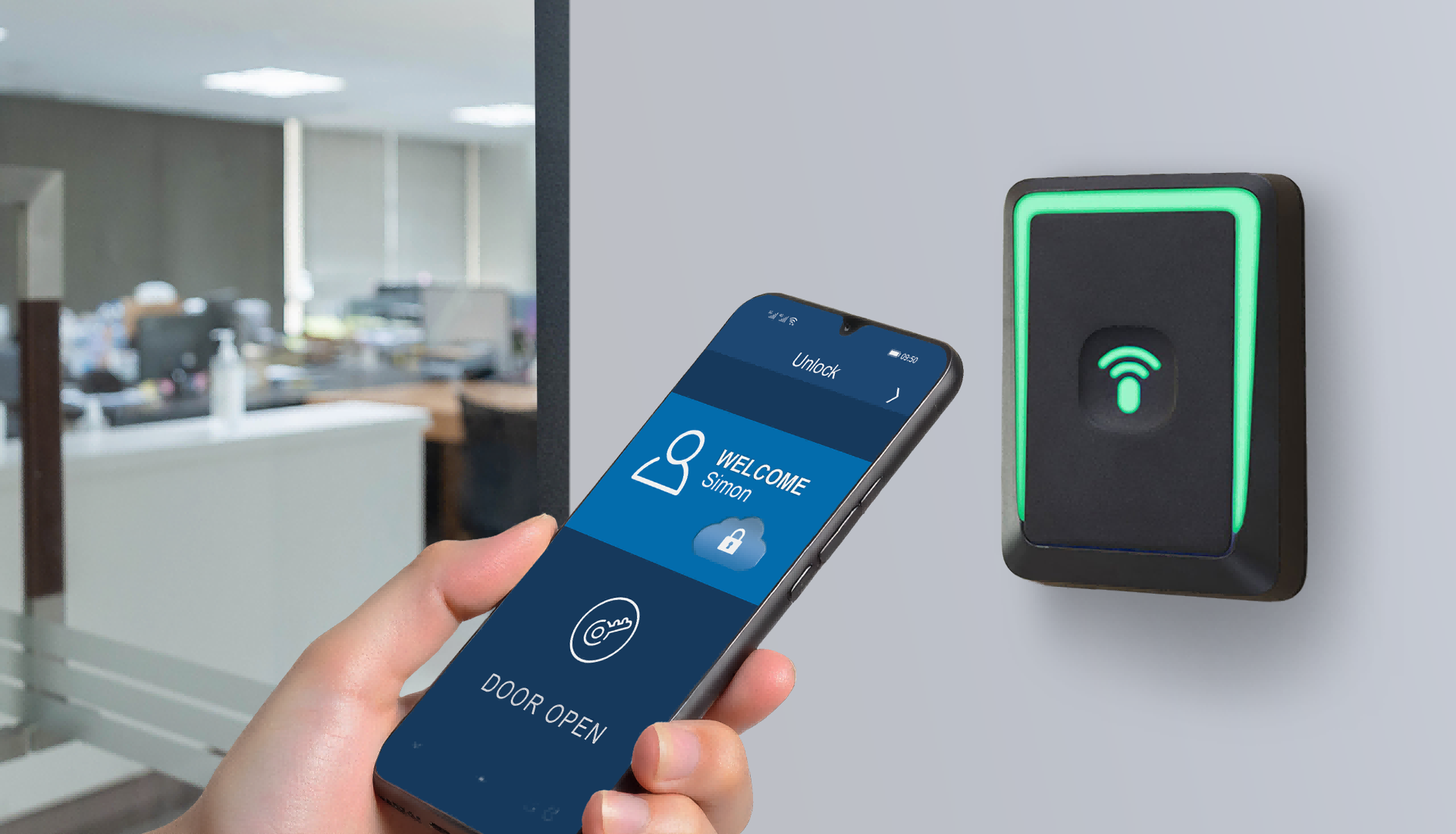
NFC/BLE mobile credentials can suit users who register through an operator's application. A mobile workflow may avoid issuing a separate physical card, while linking access permissions to the customer's account. The compatible phone, application and terminal configuration should be confirmed before the service is offered to users.
Consider how a cyclist will approach the reader while handling a bicycle, bags or gloves. Test credential presentation with representative phones at the installed entrance. The interaction should make it clear whether access was granted, denied or needs another attempt; it should not leave users guessing whether a gate is about to open.
Our article on smart mobile credentials in enterprise access control provides related background. For bike parking, the customer's application should also explain replacement and recovery when a phone is unavailable. Moving a credential to a phone does not remove the need for account management.
An optional QR code module can support a visitor credential workflow when included in the selected terminal configuration. The customer platform should define validity periods, permitted entrances and any usage restrictions. A QR code is not automatically single-use or resistant to forwarding simply because a terminal can read it.
PIN can be another option for an appropriate application. CIVINTEC terminals support basic PIN configuration in standalone mode. More advanced processes, such as dynamic PINs or assigning different PINs to different individuals, depend on the customer's cloud software. Operators should avoid relying on a widely shared, permanent code as their main identity policy.
The SDK is a key part of building self-service bicycle parking around an existing service model. CIVINTEC's Linux-based terminals provide SDK resources for third-party software development and integration. Developers can connect supported terminal functions with the customer's account system instead of treating the entrance as an isolated device.
A bicycle operator may already have registration, subscriptions or booking software. SDK integration provides a route to connect that business logic with credential verification and entry control. It does not mean that the access control terminal includes a complete parking application, a payment processor or a ready-made membership database.
A typical integrated workflow can be organised as follows:
Register the user. The customer platform creates an account and records the information required by the operator's policy.
Approve the parking entitlement. The platform checks the relevant subscription, booking or other approval condition. If payment is required, a compatible payment service handles that transaction.
Associate an access credential. The approved account receives or is linked to an RFID, NFC/BLE mobile or other supported credential.
Define the permission. The platform identifies the allowed entrance and access period, then communicates the required authorisation through the implemented integration.
Verify at the entrance. The terminal processes the presented credential and performs supported control according to the chosen online or configured local operation.
Manage the ongoing account. Renewal, cancellation and replacement are handled through the customer's process, including updates to affected terminals.
The usefulness of this workflow comes from a consistent permission lifecycle. A valid payment record should lead to the intended access entitlement, while an expired or cancelled entitlement should be handled according to the agreed operating rules. Developers should test both successful journeys and the exceptions users are likely to encounter.
The SDK can also support customised screen content on the terminals' 3.5-inch touch screens. Integrators can use supported interface functions to display project-specific text or branding. At a cycle garage, a concise prompt explaining how to present a credential can be more useful than a screen filled with general promotional information.
Feedback should distinguish an expired entitlement from a communication problem where the integration can reliably identify that difference. A cyclist whose membership has ended needs a renewal route; a cyclist affected by a temporary service issue needs assistance. The messages must correspond to actual system states rather than promise access that cannot be granted.
CIVINTEC's CT9 PRO reservation integration solution offers a related example of linking customer booking software with physical access. The bicycle parking application should use its own entitlement rules, entrance mapping and support process.
Choosing hardware starts with how the facility will be used. Decide whether the entrance needs credential-only access, configured photo capture or facial recognition. Consider assistance requirements and the customer's software architecture alongside the physical installation. A more complex terminal is not automatically the best choice for every cycle room.
Selection point | CIVINTEC CT11 | CIVINTEC CT10 | CIVINTEC CT9 PRO |
|---|---|---|---|
Main role | Facial recognition access control terminal | Credential-based access control terminal with camera | Credential-based access control terminal |
Interface | 3.5-inch touch screen; Linux | 3.5-inch touch screen; Linux | 3.5-inch touch screen; Linux |
Credential options | Face; RFID (125kHz & 13.56MHz); NFC/BLE mobile credentials; optional QR code; PIN | RFID (125kHz & 13.56MHz); NFC/BLE mobile credentials; optional QR code; PIN | RFID (DESFire with SAM); NFC/BLE mobile credentials; optional QR code; PIN |
Camera function | Facial recognition; confirm project capture settings | Supported photo capture on RFID card and QR code reads | No built-in camera |
Assistance | VoIP audio intercom | VoIP audio intercom | No built-in VoIP intercom |
Software integration | SDK for customer software integration | SDK for customer software integration | SDK for customer software integration |
CT9 PRO is a relevant starting point for card and mobile-based cycle parking, and it is featured in CIVINTEC's bicycle garage solution. Its touch screen and SDK integration can form part of a customer-managed service. The SAM card-slot design is especially relevant when specifying a DESFire-based credential architecture.
For a straightforward bicycle room, focus on the required credentials and permission workflow first. Where remote assistance is needed, include a separate support arrangement rather than assuming CT9 PRO contains a camera or VoIP intercom. Confirm the selected connectivity and QR code options with the model specification.
The CIVINTEC CT10 access control terminal combines credential-based access with a camera and VoIP audio intercom. Supported photo capture on RFID card and QR code reads may be relevant where the operator requires additional event context. The triggering, storage and transfer configuration should be agreed for the project.
CT10 verifies presented credentials rather than identifying users by face. Its camera is useful where configured RFID or QR code reads need an associated image record. Choose it for that credential-based workflow, and define the event triggers and record-handling process as part of the project.
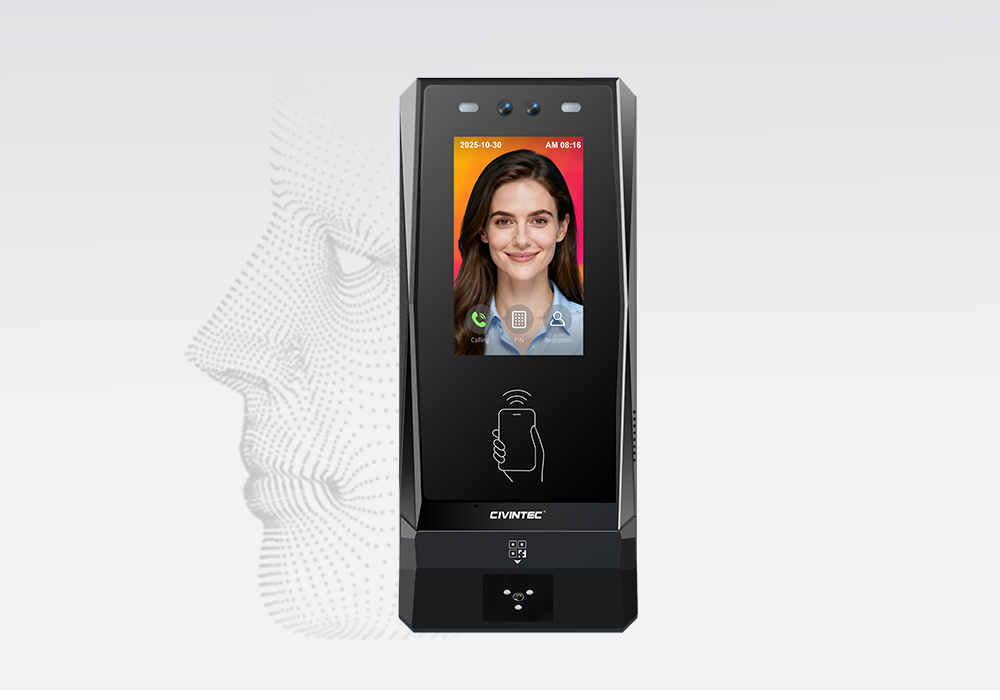
The CIVINTEC CT11 access control terminal provides facial recognition alongside other supported identification options and VoIP audio intercom. It may be considered when a project specifically requires biometric identification rather than credential-only access. Its suitability should be evaluated for the actual user population and entrance conditions.
For public cycle storage, decide whether biometric identification is necessary and appropriate before selecting it. Include user enrolment and information-handling requirements in that decision. Facial recognition is an option within a designed service, not a requirement for every self-service bicycle parking installation.
Confirm the ordered configuration before deployment. QR code reading and network options depend on model selection. CT9 PRO's SAM slot does not establish that a module is installed or commissioned. Basic standalone PIN configuration and advanced customer-platform PIN workflows should remain distinct in the project specification.
A campus or property portfolio may operate several bicycle rooms with different user groups. Centralised customer software can help administrators manage these locations through a consistent interface, while preserving the permission boundary of each room. One user may have access to the nearest commuter hub without receiving rights to every cycle storage area.
Assign clear names to entrances and terminal identifiers so support staff can determine where a problem occurred. The integration should associate permission updates and access events with the correct location. This becomes particularly useful when a lost card needs to be withdrawn from several entrances.
Event records can help an operator review credential activity and investigate reported access issues. They should be described accurately: a credential event does not independently identify a bicycle, establish rack occupancy or prove that every person physically left the enclosure. Reliable occupancy information requires an appropriate counting or allocation method.
Our article on cloud centralised access control covers the broader relationship between terminal communication and customer platforms. For bicycle parking, start with the events needed to operate the service and avoid collecting unrelated data simply because a system can store it.
Smart access control for secure bike parking must work with the enclosure itself. A reader cannot compensate for a door that does not close properly or an opening that cyclists routinely hold for other people. Review the entrance width, lock arrangement and circulation space with the installation team, including how users handle larger bicycles.
Where appropriate interfaces and external equipment are selected, access control can be integrated with a door or gate controller and door-position monitoring. The terminal provides supported control signals; the external controller remains responsible for the gate mechanism and its safety functions. Free egress and emergency arrangements should be designed separately for the site.
Operators also need a response when a valid user cannot gain entry. Publish a support route, define who may approve an exception and record any temporary permission issued. Leaving the entrance permanently open or distributing a shared master code undermines the original purpose of controlled access.
For network interruptions, agree whether configured local permissions will be used and which functions remain available. An offline terminal cannot receive a new server-side revocation until communication and synchronisation are restored. Loss of network connectivity and loss of electrical power are different conditions and need separate planning.
A useful brief for a bicycle parking access control project explains the service before listing hardware. This helps the integrator select a terminal and develop the customer software connection around real requirements. It also makes the evaluation process more meaningful than checking whether a device recognises a card in isolation.
Describe the user groups, access hours, entrances and any subscription or booking rules.
Identify the preferred credentials and the DESFire/AES authentication policy for secure RFID use.
Specify the customer platform that will manage accounts, payment status and permission validity.
Confirm networking, the installed entrance equipment and the responsibilities of each supplier.
Agree replacement, cancellation, assistance and exception-handling procedures.
Test representative user journeys, including expired permissions and temporary service interruptions.
During evaluation, include cyclists rather than testing only at an engineering bench. Check that someone can identify the reader, understand the feedback and move through the entrance without an awkward interaction. These practical observations help shape a service that is usable at the times it is intended to operate.
[block2]
Self-service bicycle parking works best when convenient credential presentation is connected to a clear permission lifecycle. DESFire credentials with correctly configured AES authentication can address card-identifier copying, while suitable entrance design and operating processes address other access risks. Neither part should be treated as a substitute for the other.
CIVINTEC CT11, CT10 and CT9 PRO offer different access control hardware options for these projects. With SDK-based customer software integration, operators can connect registration and approved entitlements to controlled entry without assuming the terminal contains the entire parking service. Define the required workflow, select the appropriate configuration and evaluate the complete user journey before rollout.
Initiate Technical Consultation to discuss your bicycle parking project with CIVINTEC.
Explore Product Specifications for CIVINTEC access control terminals.


 Home >
  Share
Share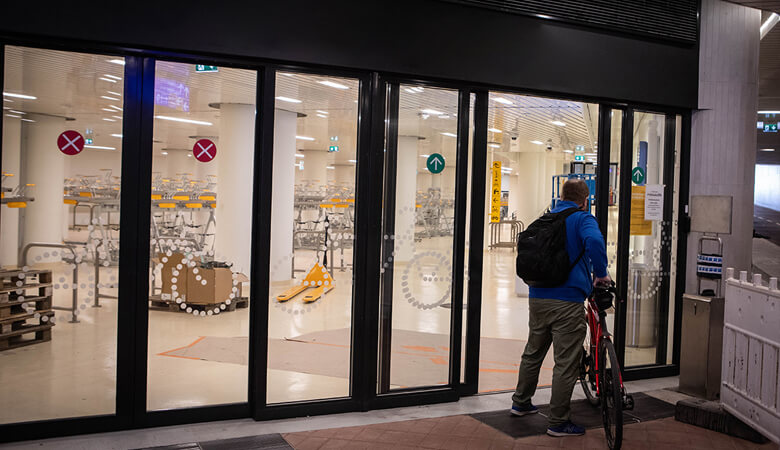



 Contact Us