

-

Applications

Industries

 OEM & ODM Service
 Development Service
 Download
 Technical support
 Warranty & RMA
 FAQS
FAQS
 My Community
 Who Is CIVINTEC
 Why CIVINTEC
 News & Express
 Cooperation




 Sep 29, 2026
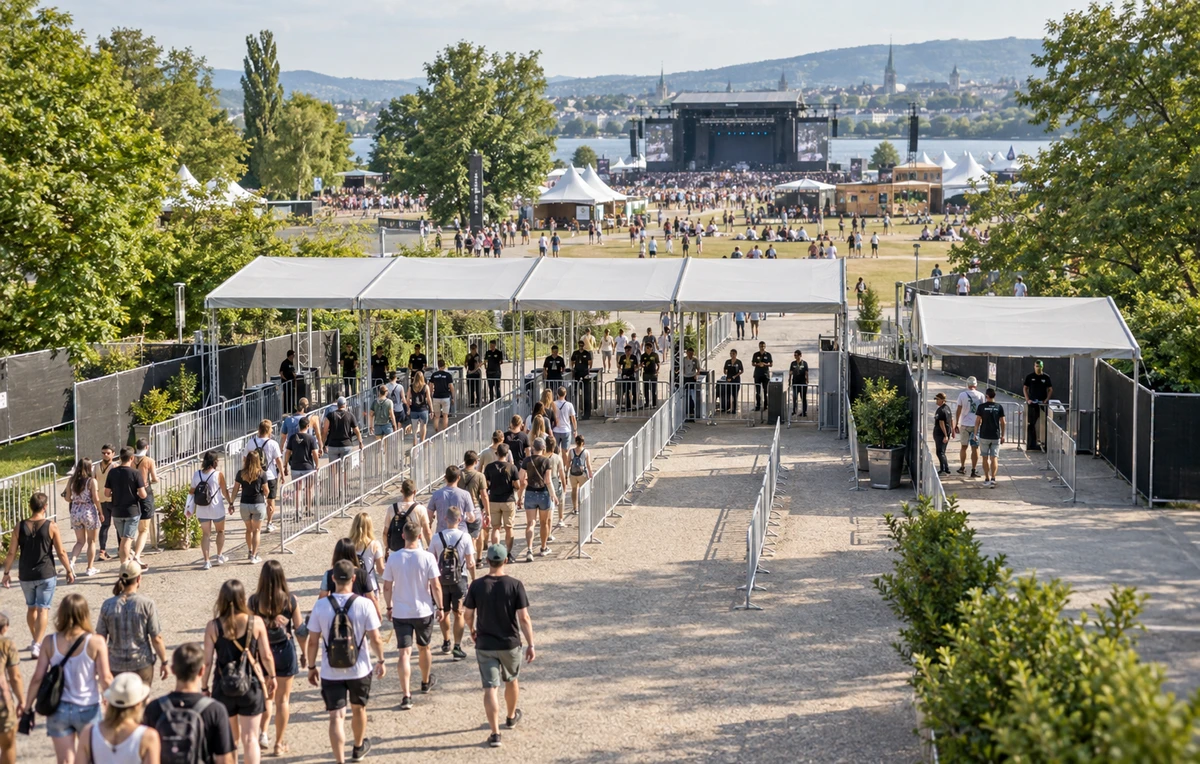
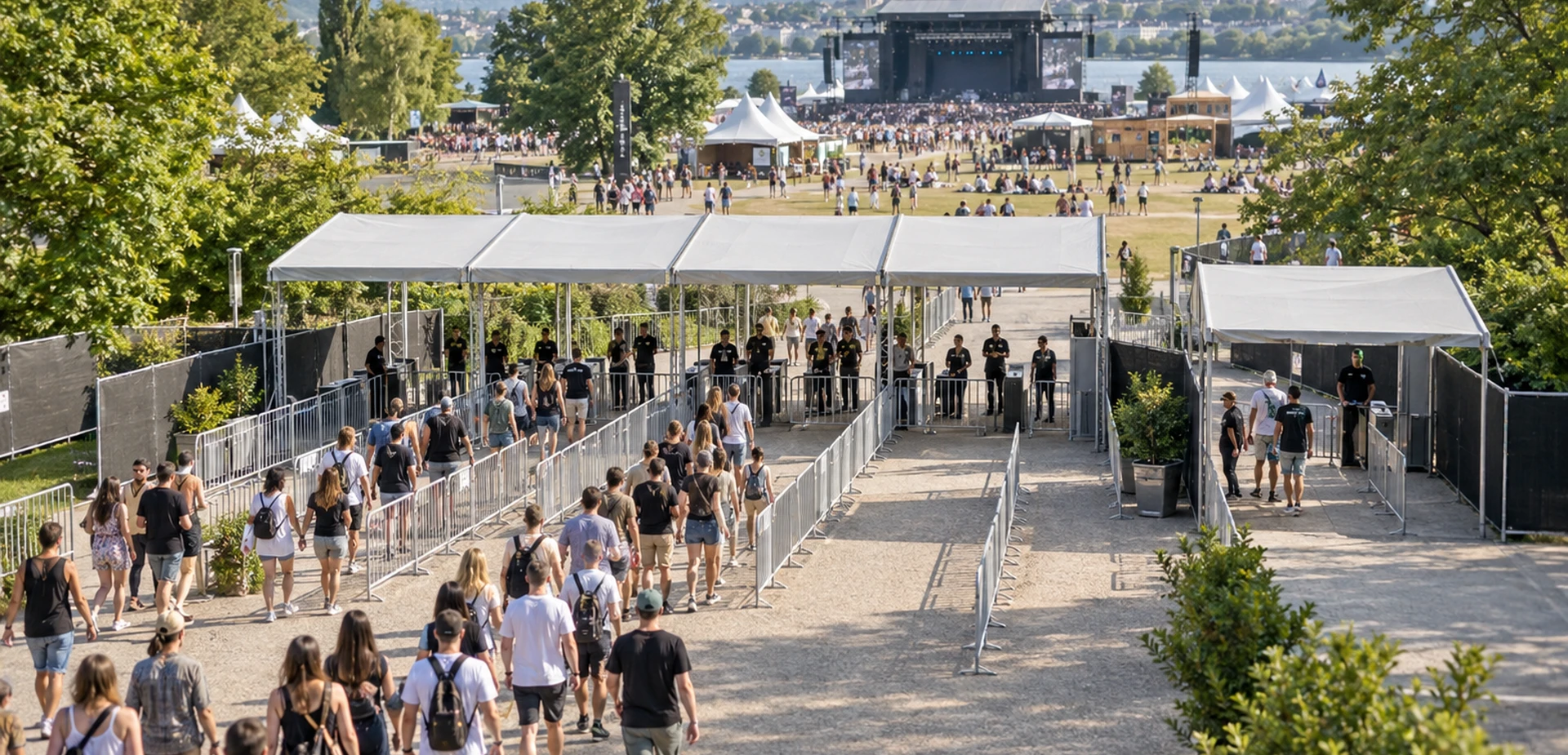
A festival can have one ticketing platform and still fail at its gates. Arrivals surge after transit drops off passengers. A VIP invitation is presented at the public entrance. A vendor reaches a service gate after its delivery window. Staff at different entrances make different exceptions because they cannot see the same current permissions. The problem is not simply reading a code quickly; it is coordinating decisions across a temporary site while keeping people moving safely.
An outdoor event access control design connects each physical entrance to a defined group, credential rule, operating period, and exception route. CIVINTEC supplies access control readers and terminals that can verify RFID, NFC/BLE mobile credentials, QR codes, or PINs according to the selected model and configuration. The organizer's ticketing or management platform remains responsible for issuing entitlements and deciding who may enter which area. Together, these components can make entry more consistent without pretending that a reader alone manages queues or counts everyone on site.
The aim is practical: give spectators a clear route, give crew and vendors the permissions they need, and give the operations team a usable view of credential events at each gate. The CIVINTEC outdoor events case study shows how readers can support event check-in at turnstiles and main gates. This guide takes the next step: how to plan several entrances as one coordinated event access control system.
A multi-entrance venue is not one doorway repeated several times. A public gate, accessible entrance, production route, VIP lane, and emergency access point have different users and different operating rules. Draw the venue as a set of zones before selecting equipment. For each entrance, specify its direction of travel, expected user groups, ticket types, opening hours, physical barrier, network connection, power source, and staffing arrangement.
It helps to distinguish the public perimeter from internal boundaries. A valid general-admission ticket may authorize entry to the site but not to backstage, a hospitality enclosure, equipment storage, or a restricted court. A contractor badge may open a delivery gate yet be invalid at a guest entrance. A wristband used for re-entry may need a different rule from a single-use spectator code. These are policy choices in the event platform, not hidden properties of a particular reader.
The first operational question is where a person should go when the wrong entrance is chosen. A denied scan should lead to a legible instruction or a staffed help point, not an improvised manual override. Put wayfinding, barrier layout, and accessible routes on the same site drawing as the devices. If crowding develops upstream of the reader, changing the reader alone will not restore flow.
The broader CIVINTEC access control application describes the hardware building blocks. At an outdoor event, those blocks are useful only when entrance policy, temporary infrastructure, and event staff roles are defined together.
Mixed credentials are valuable because an event has mixed users, not because every guest should be offered every method. Select the simplest route for each audience and test it in the form they will actually carry on arrival.
Public ticket holders: A QR code on a phone or paper ticket can be practical when the chosen reader has the QR code module and the ticketing system validates the code. Define the valid date, gate, entry count, and re-entry rule in that system.
Crew and recurring staff: RFID badges or NFC/BLE mobile credentials can suit repeated entry across a multi-day build, show, and dismantling period. Assign access by role and shift rather than sharing a master credential.
VIP guests and invited partners: A dedicated lane can use a pre-issued credential, but hospitality access should not automatically open production areas. Check the escalation path for a changed guest list.
Vendors and service vehicles: Use a separate arrival window and service route. Vehicle clearance and a driver's personal credential are distinct checks; the reader does not identify a vehicle or its passengers without the necessary external process.
Temporary exceptions: A basic PIN may be configured at a suitable terminal. Individually assigned or dynamic PIN workflows need the customer's cloud software and an approval process; avoid a permanent shared code at an unstaffed gate.
For printed and phone-displayed QR codes, test under direct sun, shade, rain cover, and night lighting. Screen brightness, damaged paper, scanner angle, and the way attendees present a code all affect the real queue. A code that scans in an office is not proof that it will work at the busiest gate. The CIVINTEC guide to QR code access is useful background on the credential, while the event plan must define the actual redemption rules.
The selected outdoor event access control system should make credential changes understandable. If a ticket is upgraded, refunded, duplicated, or reassigned, the customer platform must decide what happens to its old authorization and how quickly every relevant entrance receives the change. A visible procedure for these cases matters more than a long list of supported credential formats.
At each entry point, a reader captures the presented credential; a controller or terminal and the configured system determine whether access is allowed; the barrier then responds. A CIVINTEC Cidron reader can work with a third-party controller through the interfaces supported by the selected model. CIVINTEC terminals can serve as networked entry devices with local control outputs and integration interfaces. Neither arrangement makes ticket sales, refunds, guest identity verification, or staffing decisions automatic by itself.
A useful gate transaction has four parts: the credential is read, the relevant rule is applied, the barrier receives an authorized command, and the event is recorded with a gate identity and time. The visitor also needs intelligible feedback. An opening barrier with no clear rejection path can turn a small scan failure into a queue or an unsafe movement toward an adjacent lane.
At a festival, the most common exception is often legitimate: a guest is early, at the wrong gate, holding a code with low phone brightness, or using a pass that has not yet been synchronized. Plan the help-desk workflow in advance. Decide which staff can inspect a ticket, who may change a permission, and how a manual admission is recorded. A local override without an audit trail can make later reconciliation harder, especially when several entrances are open at once.
Automation should reduce repetitive checks, not remove human judgment from safety and customer-service decisions. A staffed accessible lane may need more time per interaction than a public turnstile. A crew gate can prioritize correct role separation over rapid throughput. This is why an event access control system should be evaluated entrance by entrance rather than by a single advertised scan-speed figure.
[block1]
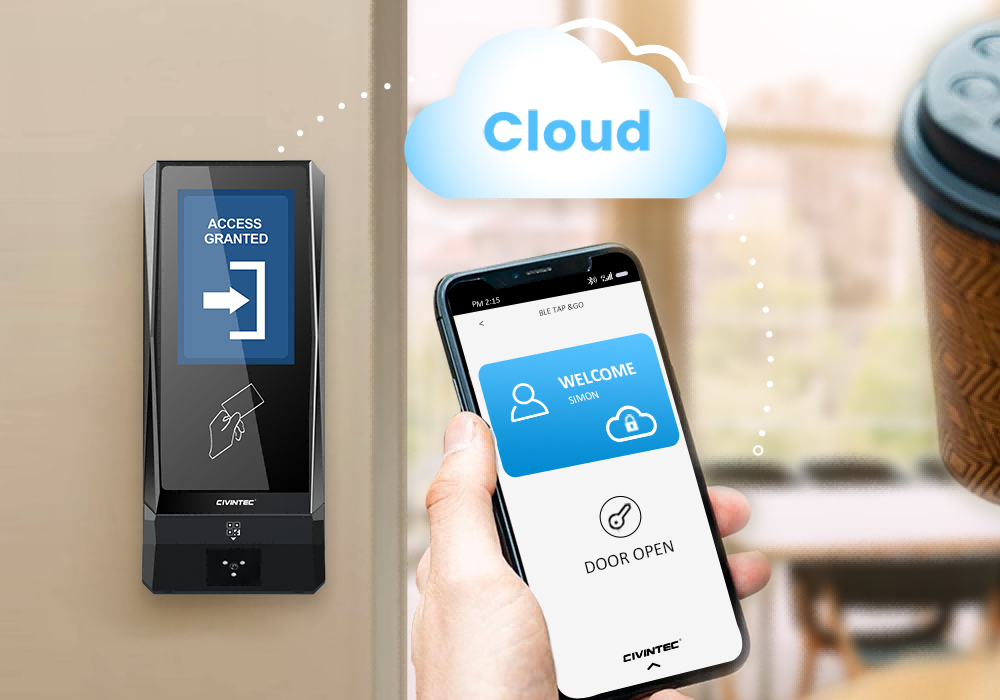
The cloud layer's main value is coordination. With an integrated customer management platform, organizers can define credential entitlements, associate them with entrance groups, distribute updates, and review access events from more than one location. CIVINTEC network-capable terminals provide interfaces for this architecture; the organizer or integrator supplies the software logic, hosting, user administration, and monitoring workflow.
Consider a guest whose evening ticket becomes a weekend pass. If the east gate knows the new entitlement but the west gate does not, the problem is not at the guest's phone. It is a mismatch in authorization state. Specify how changes propagate, whether the event relies on a live server decision or configured local permissions, and what happens if a device loses its connection. The CIVINTEC cloud access control overview discusses centralized visibility; for a temporary venue, the integrator should translate that idea into testable synchronization and operator procedures.
Gate identifiers and time settings must be consistent. An event record can tell staff which credential was presented at which device, but it cannot independently prove that one person passed, that a companion did not follow, or that a ticket holder physically remained inside. Occupancy estimates require an entrance/exit design, accurate sensing or counting, and reconciliation of exceptions. Do not promote scan totals as live crowd counts without that additional system.
When the network fails, distinguish local authorization from cloud authorization. A terminal configured for local verification may continue using permissions already stored on it; it cannot receive a fresh cloud revocation while disconnected. An online-only workflow may instead need a staffed contingency. Power loss is a separate issue requiring a venue-approved power and barrier plan. Test the exact selected model, software settings, and recovery sequence before guests arrive.
One model need not serve every gate. The CIVINTEC access control reader range is relevant where a controller-based architecture and compact credential presentation suit a turnstile. The case study on outdoor event attendance discusses Cidron readers in that role. Confirm the chosen reader's QR, NFC/BLE, RFID, PIN, controller-interface, and mounting configuration rather than assuming every family member has the same options.
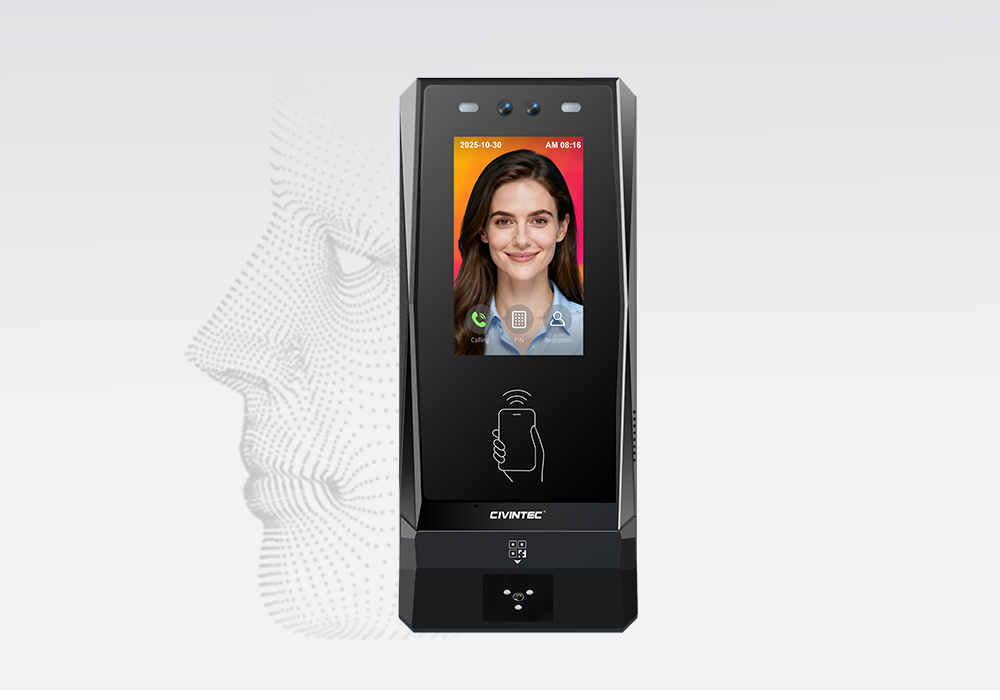
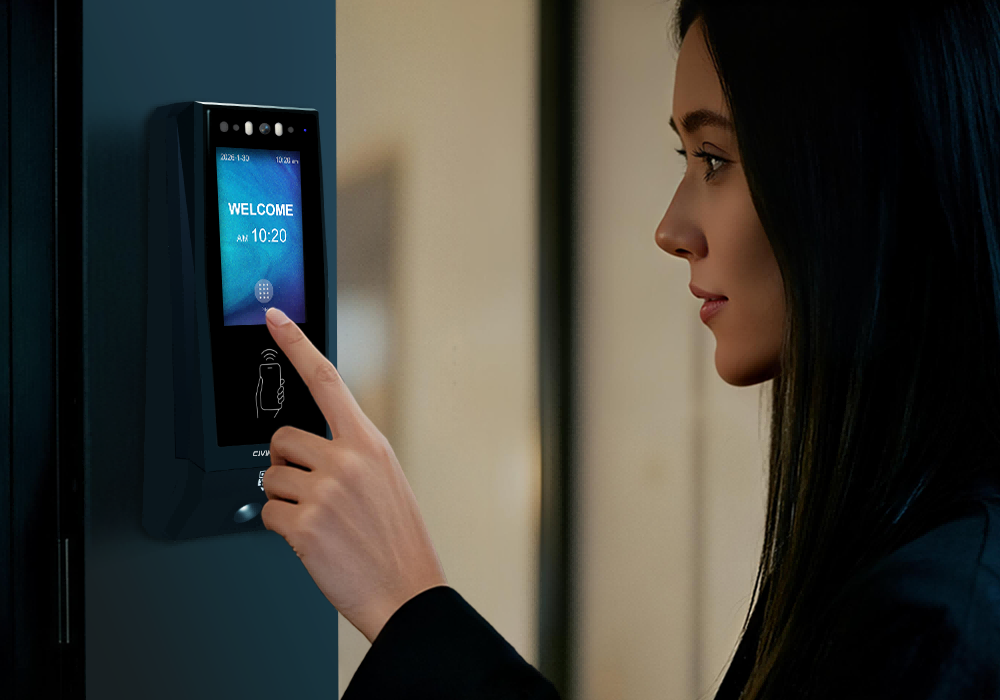
The CIVINTEC CT11 is appropriate to consider where a staffed or supervised entrance needs the option of facial recognition and VoIP audio assistance in addition to other credentials. Facial enrollment, consent, privacy rules, presentation conditions, and site policy require a separate decision. A face-capable terminal is not a substitute for physical lane separation, and recognition should not be presented as mandatory for every spectator.
The CIVINTEC CT10 is a credential-based terminal with a camera and VoIP audio intercom. Its camera may support configured photo capture on RFID card and QR code reads; it is not a facial-recognition device or a video intercom. It may be considered for a service or assistance point where credential checks and a voice route to an operator are useful. Verify the purchased variant and capture configuration before specifying an event-recording workflow.
The CIVINTEC CT9 PRO is a credential-based terminal for access and cloud integration without a built-in camera or VoIP intercom. Its SAM slot can be relevant to a properly specified DESFire deployment, but a slot alone is not an installed or configured security module. Where a gate needs voice assistance, provide a separate communication path. The sports court case study illustrates CT9 PRO in a cloud-connected facility-control setting; an event deployment still needs its own ticketing and temporary-site design.
| Selection point | CIVINTEC CT11 | CIVINTEC CT10 | CIVINTEC CT9 PRO |
|---|---|---|---|
| Best fit to evaluate | Supervised priority or assistance gate | Credential gate with camera-supported event capture and voice assistance | Credential gate where display and platform integration matter |
| Identification | Face; RFID; NFC/BLE mobile credentials; optional QR code; PIN | RFID; NFC/BLE mobile credentials; optional QR code; PIN | RFID (DESFire with SAM); NFC/BLE mobile credentials; optional QR code; PIN |
| Camera and assistance | Facial-recognition cameras; VoIP audio intercom | Supported photo capture on configured RFID/QR reads; VoIP audio intercom | No built-in camera or VoIP intercom |
| Integration boundary | Customer platform defines tickets, permissions, and gate policy | Customer platform defines tickets, permissions, and capture workflow | Customer platform defines tickets and permissions; confirm exact variant |
This is a selection guide, not a claim that every option is standard. QR modules, networking methods, SAM installation, reader-controller security, environmental mounting, and software interfaces must be confirmed for the ordered versions. Decide which gate benefits from a terminal display, which needs staff assistance, and which is better served by a simple reader and controller.
For repeat staff, production, or restricted-zone badges, a DESFire EV1/EV2/EV3 credential with an AES-protected application can help resist misuse based only on a copied card identifier when keys and authentication are correctly configured. Reading a card UID alone does not activate that protection. The card-to-reader authentication, reader-to-controller interface, terminal-to-server connection, and credential-issuance process are separate links in the security design. Review each one for the chosen installation.
For event QR passes, the useful control is not the word "dynamic" on a sales sheet. The organizer must define validation at the backend, expiry, permitted gates, entry count, cancellation, and whether re-entry is allowed. A screenshot or forwarded code can still be misused if those rules are weak. NFC/BLE mobile credentials likewise require a defined issuance and revocation process, supported devices, and a fallback for an attendee whose phone is unavailable.
No credential system alone stops tailgating. A second person can move through a barrier after a valid scan unless the lane geometry, turnstile, gate timing, sensors, staff supervision, or another physical control addresses it. Anti-passback can enforce configured credential-sequence rules; it does not prove that exactly one person crossed. For densely attended events, work with the venue's safety team on barrier behavior, accessible routes, and emergency operation rather than translating access logs directly into physical crowd claims.
Gate staff need a small number of reliable signals: which entrance is seeing repeated denials, whether a device is connected, whether the barrier is responding, and which exception queue needs help. A centralized platform can organize these events when devices, controller outputs, and customer software are integrated. It should distinguish a denied credential from a failed scan, a manual override, a device outage, or a lane closed by operations.
The central dashboard should display an entrance name that matches the site map. A vague device ID is difficult to use when a supervisor has to send a technician to a specific fence line. Give every terminal a physical label and record its network path, power circuit, barrier interface, and support owner. A short escalation matrix is more helpful than a long list of alarms with no assigned response.
Event data also has limits. A successful credential event records a system decision and time, not a verified headcount. If management needs throughput by five-minute interval, it must validate how duplicate scans, re-entry, manual admits, and closed lanes are handled. If it needs total occupancy, it must account for exits and physical passage. The event platform can support these calculations, but they should be tested against observed movement before the figures are used for operational decisions.
Cloud-based control can help on temporary sites with distributed entrances, but the network design must be deliberate. Check the selected terminal's supported Ethernet, Wi-Fi, or cellular variant, available coverage, latency requirements, and what staff do when the server cannot be reached. Do not describe a 4G-capable product as a guarantee of coverage at a crowded venue.
An event entrance is busiest in a short window before the start. Model that peak using the expected arrivals per gate, the physical width of each lane, the proportion of phone versus wristband users, bag-check time, accessibility needs, and the likely fraction requiring help. Do not use an unverified device throughput number as the whole calculation. A single unresolved ticket at the front of a narrow lane can erase any theoretical gain in reading speed.
Run a site trial with the actual barrier and credential mix. Include a bright phone display, a dim phone display, printed codes, wet wristbands if relevant, gloved staff, noisy surroundings, and people approaching from the wrong direction. Place the scanner where the guest can present the credential naturally without crossing another lane. Position exception staff downstream or to the side so they do not stop the main flow.
Before doors open, decide how staff will announce a temporary lane closure and redirect guests. If one public entrance is overloaded, the software must be able to authorize the intended ticket group at an alternate gate before signage changes. The venue must also confirm that a change in ordinary admission routing does not interfere with approved emergency routes. These operational choices are the difference between a technically connected site and a usable outdoor event access control system.
Temporary infrastructure deserves a formal acceptance check. A reader that worked on a bench may be connected to a different controller, barrier, power source, or network segment at the venue. Test each installed lane as a complete path and record the result.
Approve the entrance map. Name public, VIP, crew, service, accessible, re-entry, and restricted points. Assign one owner to each rule and define which zones remain staff-controlled.
Agree on credential policy. Confirm ticket issue and refund logic, re-entry, group passes, staff shifts, vendor windows, basic versus individually managed PIN use, and procedures for lost credentials.
Select and configure the hardware. Confirm the ordered CIVINTEC reader or terminal variant, QR option if needed, controller link, power, weather protection, enclosure, barrier interface, and accessible mounting position.
Connect the customer platform. Map entitlement groups to actual entrance IDs. Test issue, upgrade, denial, revocation, manual admit, and a change made while several gates are open.
Exercise failure scenarios. Disconnect the network, restart a device, interrupt power in a controlled test, and restore service. Verify what continues locally, what stops, and how delayed events or permissions are reconciled.
Rehearse with gate staff. Have staff scan real test credentials, manage a wrong-gate case, direct an accessibility request, close a lane, and record an exception. Review signage and radio procedures with operations and safety teams.
Review the first operating window. Compare system events with observed queues and staff reports. Correct confusing signs, a misconfigured entitlement, or a weak exception route before the next arrival peak.
The same discipline applies if a venue is used for recurring sports events. CIVINTEC's sports court access case study provides a related facility-management example, but a mass-event crowd pattern requires its own gate-capacity and exception testing.
[block2]
Effective outdoor event access control is a site plan, a credential policy, a physical lane, and a working integration—not a collection of isolated scanners. CIVINTEC readers and terminals offer choices for QR, RFID, NFC/BLE mobile credentials, PINs, and model-specific assistance features. The organizer's software and operating team connect those choices to ticket validity, entrance permissions, exception handling, and cross-site visibility.
For the next festival, outdoor exhibition, or sports venue, start with the entrance map and the busiest arrival window. Then match each lane to the hardware and workflow it actually needs. Initiate a technical consultation with CIVINTEC to review entrance types, system interfaces, and selected configurations, or explore access control terminal specifications before building a device shortlist.


 Home >
  Share
Share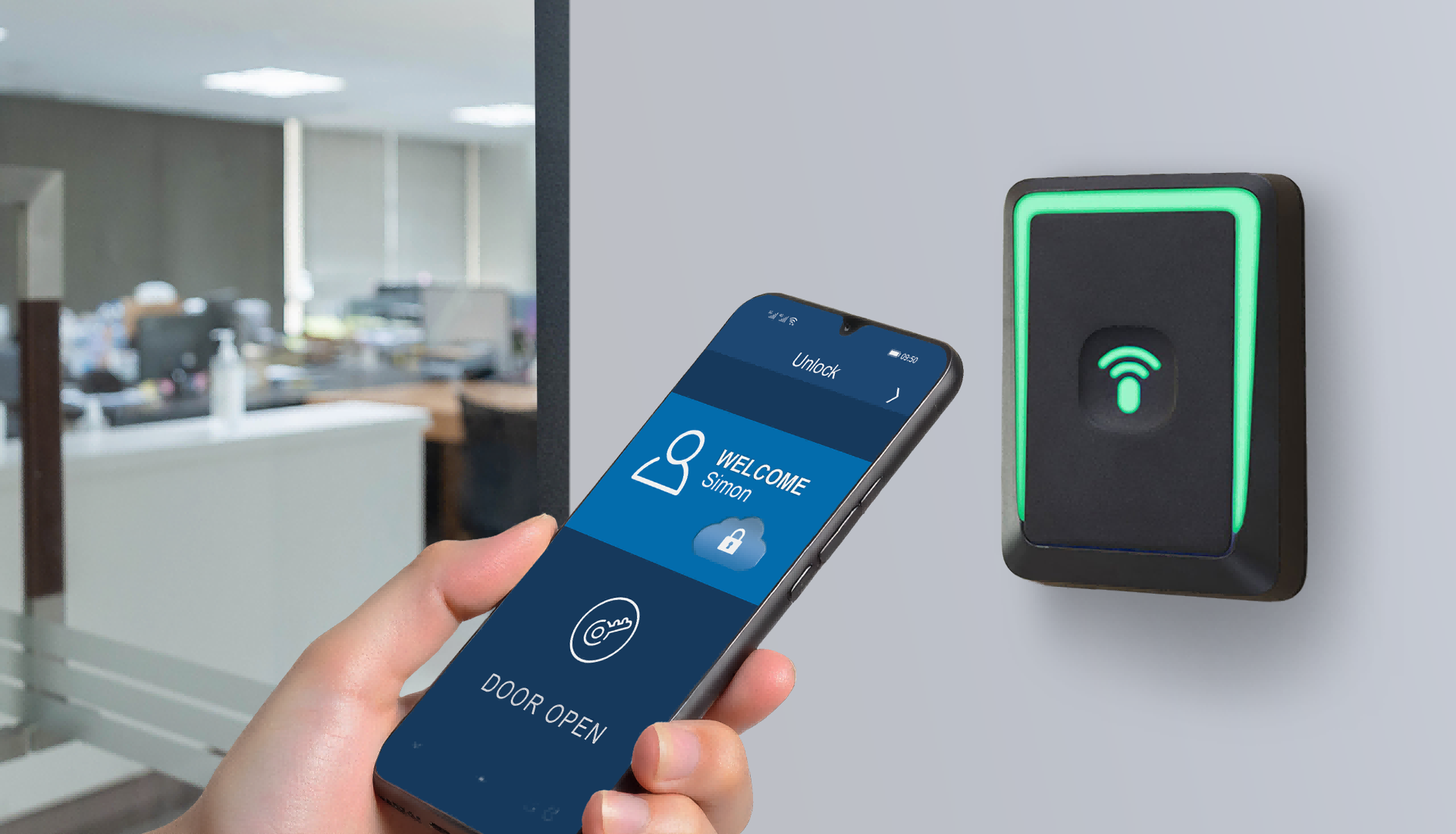




 Contact Us