

-

Applications

Industries

 OEM & ODM Service
 Development Service
 Download
 Technical support
 Warranty & RMA
 FAQS
FAQS
 My Community
 Who Is CIVINTEC
 Why CIVINTEC
 News & Express
 Cooperation





 Sep 10, 2026
A factory parking lot rarely serves only employees. Delivery vehicles arrive before reception opens, contractors need temporary access, visitors attend scheduled meetings, and EV drivers may use charging bays beside staff parking. Each group has a legitimate reason to enter, but none should automatically receive the same permissions.
A Car Parking Access Control System connects credential verification with defined entry rules and controlled barrier operation. For manufacturers, its value extends beyond opening a gate: it helps separate parking access from production access, reduce dependence on shared codes, and create usable records for security and facilities teams.
CIVINTEC provides access control hardware for these integrated environments. Its approach combines multiple credential options, configurable terminal operation, and customer software integration. For RFID-based entry, a particularly important protection is the use of MIFARE DESFire EV1/EV2/EV3 credentials with AES encryption. Properly implemented, this makes access depend on cryptographic authentication rather than a card number alone.

An employee arriving for a night shift and a supplier making a morning delivery should not share an unrestricted parking credential. Their destinations, access periods, and approval processes are different.
Before choosing equipment, create a permission map that identifies who needs access, where they may go, and when their authorization should expire.
User group | Suitable credential approach | Permission boundary |
|---|---|---|
Employees | AES-protected DESFire cards or mobile credentials | Assigned parking areas and approved schedules |
Contractors | Individually issued cards, mobile credentials, or temporary QR codes | Approved dates and designated entrances |
Delivery drivers | Booking-linked QR codes or other approved credentials | Delivery entrance and allocated arrival window |
Business visitors | Temporary QR codes or individual PIN codes | Visitor parking without automatic production-area access |
EV charging customers | Session-linked credentials through integrated software | Charging facilities and eligible amenities only |
These are planning examples, not fixed software functions included with every terminal. The customer platform maintains the relevant employee, booking, contractor, or charging information and translates it into access permissions.
For factory teams, one distinction is essential: permission to park does not establish permission to operate machinery or enter a production building. Those decisions require separate authorization policies. Likewise, the terminal verifies assigned permissions; it does not independently assess whether a contractor has completed safety training.
Consider a planning example: a manufacturer shares its front entrance among employees, customer visitors, and delivery drivers, while charging bays sit near a staff building. The shared entrance does not require a shared permission profile.
An employee credential can authorize staff parking without opening the loading yard. A customer booking can authorize visitor parking without granting production access. A carrier credential can direct an approved delivery to the logistics entrance without becoming a reusable staff badge.
When a person has more than one role, retain the distinction. An employee charging a personal vehicle does not need the same rules as an external charging customer. A maintenance contractor visiting regularly still needs an authorization end date.
This approach also clarifies responsibility: facilities teams define parking zones, logistics teams approve delivery arrangements, and designated administrators issue the resulting permissions. Physical signs and lane arrangements should reinforce those decisions, so an accepted credential leads to the intended destination.
An integrated parking access transaction has several distinct stages:
Present a credential. The driver uses an approved RFID card, NFC/BLE mobile credential, QR code, or PIN.
Verify the credential. The configured reader or terminal processes the selected authentication method.
Check authorization. The server, or the terminal in a configured local mode, checks the applicable permissions.
Control the entrance. An approved request activates the appropriate control output to the barrier system.
Record the event. Access information supports operational review and subsequent synchronization where applicable.
This separation matters when diagnosing problems. A readable credential may still be unauthorized because it has expired or belongs to a different parking area. Conversely, a valid reservation should not authorize an unverified credential.
CIVINTEC's access control terminals and hardware solutions describe the broader architecture connecting credentials, terminal control, and centralized management. Factory buyers should use that architecture to define responsibilities between their hardware supplier, parking software provider, and barrier installer.
For a manufacturer, a copied parking badge can undermine otherwise well-managed access rules. If an unauthorized person can reproduce the identifier accepted at the gate, adding more schedules or reporting tools will not address the underlying weakness.
CIVINTEC's RFID credential protection uses MIFARE DESFire EV1/EV2/EV3 with AES encryption. The important point is not simply that the terminal recognizes a DESFire card. The installation must use its protected application and authentication capabilities.
A system that authorizes entry only from a publicly readable card identifier checks a label rather than cryptographic proof. Reading a DESFire card's UID alone does not activate the protection available from its secure applications.
In an AES-configured deployment, the card and authorized reading system use secret keys for mutual authentication. Copying a visible identifier does not provide the key needed to complete that process. The system checks cryptographic proof rather than accepting a matching number alone.
For procurement, ask a precise question: “Will this parking installation authenticate the protected DESFire application, or will it only read the card serial number?” The answer is more meaningful than a general claim of RFID compatibility.
AES supplies the cryptographic basis for protected communication when the application is configured to use it. Authentication establishes that the communicating parties possess the required secrets, while the selected secure messaging mode protects the associated data exchange.
Application-level authentication and AES-based secure messaging make a properly secured transaction different from presenting a reusable, unprotected number. Select the protected application and communication settings as part of commissioning; simply enabling a card reader is not sufficient.
This is how anti-cloning protection becomes relevant at a factory gate: an unauthorized copy that reproduces only readable information cannot satisfy the required cryptographic verification. A barrier should receive an authorization command only after the credential passes verification and the applicable access rules.
Strong card technology still needs disciplined implementation. During commissioning, the integration team should establish controlled key provisioning, appropriate application permissions, and a documented process for credential replacement.
Keep test credentials separate from production credentials. Restrict who can issue cards or modify security settings. Where the selected architecture supports diversified keys, evaluate that approach rather than unnecessarily sharing one operational key across a large credential population.
Compatibility across DESFire EV1, EV2, and EV3 should not be interpreted as identical configuration requirements or automatic activation of every generation-specific feature. Confirm the credential generation, AES application configuration, and key management responsibilities for the selected installation.
AES-protected DESFire credentials address unauthorized duplication and credential communication risks. They do not prevent someone from lending a genuine card, stop a vehicle physically following another through an open barrier, or correct an administrator's mistaken authorization.
A complete design therefore combines cryptographic protection with individual permissions, lost-card revocation, appropriate lane controls, and event review. Card-to-reader protection also does not automatically secure every downstream connection. Terminal-to-server communications and any external reader links require their own suitable security configuration.
The practical objective is clear: authenticate protected credentials, preserve that trust through the system, and release the barrier only for an authorized transaction—not merely a familiar card number.
Factories upgrading an existing RFID parking access control installation may need to replace credentials gradually. Plan this transition by user group or entrance, with a clear date for retiring the older method.
A secure card rollout loses its purpose if the same protected lane continues to accept an easily reproduced legacy identifier as an unrestricted alternative. Ask the integrator to document which credential technologies remain active, which permissions they receive, and how fallback acceptance is controlled.
Existing DESFire cards also require review. A card already used for canteen purchases or building entry may contain applications managed by another provider. Compatibility with the card family does not give a new parking supplier permission or keys to access those applications.
Before reusing employee badges, establish application ownership, permitted access, and key responsibilities. Then test the agreed parking application without disrupting other authorized uses. This turns credential reuse into a controlled integration decision rather than an assumption based on the printed card name.
[block1]
DESFire cards are useful for regular users, but a mixed-use factory lot also needs practical options for occasional arrivals.
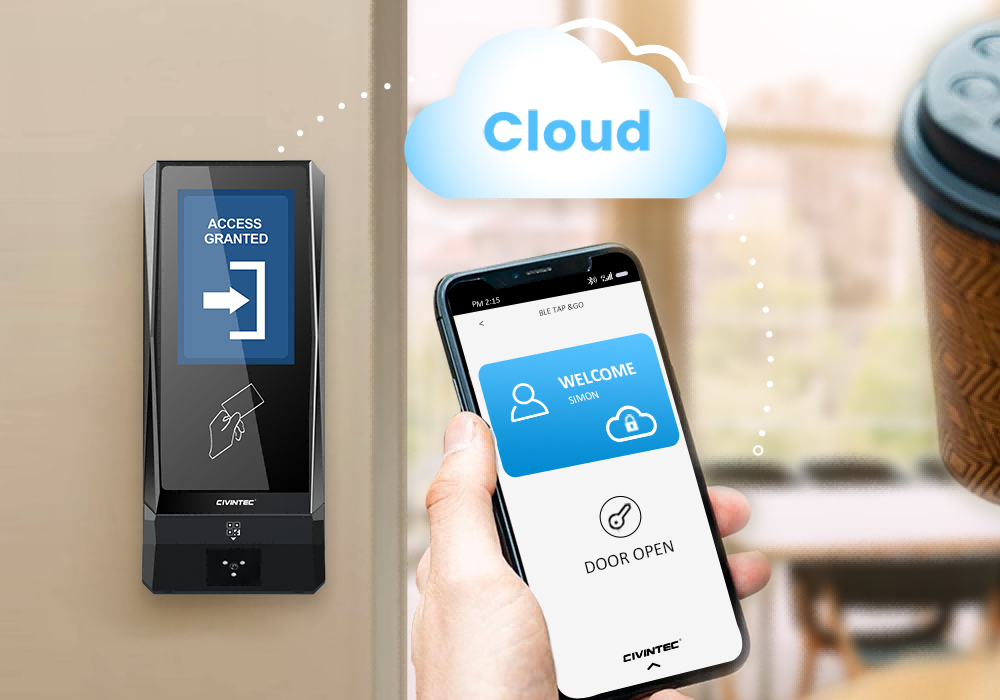
NFC/BLE mobile credentials can reduce reliance on separately issued physical cards. Confirm the supported phone platform, application, and intended interaction before deployment. The mobile credential workflow should suit the actual driver approach, not an assumed universal reading distance.
At neighboring lanes, test which reader a phone selects and how the driver confirms the intended entrance. Convenience should not introduce uncertainty about which barrier will open.
A compatible QR code module gives visitors an alternative to collecting a permanent badge. Customer software can associate the credential with a booking, destination, and validity period.
However, displaying a changing code does not, by itself, make screenshots or forwarding impossible. Security depends on how the platform validates the code, limits its use, and handles expiration. Define those rules with the software provider.
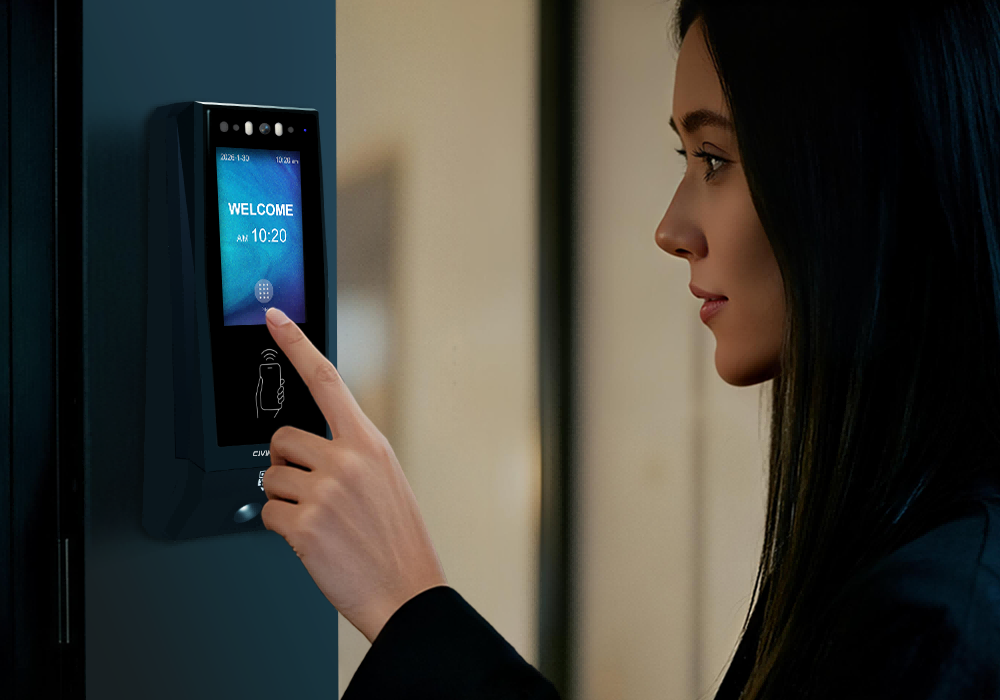
When configured through the client's cloud software, individual, limited-duration PIN codes can support selected visitor or fallback workflows. Avoid using one permanent gate code across employees, suppliers, and cleaning teams. A shared code obscures accountability and becomes difficult to withdraw without disrupting everyone who knows it.
Different access points within the same factory campus may justify different terminal capabilities. The following comparison helps procurement teams and integrators match CIVINTEC hardware to the required entrance transaction.
Technical parameter | CIVINTEC CT11 | CIVINTEC CT10 | CIVINTEC CT9 PRO |
|---|---|---|---|
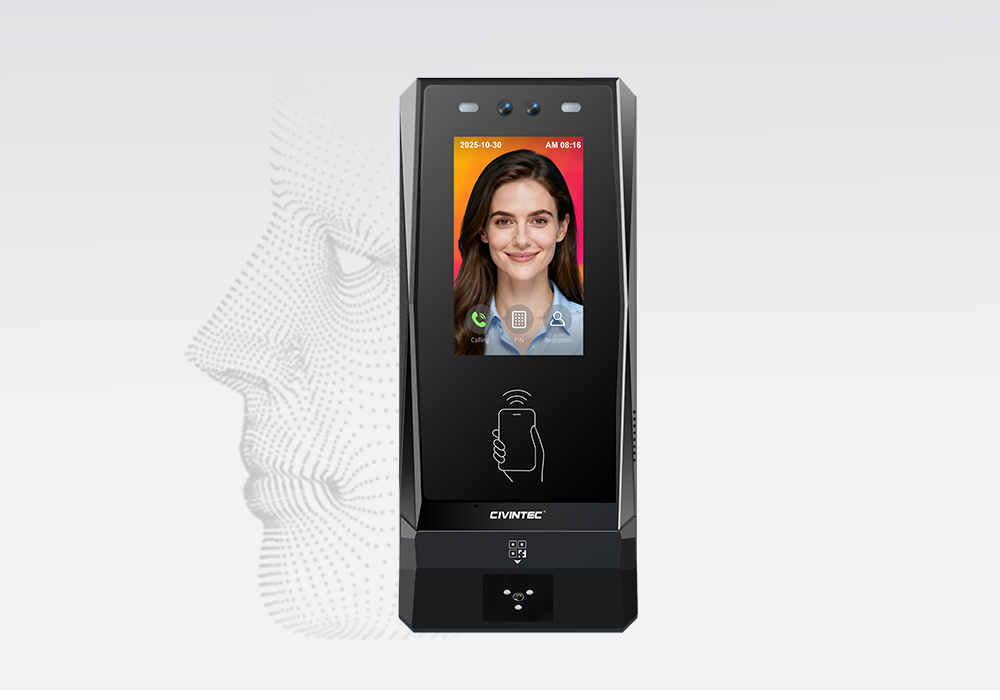
Primary design focus | Facial recognition access control with VoIP audio intercom | Multi-credential access control with credential-read photo capture and VoIP audio intercom | Touch screen multi-credential access control |
Operating system and interface | Linux; 3.5-inch touch screen | Linux; 3.5-inch touch screen | Linux; 3.5-inch touch screen |
Credential options* | Face, RFID (125kHz & 13.56MHz), NFC/BLE mobile credentials, QR code, PIN | RFID (125kHz & 13.56MHz), NFC/BLE mobile credentials, QR code, PIN | RFID (DESFire with SAM), NFC/BLE mobile credentials, QR code, PIN |
Camera and facial recognition | Dual-camera facial recognition | Credential-read photo capture (card/QR); no facial recognition | No camera or facial recognition |
Voice assistance | VoIP audio intercom | VoIP audio intercom | No VoIP audio intercom |
RFID anti-cloning approach* | DESFire EV1/EV2/EV3 with AES authentication | DESFire EV1/EV2/EV3 with AES authentication | DESFire EV1/EV2/EV3 with AES authentication |
Management and integration | Online/server; SDK integration | Online/server; SDK integration | Online/server; SDK integration |
Potential factory deployment | Associated pedestrian entrances requiring facial recognition | Visitor or delivery entrances requiring voice assistance | Staff or visitor entrances using card, mobile, QR, or PIN credentials |
Product specifications |
Credential modules, networking, and interfaces depend on the ordered configuration; confirm any optional QR code module. DESFire anti-cloning protection requires AES-configured credentials, protected application authentication, and appropriate key provisioning. It does not apply automatically to every supported RFID card or a UID-only workflow.
For a staff entrance using individually issued credentials, evaluate CT9 PRO against the required user capacity and connections. For visitor assistance, consider CT10 and define the operator's voice endpoint and approval workflow. CT10's built-in camera supports photo capture on RFID card and QR code reads for access-event review. Confirm the enabled capture triggers and record handling for the selected configuration; this is not facial recognition or video calling.
Where facial recognition is appropriate, evaluate CT11 for associated pedestrian entrances. Do not assume reliable recognition through every vehicle window or from an unspecified distance. Validate positioning and the intended approach, and retain suitable alternative credentials. Across all three models, the SDK enables integration with customer software; it is not a complete parking reservation or billing platform.
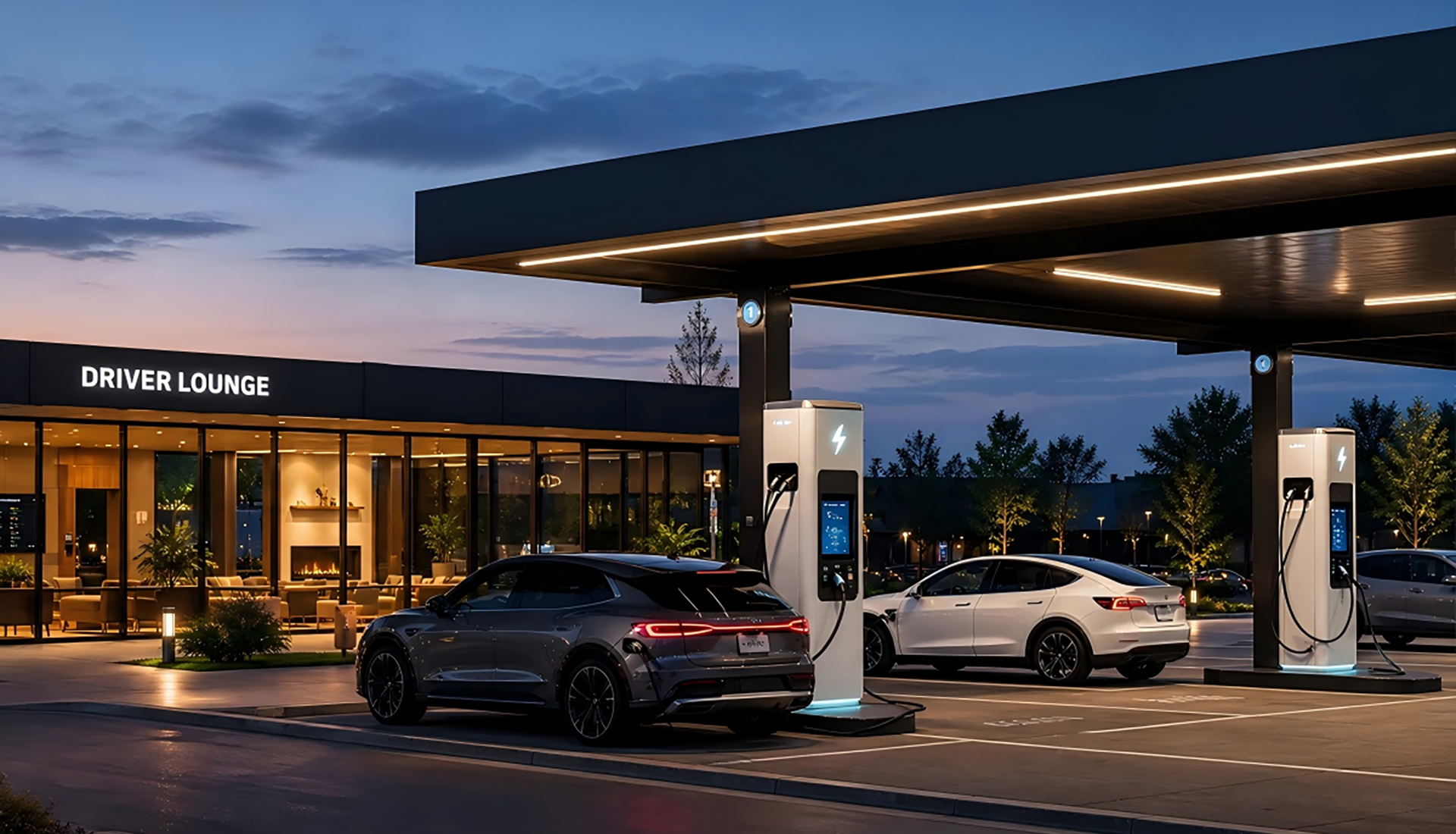
A factory may provide employee charging bays while also allowing selected visitors to charge. Nearby lounges or restrooms create another access boundary: a valid parking credential should not necessarily open every amenity.
The CIVINTEC EV charging rest area access control solution addresses this relationship between charging users, staff, and controlled facilities. In an integrated project, charging software can provide session information to the access management platform, which assigns the relevant permissions.
For example, an approved driver might receive lounge access during an active charging session, while cleaning personnel retain a separate scheduled credential. The terminal verifies the resulting authorization; it does not independently determine whether electricity has been purchased.
Also distinguish permission to enter from the ability to leave. Expiring a lounge credential must not be treated as a reason to obstruct safe departure. Emergency arrangements belong in the wider building and barrier design.
For additional scenario context, see security access control for charging rest areas, while confirming the selected product configuration during technical planning.
Central management is valuable when a manufacturer operates several entrances or multiple sites. It allows the customer's software to coordinate permissions and review events without treating each parking gate as an isolated installation.
Specify available TCP/IP Ethernet infrastructure first, then evaluate supported Wi-Fi or 4G configurations where appropriate. PoE can simplify terminal installation on supported models, but the barrier, locks, and other equipment still require suitable power arrangements. Wireless networking reduces certain communication cables; it does not remove every cable from the project.
Use HTTPS for supported terminal-to-server connections requiring encrypted transport. HTTP and HTTPS should not be described as equally encrypted alternatives.
Offline operation needs a separate policy. Determine which credentials and permissions are stored locally, how temporary access expires, and what happens when a card is revoked while a terminal is disconnected.
A terminal operating from cached permissions cannot be assumed to receive an immediate cloud revocation during a complete network outage. Test reconnection and event synchronization before acceptance. Network resilience and backup power are also separate requirements: local authorization does not mean the system remains powered during an electrical outage.
The CIVINTEC smart car parking solution describes parking integration with credential readers, barrier control, and customer software. Where longer-range vehicle identification is needed, its external UHF reader approach should be distinguished from built-in terminal capabilities.
For factory sites, assess the physical lane before finalizing reader placement. A position convenient for a passenger car may be unsuitable for a delivery truck. Check approach direction, driver reach, turning space, and the relationship between vehicle lanes and pedestrian routes.
Where a suitable terminal configuration offers independent relay outputs, define each output's purpose clearly. A relay may provide a command to a barrier controller or compatible interface; it should not be assumed to power a barrier motor directly.
Barrier safety detection remains the responsibility of the appropriate equipment and system design. Similarly, anti-passback can enforce credential entry and exit sequencing, but it is not a substitute for physical vehicle detection or measures against tailgating.
These distinctions help purchasing teams compare complete proposals rather than evaluating only the price of a reader mounted beside a gate.
Before expanding across the factory, pilot a representative entrance. Include facilities, IT, security, the software integrator, and the barrier installer in acceptance testing.
Start with ordinary transactions: an authorized employee arrival, a visitor within a booking window, and a delivery directed to the correct entrance. Then test exceptions, including expired credentials, a revoked card, and an attempted entry at the wrong gate.
For anti-cloning validation, ask the integration team to demonstrate that the selected workflow requires protected DESFire application authentication. A negative test using an unprovisioned credential should result in rejection. Do not accept a successful card read as evidence that AES security is active.
Record baseline operational measures such as first-attempt access success, queue formation during shift changes, and operator assistance requests. Repeat those observations after adjustments. These site-specific results provide stronger evidence of value than an unsupported claim that every deployment achieves a fixed efficiency improvement.
Finally, document responsibility for issuing credentials, revoking access, responding to failures, and maintaining configuration records. Security depends on these routines throughout the installation's life, not only on the commissioning day.
A mixed-use lot needs a process for a driver arriving early, presenting the wrong credential, or requesting access outside an approved booking. Avoid resolving every exception by sharing a permanent PIN or leaving the barrier open.
Instead, define who may approve an exception, what information they must check, and how the approval is recorded in the customer platform. A permitted exception should remain distinguishable from an ordinary credential transaction.
Also be precise about what records prove. A credential event identifies the credential used; it does not independently establish a vehicle registration, passenger count, or every person's presence. Link those details only when the project has the necessary verification process or integrated equipment.
[block2]
A well-designed Car Parking Access Control System combines practical vehicle entry with clear permission boundaries. For factory operators, the priorities are secure credentials, appropriate terminal selection, reliable integration, and tested handling of everyday exceptions.
CIVINTEC supports this approach with access control hardware for RFID, mobile, QR, and PIN workflows, plus model-specific capabilities for voice assistance and facial recognition. DESFire EV1/EV2/EV3 with AES encryption strengthens RFID credential protection when deployed through properly configured authentication—not simple serial-number matching.
Share your entrance layout, user groups, existing cards, networking conditions, and software requirements to define an appropriate configuration.
Initiate Technical Consultation: Discuss your parking project with CIVINTEC.
Explore Product Specifications: Browse CIVINTEC access control terminals.


 Home >
  Share
Share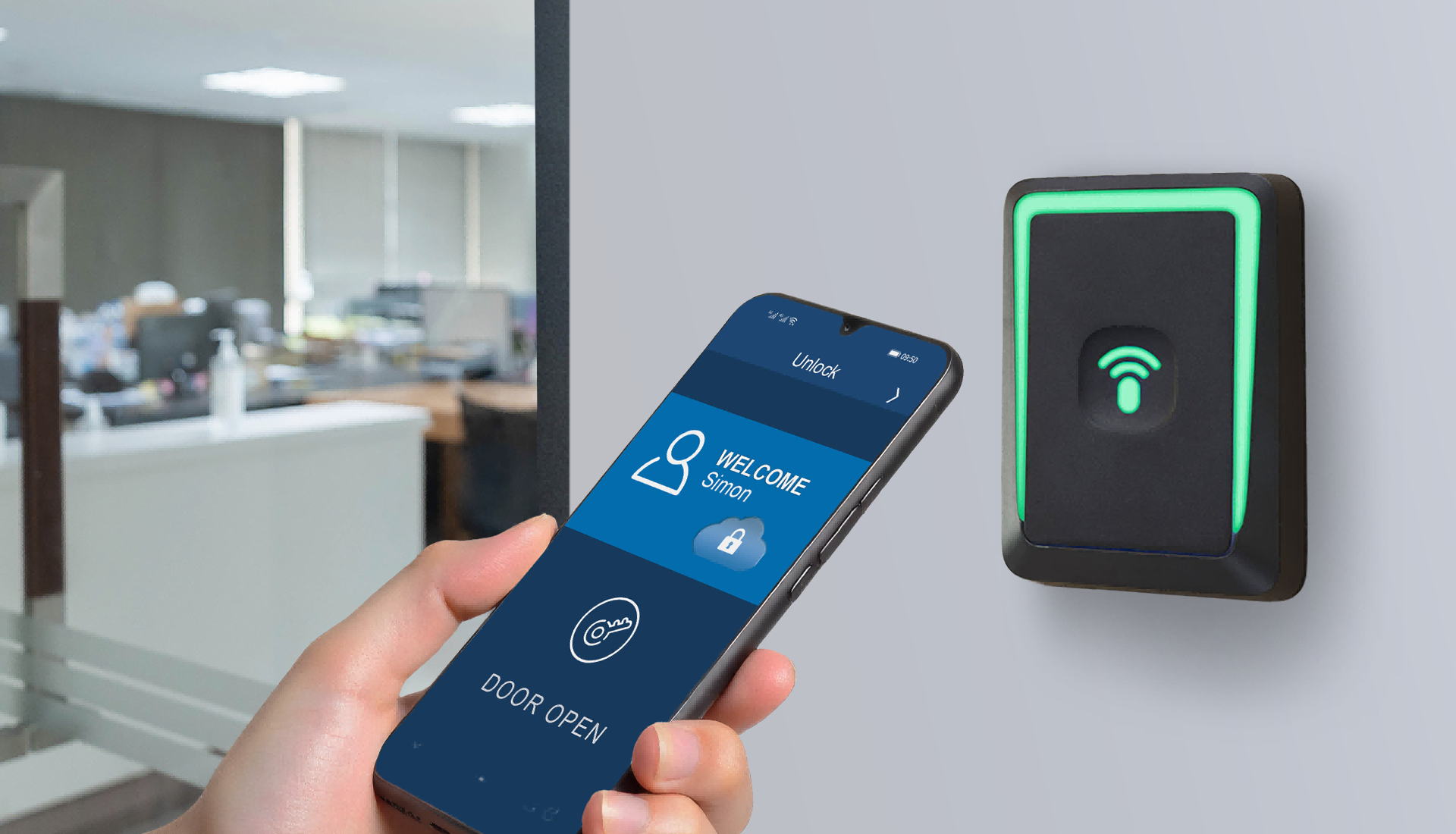



 Contact Us