

-

Applications

Industries

 OEM & ODM Service
 Development Service
 Download
 Technical support
 Warranty & RMA
 FAQS
FAQS
 My Community
 Who Is CIVINTEC
 Why CIVINTEC
 News & Express
 Cooperation





 Sep 08, 2026
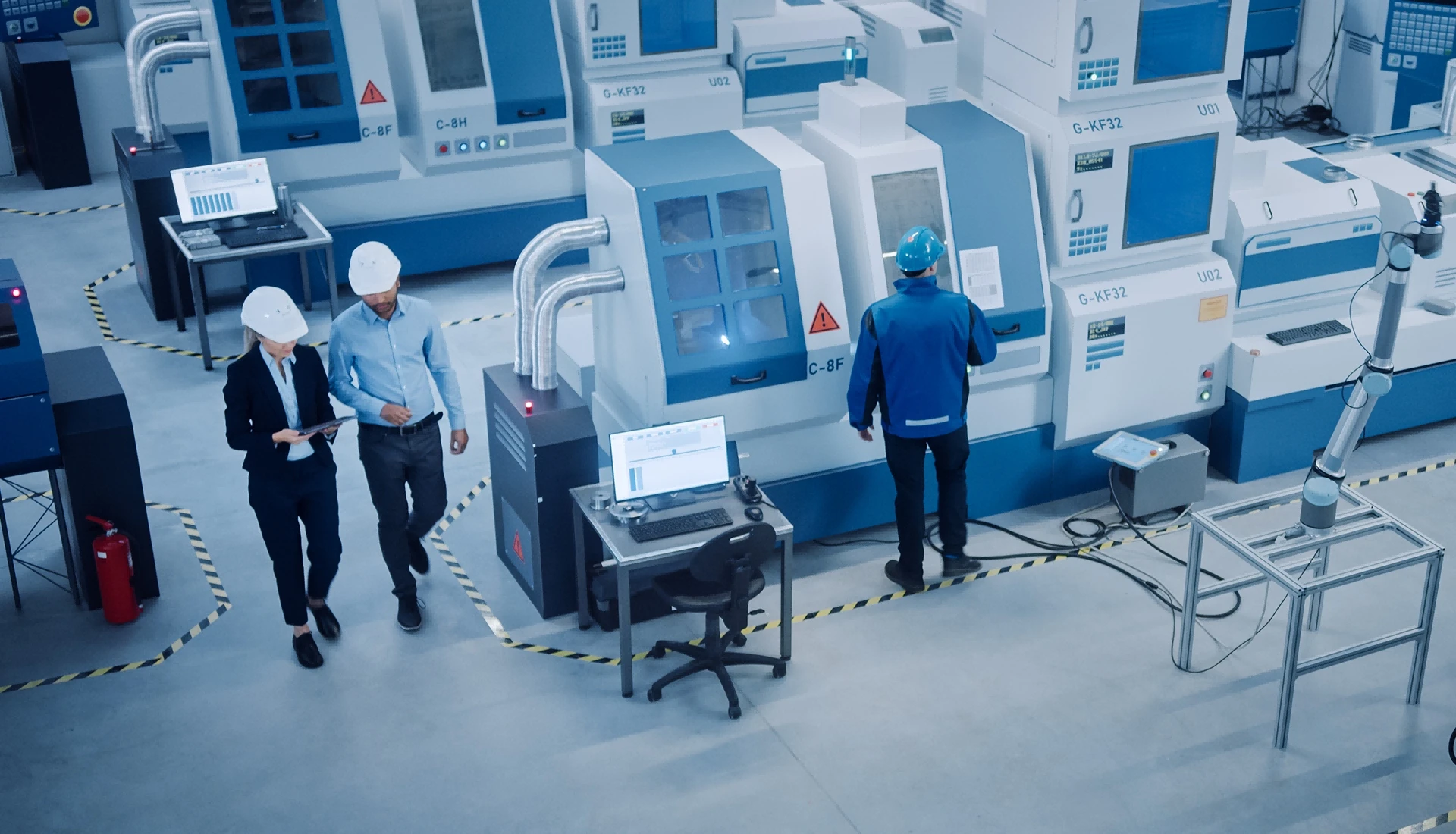
Managing multi-site enterprise operations—spanning manufacturing plants, chemical processing facilities, regional distribution centers, and fabrication hubs—demands uncompromising physical security and precise operational oversight. Across these distributed industrial networks, the daily workforce is no longer composed solely of permanent full-time personnel. On any given day, an industrial enterprise must coordinate, verify, and monitor an influx of third-party contractors: specialized mechanical technicians, electrical contractors, facility maintenance teams, outsourced cleaning crews, logistics freight drivers, and third-party compliance auditors.
Controlling contractor access across geographically dispersed sites presents severe operational, legal, and environmental liabilities. When facilities rely on fragmented physical keys, unencrypted proximity badges, paper visitor logs, or disconnected standalone door controllers, security visibility deteriorates rapidly. Unmonitored contractor entry leads to catastrophic vulnerabilities: uncertified technicians wandering into high-voltage electrical vaults, unauthorized contractors bypassing mandatory safety inductions, ghost worker billing schemes, and illicit badge swapping between transient laborers. A safety incident, regulatory violation, or intellectual property leak caused by an unvetted contractor at a single remote site can halt production across the entire enterprise supply chain.
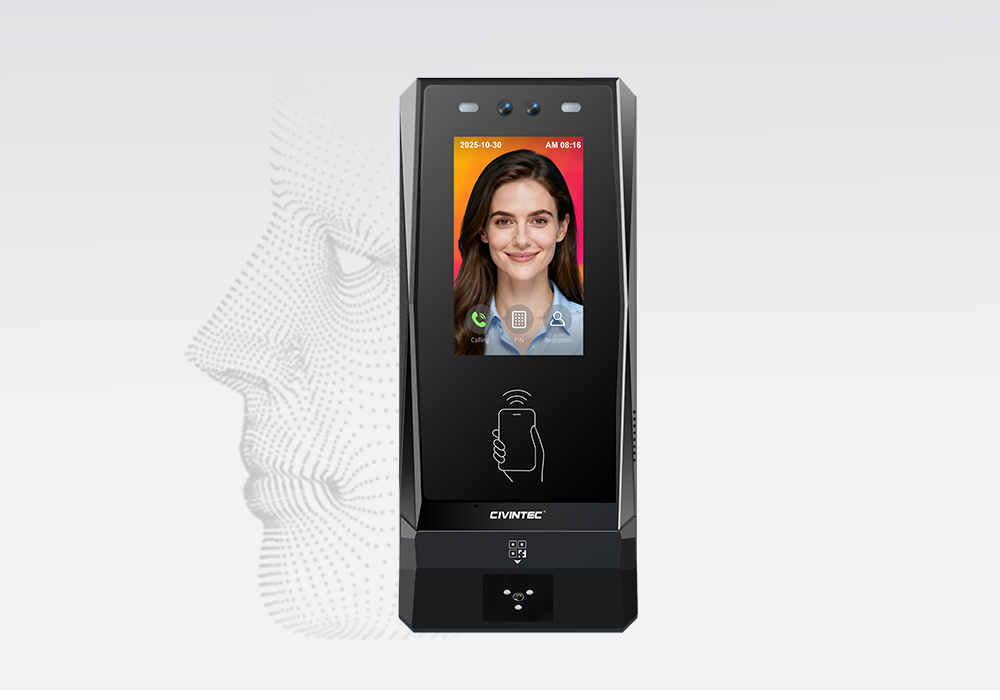
To eliminate these vulnerabilities, enforce regulatory compliance, and establish real-time cross-facility visibility, enterprise operators are deploying an advanced Contractor Access Control System. As an industry-leading hardware developer and manufacturer, CIVINTEC provides CIVINTEC Access Control Hardware Solutions and dedicated Industrial Access Control Hardware Solutions tailored for demanding multi-site industrial ecosystems. Centered on the flagship CIVINTEC CT11 Access Control Terminal—integrating sub-0.015s edge biometric facial recognition, duplex VoIP audio intercom capabilities, multi-protocol credential processing, and encrypted HTTP/HTTPS cloud telemetry—CIVINTEC delivers the durable hardware foundation required to govern contractor movements across global facilities.
Managing contractors across multiple distributed sites requires balancing centralized corporate security policies with autonomous edge enforcement at individual plant entryways.
Traditional approaches to contractor management in industrial environments introduce severe security gaps:
The "Ghost Worker" & Buddy Punching Vulnerability: When physical plastic cards or generic PINs are issued to contractor firms, individuals routinely swap badges to clock in uncertified peers or bill clients for unworked hours.
Safety Induction & Certification Lapses: Contractors frequently arrive on site after mandatory safety certifications (such as OSHA 10/30, NFPA 70E electrical safety, or hazardous chemical handling) have expired. Standalone door readers fail to validate real-time credential status against central training databases.
Cross-Facility Credential Drift & Orphaned Badges: In multi-site organizations, a contractor issued a badge at Site A often retains active permissions months after completing their scope of work, exposing Site B and Site C to unauthorized entry.
WAN Network Disruption at Remote Sites: Remote pumping stations, solar farms, and exterior loading docks frequently experience cellular or internet drops. If access control hardware relies on continuous server polling, doors either fail locked (halting vital maintenance) or fail open (compromising perimeter security).
A modernized Contractor Access Control System resolves these challenges by decoupling edge hardware operations from continuous server dependency while maintaining synchronized, role-based authorization rules across every facility.
To eliminate badge swapping and ensure that only vetted, safety-certified contractor personnel enter restricted plant zones, the CIVINTEC CT11 Access Control Terminal serves as the primary biometric verification anchor for enterprise contractor portals.
The CT11 incorporates an enterprise-grade biometric engine designed to eliminate contractor identity fraud and streamline high-volume shift changes:
Contractor access control demands high-security verification that cannot be deceived by presentation attacks. The CT11 features a dual-camera array capturing visible RGB spectral profiles and infrared (IR) light data simultaneously. By analyzing live human skin, surface textures, and multi-dimensional depth directly at the hardware edge, the terminal verifies live human presence in real time. This architecture blocks printed photographs, high-definition smartphone video replays, and 3D silicone mask spoofing attempts.
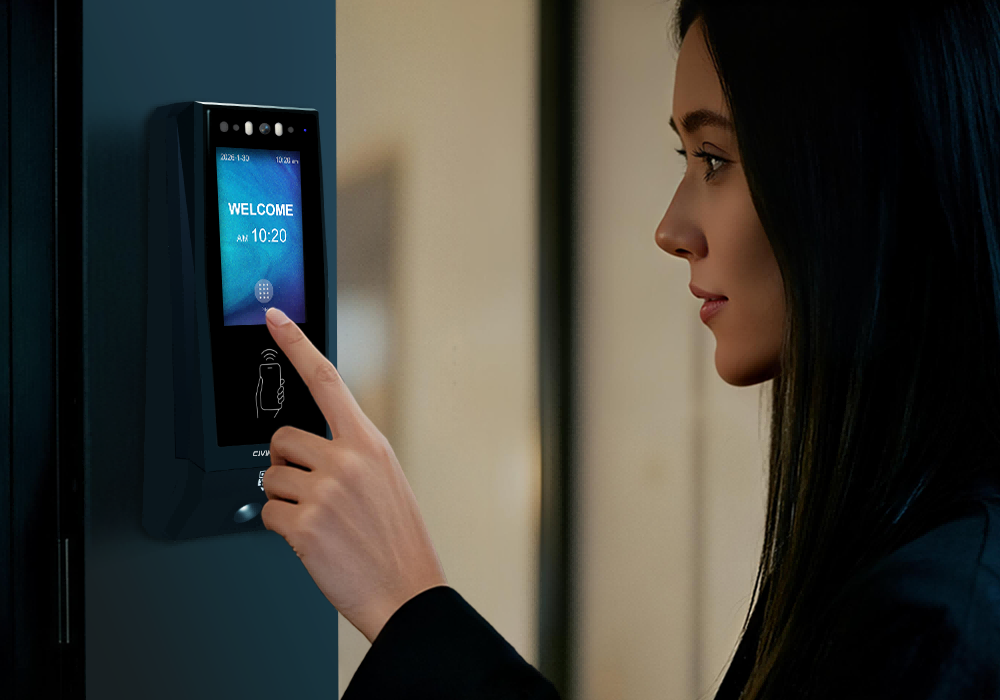
Major plant shutdowns, capital retrofits, and shift changeovers involve hundreds of subcontractor tradespeople arriving at facility gates simultaneously. The CT11's edge matching engine executes biometric handshakes in an astonishing 0.015s across a dynamic detection range of 30 to 150 centimeters. Contractors pass through turnstiles and mantrap portals at a continuous walking pace without stopping, bottlenecking perimeter gates, or causing shift-start delays.
Subcontractors in heavy fabrication, chemical manufacturing, and civil construction must wear specialized protective equipment. The CT11's recognition algorithm isolates invariant skeletal facial landmarks around the eyes, temples, and upper nasal bridge. This allows the terminal to verify personnel wearing hard hats, safety glasses, high-visibility hoods, and protective dust masks without requiring workers to remove safety gear in hazardous areas.
Enterprise multi-site facilities often manage dynamic contractor databases containing thousands of temporary worker profiles. The CT11 houses up to 50,000 local biometric templates and 7,000 event records in non-volatile flash memory. If local plant network switches fail or wide-area network (WAN) links drop, the CT11 validates credentials and triggers door relays autonomously, synchronizing cached transaction records to the client's cloud system via secure HTTP/HTTPS protocols once connectivity returns.
To satisfy statutory audits and verify contractor attendance, the CT11 and CT10 access control terminals feature automated photo capture functionality. Whenever an individual presents a credential—such as swiping an RFID card or scanning a QR code—the camera automatically captures a photo snapshot of the person at that precise moment. This image log is bound to the credential ID, terminal ID, and timestamp, providing an unalterable visual audit record that eliminates time-card disputes and confirms on-site compliance.
To review the detailed hardware specifications of this terminal, explore our guide on the CIVINTEC CT11 smart facial recognition access control system with VoIP intercom.

Managing unattended contractor gates, remote equipment storage yards, and after-hours maintenance doors requires reliable voice communication between visiting contractors and central facility managers.
The CIVINTEC CT11 Access Control Terminal features an enterprise-grade VoIP audio intercom engine with an acoustic echo-canceling microphone and high-fidelity loudspeaker.
Instant Dispatch Calling: When an external contractor, uninducted service technician, or emergency repair specialist arrives at a locked portal without pre-configured credentials, they tap the dedicated call prompt on the CT11's color touchscreen to establish an immediate two-way voice call with central plant dispatch.
VoIP Intercom for Access Control Assistance: Security operators conduct clear, duplex voice communication with the individual at the gate to verify their identity remotely. By enabling direct communication in unexpected situations where normal access credentials cannot be completed, the system provides an additional layer of protection to maintain secure and reliable access control operations.
Encrypted Remote Door Release: Upon validating the contractor's work authorization, the operator issues an encrypted remote door unlock command from the cloud dashboard, releasing the electromagnetic door lock via secure HTTP/HTTPS communication protocols.
Enterprise contractor workforces are heterogeneous. An effective Contractor Access Control System must support multiple credential modalities mapped to specific worker roles, risk profiles, and project durations.
For long-term engineering contractors, resident maintenance staff, and facility management partners:
Advanced Smart Card Processing: CIVINTEC terminals read 13.56MHz contactless smart cards, including NXP MIFARE DESFire EV1, EV2, and EV3 chips protected by 128-bit AES cryptographic keys.
Integrated SAM Slot (EAL5+ Certified): For high-security military-industrial, aerospace, or critical infrastructure plants, the CIVINTEC CT9 PRO Access Control Terminal features an integrated Secure Access Module (SAM) slot certified to EAL5+ security standards. Master cryptographic root keys are stored in a tamper-proof hardware vault, protecting the site against card cloning, credential sniffing, and replay attacks.
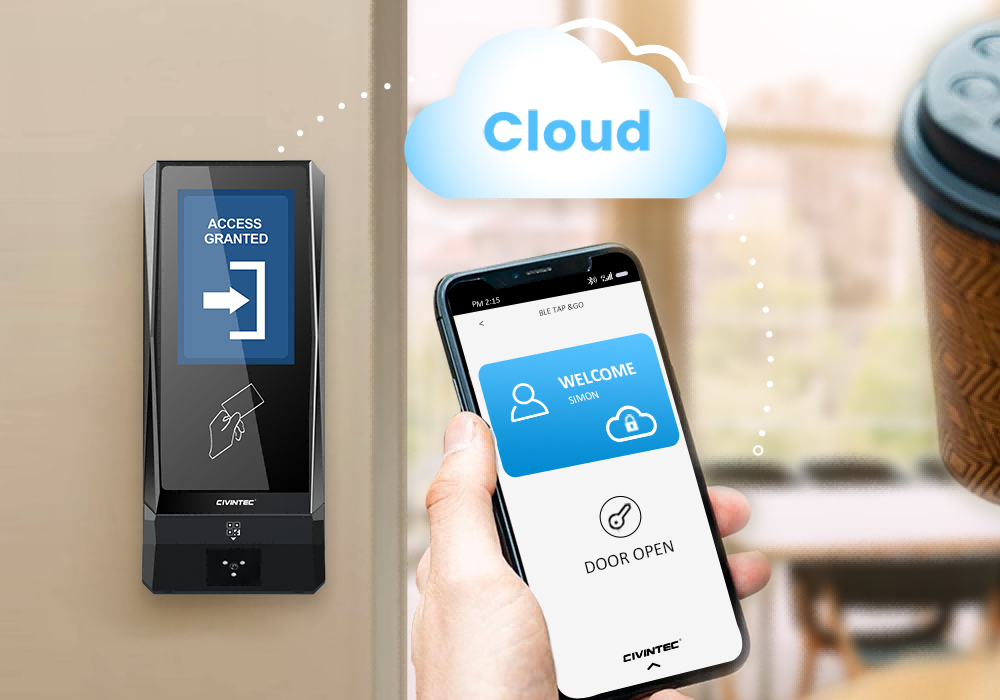
Long-Range BLE Mobile Access Control: Subcontractors operating concrete mixers, flatbed delivery trucks, and mobile cranes can trigger outer perimeter vehicle gates from inside their vehicle cabs using encrypted BLE mobile credentials, accelerating gate turnaround without exposing drivers to physical site hazards.
NFC Access Control Integration: Corporate technical consultants and project managers tap their NFC-enabled smartphones against the terminal face for rapid, contact-free verification.
For short-term maintenance technicians, third-party delivery couriers, and temporary equipment inspectors:
The enterprise contractor management system issues a time-bound, encrypted dynamic QR code sent directly to the contractor’s smartphone via SMS or email prior to site arrival.
The contractor presents the digital pass to the terminal's integrated QR code module.
The access control terminal validates the dynamic QR code, verifies authorized entry hours, captures a photo snapshot of the person scanning the code, and triggers the door relay. Once the contractor's shift or service contract expires, the QR code automatically invalidates across all facilities.
[block1]
Different industrial environments present distinct operational workflows, hazard profiles, and regulatory compliance mandates. CIVINTEC hardware adapts seamlessly across varied industrial verticals:
Automotive assembly lines, metal foundries, and machinery plants operate with continuous shift rotations. Specialized third-party contractors frequently enter the plant to perform die changes, robotic arm maintenance, and tooling overhauls.
Application: Deploying the CIVINTEC CT11 on pedestrian speed turnstiles and machining hall mantrap airlocks prevents uncertified contractors from entering active automated cells. The 0.015s face matching engine handles massive throughput during shift changes, while IK07 impact resistance rating protects terminals against accidental strikes from heavy hand tools and equipment carts.
Large-scale manufacturing plant expansions involve hundreds of transient trade subcontractors—welders, pipefitters, electricians, and civil laborers—working on active jobsites with changing physical boundaries.
Application: Full-height turnstiles equipped with CIVINTEC CT11 access control terminals enforce strict physical security based on assigned authorization profiles. Once subcontractors complete mandatory site safety training and are provisioned access permissions in the client's management platform, the CT11 access control terminal validates whether the presenting individual is an authorized person and grants or denies entry accordingly. Offline non-volatile flash memory ensures uninterrupted turnstile operations during temporary site network disruptions.
To explore real-world construction site deployments, read our case study on CIVINTEC construction access control for real-time site management.
Petrochemical plants, solvent processing bays, and gas formulation areas operate under stringent environmental, health, and safety (EHS) regulations (e.g., OSHA PSM, Seveso III directives). Unescorted or unqualified contractors represent severe explosion and contamination risks.
Application: High-risk containment portals utilize the CIVINTEC CT11 to enforce multi-factor authentication: touchless facial recognition combined with an authorized PIN code. Terminals feature IP65-rated enclosures with electrically potted epoxy circuit boards to prevent degradation from corrosive chemical fumes and airborne solvent vapors.
Regional distribution centers handle a continuous flow of third-party freight carriers, independent logistics drivers, and temporary seasonal warehouse pickers.
Application: External loading bays and driver waiting areas deploy the CIVINTEC CT10 Access Control Terminal. Freight drivers present dynamic QR codes to access designated driver lounges and restrooms without entering active forklift staging areas. Magnetic door sensors trigger a "DOOR NOT CLOSED" alarm if a loading dock door remains propped open beyond 15 seconds, preventing climate loss and unauthorized warehouse access.
Food processing facilities and pharmaceutical formulation cleanrooms enforce strict hygienic barriers to prevent biological contamination and comply with FDA cGMP, FSMA, and ISO 22000 standards.
Application: Cleanroom airlock entries utilize the CIVINTEC CT11 for 100% touchless facial recognition. Contractors wearing cleanroom hoods, beard nets, and face masks are authenticated without touching reader surfaces or pulling down protective masks, preserving the sterile integrity of the production environment.
Electric utility networks maintain dozens of remote transformer substations and power switching yards distributed across vast geographical regions. Unattended sites are vulnerable to physical intrusion and equipment theft.
Application: Remote perimeter gates utilize the CIVINTEC CT10 (4G LTE + GPS). Contractors gain entry via long-range BLE mobile access control or dynamic QR codes. If an intruder attempts to dislodge the terminal, an internal tamper switch triggers a local siren and transmits an encrypted alert packet containing GPS coordinates directly to the central security console.
The table below outlines operational parameters, security risks, authentication modalities, and recommended CIVINTEC hardware across multi-site industrial verticals:
Industrial Facility Sector | Environmental & Operational Risks | Primary Contractor Authentication Modality | Automated Safety & Alarm Telemetry | Recommended CIVINTEC Hardware |
Automotive & Heavy Manufacturing | High pedestrian shift throughput, machinery hazards, buddy punching | 0.015s Facial recognition, MIFARE DESFire EV3 cards | Instant relay turnstile release, photo capture on credential reads | |
Industrial Construction Sites | Heavy dust, mud, transient trades, lost physical badges | Touchless facial recognition (hard hat & PPE tolerant) | Offline edge caching (50K users), safety induction lockouts | |
Petrochemical & Gas Refineries | Toxic vapor hazards, explosion risks, strict EHS audit compliance | Multi-Factor: Biometrics + Touch Keypad PIN code | Dual-relay mantrap interlock, IP65 epoxy potted electronics | |
Warehousing & Freight Docks | Third-party truckers, temporary pickers, propped loading doors | Dynamic QR codes via mobile app, touch keypad PIN code | Photo capture on credential reads, "DOOR NOT CLOSED" alarm (15s) | |
Pharma & Food Cleanrooms | Airborne contamination, cleanroom hoods, strict sanitary rules | 100% Touchless facial recognition (mask/hood friendly) | Interlocking airlock doors, photo capture on credential reads | |
Remote Power Substations | Unattended perimeters, lack of wired network drops, copper theft | Long-range BLE mobile access control, dynamic QR codes | 4G LTE cellular telemetry, GPS tracking, internal tamper alarm | |
Mission-Critical SCADA Vaults | Zero-Trust mandate, critical infrastructure sabotage risks | Multi-Factor: Biometrics + DESFire EV3 SAM card + PIN | Multi-door interlock mantrap, photo capture on credential reads |
The matrix below provides technical specifications across CIVINTEC's enterprise product line to assist facility engineers and security integrators in specifying appropriate hardware:
Technical Specification | CIVINTEC CT11 | CIVINTEC CT10 | CIVINTEC CT9 PRO |
Primary Deployment Role | Biometric Facial Recognition & VoIP Audio Intercom Terminal | Durable Touchscreen Terminal with Camera & 4G Telemetry | High-Security Touchscreen Access Control Terminal |
Biometric Verification | Dual-Camera IR/RGB Facial Verification (0.015s) | None (Camera for Photo Capture Only) | None (External Reader Hub) |
Event Photo Capture | Photo Capture on Credential Reads (Card & QR) | Photo Capture on Credential Reads (Card & QR) | None |
Intercom Capabilities | Duplex VoIP Audio Intercom with Noise Cancellation | Voice Call Prompt Core | None |
Display Interface | 3.5-inch Color Touchscreen UI | 3.5-inch Interactive Touchscreen UI | 3.5-inch Color Touchscreen UI |
Supported Credentials | Face, RFID (125KHz/13.56MHz), BLE, NFC, QR, PIN | RFID (125KHz/13.56MHz), NFC, BLE, QR, PIN | RFID (DESFire with SAM), BLE, NFC, Dynamic QR, PIN |
QR Code Processing | Integrated High-Speed QR Code Module | Integrated High-Speed QR Code Module | Integrated High-Speed QR Code Module |
SAM Cryptographic Slot | None | None | Integrated SAM Slot (EAL5+ Certified) |
Impact Resistance Rating | IK07 Impact Resistance Rating | IK07 Impact Resistance Rating | High-Durability Housing |
Ingress Protection Rating | IP65 Waterproof & Dustproof | IP65 Waterproof & Dustproof | IP65 Weatherproof Sealed |
Network Interfaces | TCP/IP Ethernet (PoE), Wi-Fi, 4G LTE, LoRaWAN | TCP/IP Ethernet, Wi-Fi, 4G LTE + GPS Telemetry, LoRaWAN | TCP/IP Ethernet, Wi-Fi, 4G |
Communication Protocols | HTTP/HTTPS Protocols (Encrypted TLS 1.3) | HTTP/HTTPS Protocols (Encrypted TLS 1.3) | HTTP/HTTPS Protocols (Encrypted TLS 1.3) |
Product Specification Link |
Industrial manufacturing facilities, chemical plants, and remote utility yards subject access control hardware to physical abuse, environmental contamination, and severe weather. CIVINTEC terminals are engineered with durable mechanical reinforcement to ensure continuous operation under demanding field conditions.
IK07 Impact Resistance Rating: The structural enclosures of the CIVINTEC CT11 and CIVINTEC CT10 are certified to an IK07 impact resistance rating. The reinforced housing withstands heavy mechanical impacts from industrial hand tools, moving machinery carts, and physical abuse.
IP65 Ingress Protection: Internal circuit boards are encapsulated in an electrically potted epoxy compound. The assembly provides an IP65 waterproof and dustproof seal, shielding sensitive electronics from conductive metal shavings, airborne oil mist, chemical washdowns, and driving rain.
UV-Resistant Protective Hardening: Exterior gate terminals exposed to direct sunlight feature UV-resistant enclosures and anti-glare touchscreens, preventing casing discoloration, embrittlement, and display failure under prolonged solar exposure.
In unattended equipment yards and remote perimeter gates, intruders may attempt to pry access control terminals off mounting posts.
CIVINTEC terminals incorporate an internal tamper switch. If an unauthorized person attempts to dislodge the terminal housing from its bracket, the unit sounds a high-decibel local audible siren.
Simultaneously, the terminal transmits an urgent tamper alert packet—containing the terminal ID, timestamp, and GPS coordinates—over secure HTTP/HTTPS protocols directly to the client's cloud software.
Contractor crews often prop open secure fire doors or airlock portals with wooden wedges or toolboxes to move supplies, compromising facility security.
CIVINTEC terminals connect directly with magnetic door position sensors to monitor open/closed status in real time.
If a secure door remains open beyond a pre-set threshold (e.g., 15 seconds), the terminal logs a "DOOR NOT CLOSED" alarm, emits an audible alert, and pushes an immediate warning packet to the central management console for security dispatch.
Worker safety is paramount during industrial emergencies. CIVINTEC access control hardware features dedicated dry-contact inputs wired directly to plant fire alarm control panels (FACP). When an emergency alarm triggers, the terminal overrides locked states instantly, unlocking electromechanical and magnetic locks along designated evacuation routes to guarantee safe, unhindered worker egress.
Integrating multi-site access control hardware into an enterprise IT infrastructure requires open architecture, versatile communication options, and robust cryptographic data protection.
CIVINTEC hardware adapts to diverse multi-site networking environments:
Wired TCP/IP Ethernet with PoE: Connects directly via RJ45 ports, delivering network data and electrical power over a single Cat6 cable (PoE IEEE802.3af) for main plant turnstiles and security mantrap portals.
2.4GHz Wi-Fi Connectivity: Built-in Wi-Fi stacks (IEEE802.11 b/g/n) connect terminals in retrofitted facilities where running physical data cabling is cost-prohibitive.
4G LTE Cellular & GPS Asset Telemetry: Integrated cellular modems deliver autonomous cloud connectivity for remote perimeter gates, pumping stations, and exterior logistics docks without requiring local network drops.
LoRaWAN IoT Connectivity: Long-range, low-bandwidth wireless technology transmits access telemetry across extensive industrial yards spanning several kilometers back to a central gateway.
CIVINTEC operates as an enterprise access control hardware developer and manufacturer. Rather than locking clients into proprietary, closed software platforms, CIVINTEC provides an open, stable Software Development Kit (SDK) and comprehensive API libraries for its embedded Linux terminals.
Enterprise software developers and system integrators can program directly to the device layer using the open SDK to:
Customize touchscreen user interfaces, company branding, shift prompts, and safety checklist instructions (English interface).
Transmit real-time transaction telemetry, timestamps, and credential read photo snapshots directly to the client's own cloud system via secure HTTP/HTTPS communication protocols.
Issue remote cloud commands to toggle terminal operational modes (e.g., Emergency Lockdown Mode, Free-Pass Evacuation Mode, Normal Access Control Mode).
Execute remote firmware upgrades across thousands of distributed terminals over TCP/IP, Wi-Fi, or 4G LTE, or via BLE OTA (Over-the-Air) using an authorized smartphone app.
Deploying an enterprise Contractor Access Control System across multiple industrial sites requires a structured engineering roadmap:
Conduct Facility Zone & Contractor Audits: Map every access portal across all regional facilities, including main perimeter turnstiles, workshop doors, cleanrooms, and loading docks. Identify environmental hazards (chemical mist, conductive dust, direct sun) at each portal.
Define Role-Based Contractor Access Control Policies: Establish granular clearance levels for trade contractors, engineering consultants, logistics drivers, and cleaning crews. Bind physical access permissions directly to mandatory safety induction completions and work order time windows.
Select Hardware Models & Credential Modalities:
Main turnstiles & hazardous workshop entries: Specify CIVINTEC CT11 for sub-0.015s biometric facial verification, PPE tolerance, and duplex VoIP audio intercom communication.
Remote perimeter gates & logistics docks: Specify CIVINTEC CT10 with 4G LTE, GPS telemetry, QR code module, and IK07 impact resistance rating.
SCADA server rooms & critical infrastructure: Specify CIVINTEC CT9 PRO with integrated EAL5+ certified SAM slot protection for encrypted MIFARE DESFire EV3 cards.
Deploy Network Topologies & Cloud Telemetry: Establish wired TCP/IP PoE connections for main gates, configure secure Wi-Fi for workshops, and insert SIM cards for remote 4G LTE perimeter units. Configure terminals to route all event telemetry to the client's cloud system via encrypted HTTP/HTTPS protocols.
Execute Validation & Emergency Testing: Validate offline edge caching by disconnecting network lines. Verify fire alarm auto-unlock triggers, test internal tamper switch sirens, and confirm "DOOR NOT CLOSED" notifications before commissioning the system enterprise-wide.
[block2]
Implementing a robust Contractor Access Control System is critical to eliminating workforce fraud, enforcing regulatory safety compliance, and protecting corporate assets across distributed industrial networks. By deploying CIVINTEC access control hardware, multi-site plant managers eliminate buddy punching, prevent unauthorized zone crossover, maintain automated photo audit trails, and ensure 24/7 operational continuity across demanding physical environments.
With the flagship CIVINTEC CT11 delivering sub-0.015s dual-camera biometric facial recognition, duplex VoIP audio intercom communication, IK07 impact resistance rating, IP65 weatherproofing, and an open Linux SDK for enterprise cloud integration, CIVINTEC provides the dependable physical foundation for multi-site industrial security.
Ready to modernize your multi-site contractor access control infrastructure? Contact CIVINTEC's technical engineering team today to request hardware evaluation packages, discuss custom SDK integrations, or receive a project quote.
Initiate Technical Consultation: Contact CIVINTEC Project Engineers
Explore Product Specifications: Browse CIVINTEC Access Control Hardware Line


 Home >
  Share
Share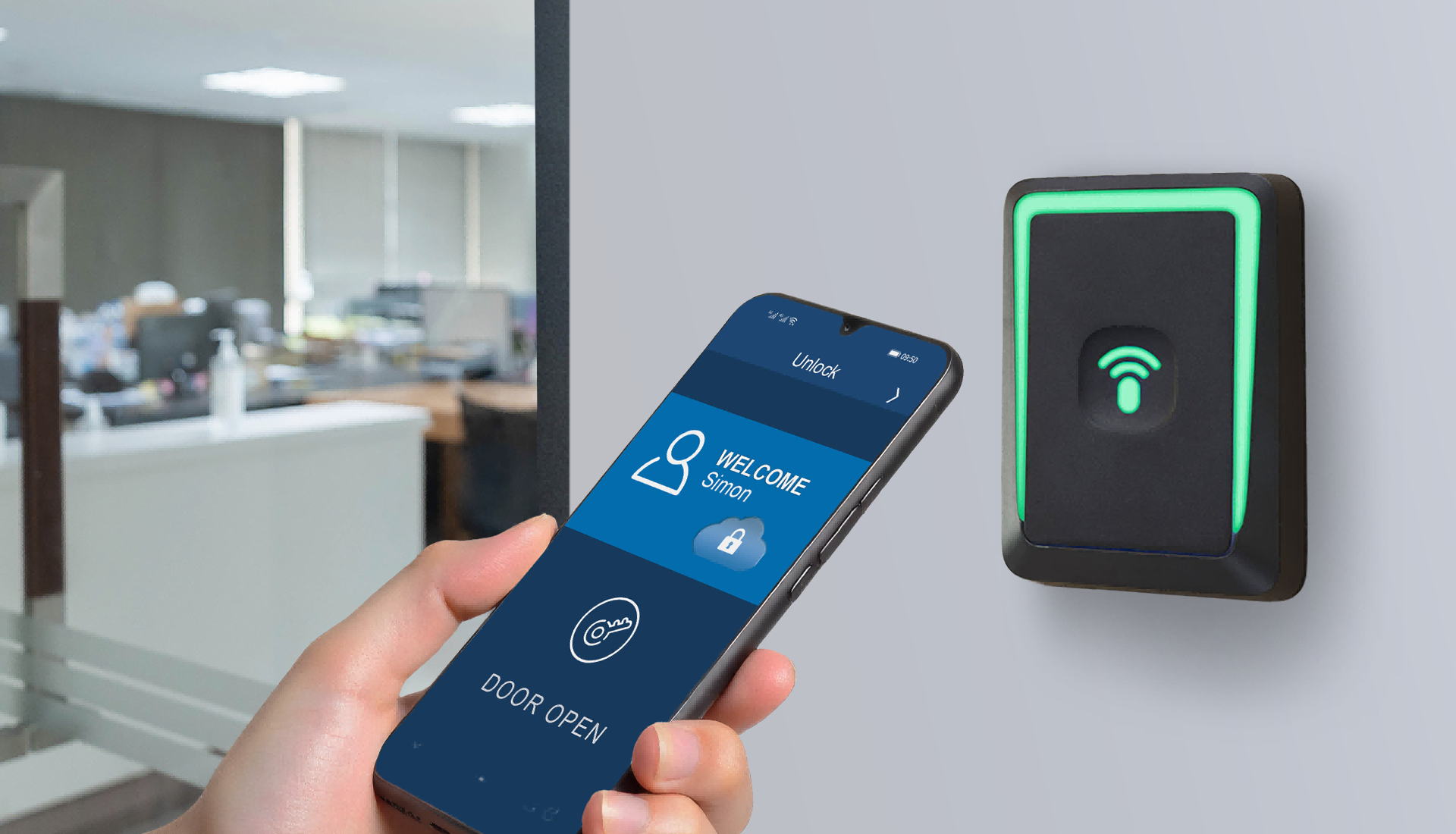



 Contact Us