

-

Applications

Industries

 OEM & ODM Service
 Development Service
 Download
 Technical support
 Warranty & RMA
 FAQS
FAQS
 My Community
 Who Is CIVINTEC
 Why CIVINTEC
 News & Express
 Cooperation




 Aug 28, 2026
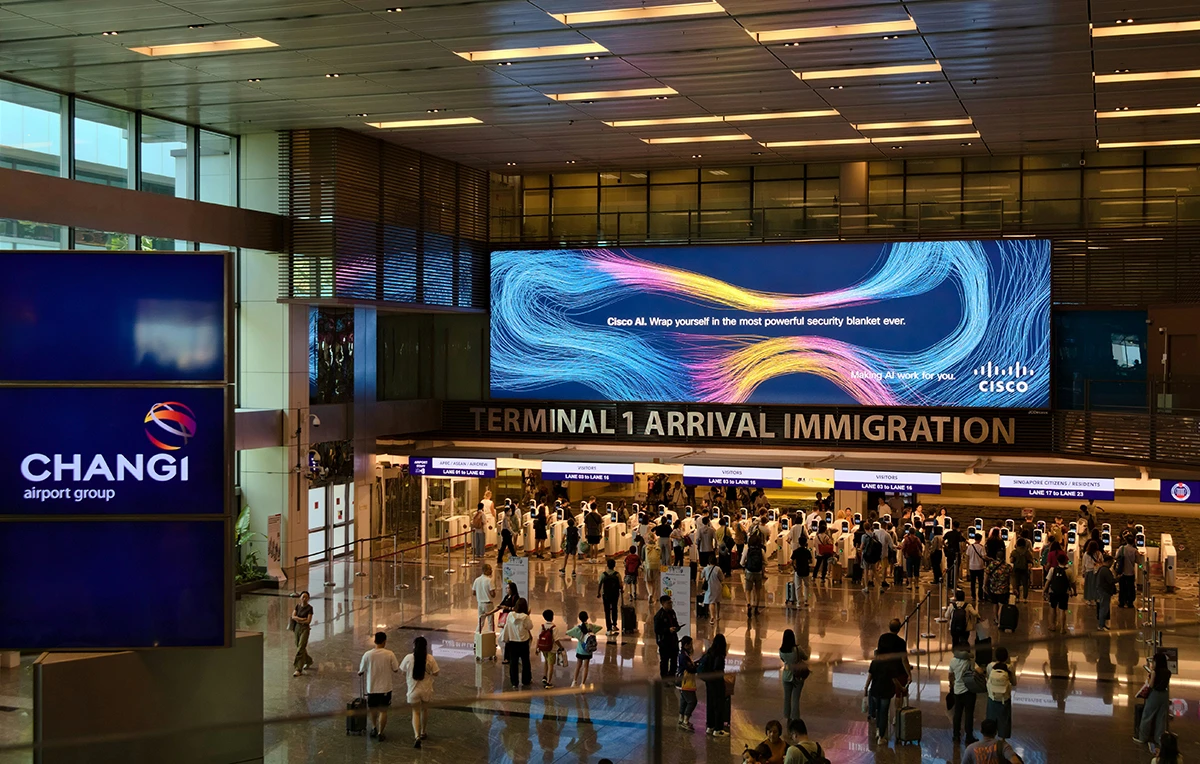
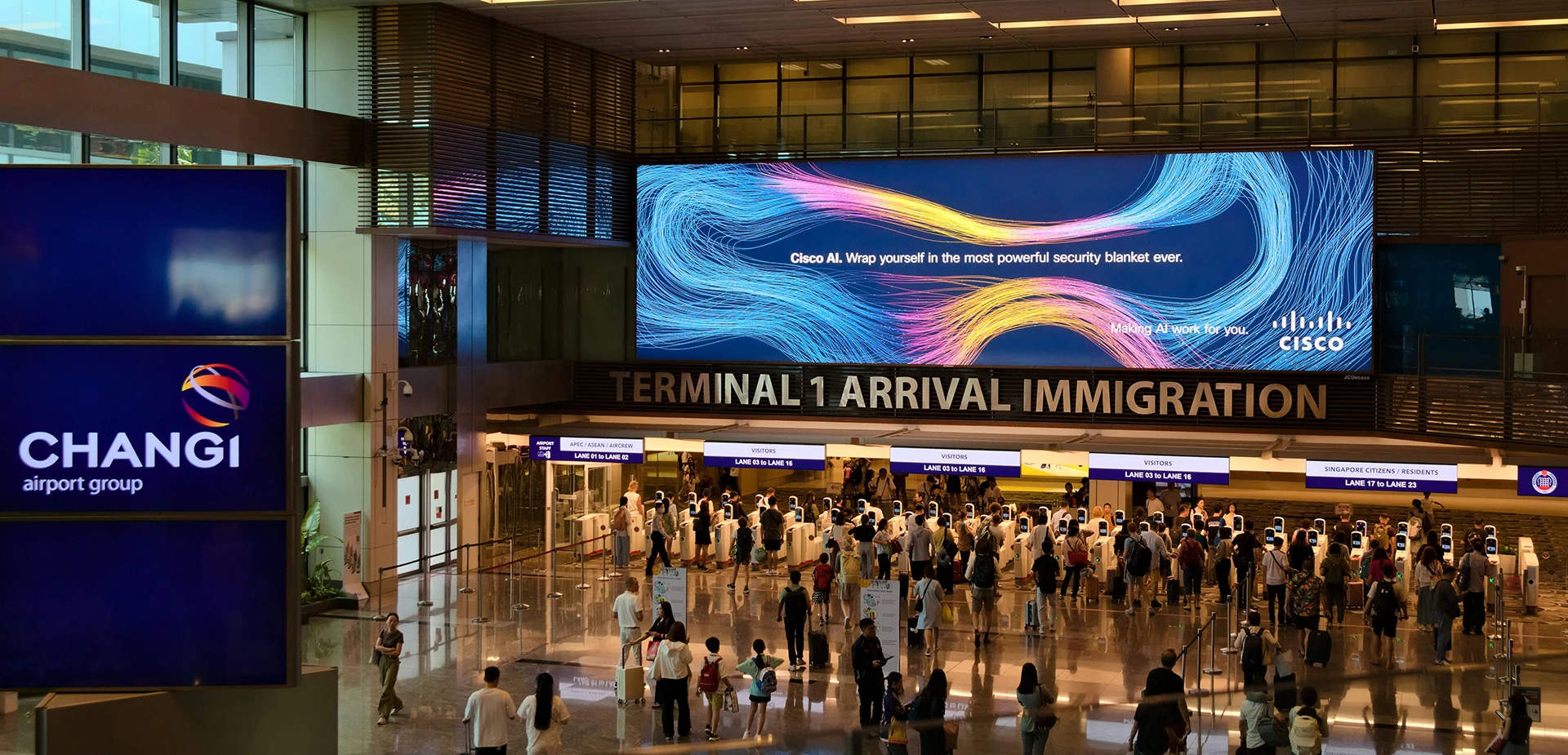
Commercial aviation hubs and international airport facilities are among the most operationally complex and heavily regulated physical environments in the world. Operating as critical national infrastructure, an airport functions as a sprawling mini-city encompassing multi-terminal concourses, sterile passenger boarding gates, automated baggage makeup tunnels, airside maintenance ramps, aircraft hangars, cargo logistics zones, and mission-critical air traffic control (ATC) towers. Within this multifaceted ecosystem, physical security is not merely a perimeter fence—it is an intricate, multi-layered defense matrix governed by stringent international aviation mandates, including ICAO Annex 17, TSA Part 1542, and EASA security directives.
Managing tens of thousands of individuals across an international airport presents immense operational challenges. On any given day, an airport security operations center (SOC) must regulate and audit the physical movements of diverse user groups: commercial flight crews, ground handling teams, baggage handlers, customs and border protection officers, maintenance technicians, third-party retail staff, and specialized external contractors. A single unauthorized breach from a public landside area into a secure airside ramp can halt flight operations, trigger massive terminal evacuations, inflict millions of dollars in financial losses, and compromise national safety.
To neutralize physical security threats, eliminate credential fraud, and guarantee seamless personnel flow during high-volume shift changes, global aviation authorities and security integrators are implementing advanced Airport Access Control System architectures. As an industry-leading OEM/ODM hardware manufacturer, CIVINTEC engineers specialized, enterprise-grade CIVINTEC Access Control Hardware Solutions designed specifically for mission-critical aviation infrastructure. Centered on the flagship CIVINTEC CT11 Access Control Terminal—which integrates sub-0.015s edge biometric facial recognition, duplex VoIP audio intercoms, multi-protocol smart card processing, and encrypted HTTP/HTTPS cloud telemetry—CIVINTEC delivers the dependable physical foundation required to secure complex, multi-zone airport environments worldwide.
A modern Airport Access Control System must enforce strict physical segregation between distinct functional zones. The physical layout of an airport is divided into tiered security layers, each characterized by distinct operational requirements, user clearance levels, and environmental stresses:
Zone 1: Public Landside & Terminal Management Suites: Publicly accessible concourses, check-in halls, retail zones, and administrative offices. The primary objective is regulating employee access to back-office corridors while facilitating visitor and contractor management.
Zone 2: Security Checkpoints & Sterile Boarding Portals: High-throughput employee bypass lanes, aircrew screening gates, and sterile concourse doors. Requires rapid, contact-free identity verification to prevent shift changeover bottlenecks without compromising security.
Zone 3: Baggage Makeup Areas & Automated Sorting Facilities: Industrial basement environments featuring conveyor networks, baggage chutes, and heavy tug vehicle transit. Hardware must resist mechanical vibration, dust, and continuous industrial use.
Zone 4: Airside Apron, Flightline Ramps & Maintenance Hangars: Exterior aircraft parking bays, jet bridges, cargo ramps, and maintenance hangars. Equipment is exposed to jet fuel fumes, extreme weather, UV radiation, and heavy mechanical impacts.
Zone 5: Air Traffic Control (ATC) & Critical Avionics Server Vaults: Mission-critical facilities housing radar processing systems, flight planning mainframes, and telecommunications nodes. Demands Zero-Trust physical security with multi-factor authentication (MFA) and hardware-level cryptographic key vaults.
Implementing a multi-zone Airport Access Control System ensures that access permissions adhere strictly to the principle of least privilege: airport workers, contractors, and airline personnel can enter only the specific geographical zones authorized on their security badge, while every access transaction is verified in real time.
For a comprehensive real-world analysis of aviation facility deployments, review our case study on security solutions for access control in airport infrastructure.
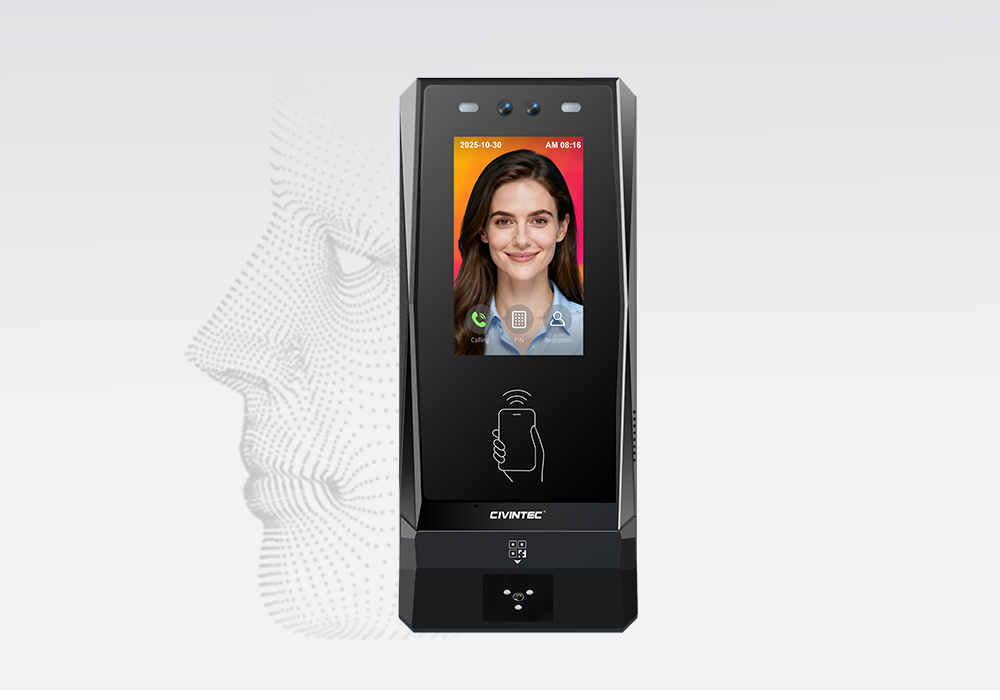
Securing high-risk airport portals demands an access terminal that combines lightning-fast verification, uncompromised biometric accuracy, and resilient hardware construction. The CIVINTEC CT11 Access Control Terminal serves as the flagship biometric terminal engineered specifically for high-throughput airport bypass lanes, airside mantrap portals, and mission-critical aviation corridors.
The CT11 integrates an enterprise-grade biometric engine designed to eliminate the physical vulnerabilities of legacy card-only systems:
In high-security aviation environments, access terminals must defeat sophisticated biometric presentation attacks. The CT11 incorporates a dual-camera array that captures visible RGB spectral profiles and infrared (IR) light data simultaneously. By analyzing multi-dimensional facial depth, surface skin textures, and infrared thermal reflections directly at the hardware edge, the system verifies live human presence in real time, immediately blocking printed photographs, high-resolution digital video loops, and 3D silicone mask spoofing attempts.
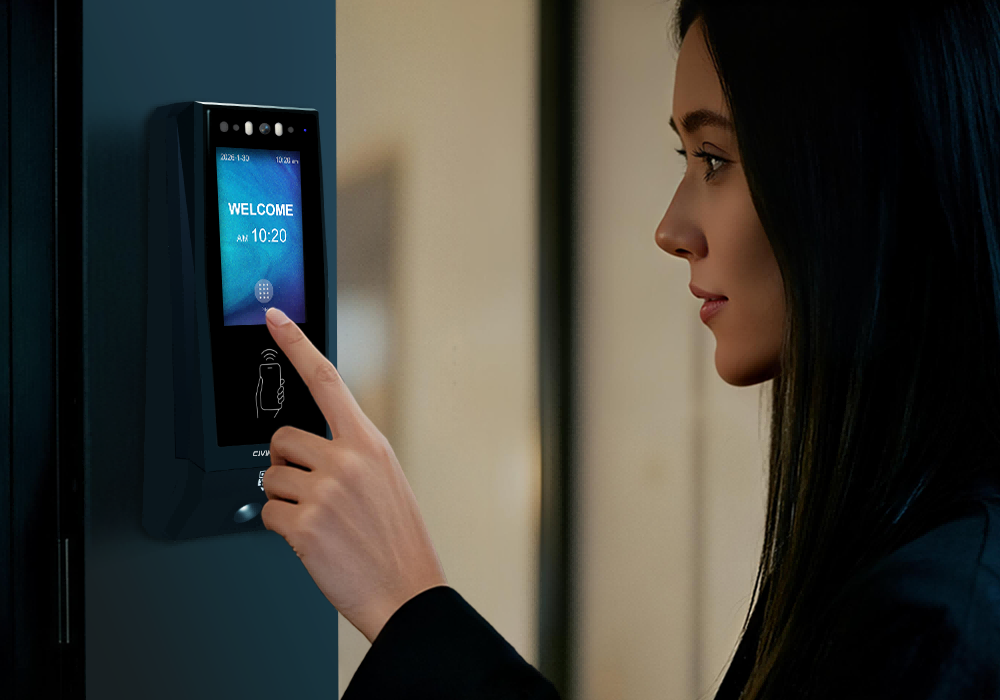
Airport shift changeovers involve thousands of airline crew members, ground handlers, and security personnel moving through designated employee bypass portals within tight 15-minute windows. The CT11's edge matching engine completes biometric verification handshakes in an astonishing 0.015s across a dynamic detection distance of 30 to 150 centimeters. Personnel pass through speed gates and turnstiles at a continuous walking pace without stopping, turning, or aligning their posture toward the lens.
Aviation personnel operate under diverse, challenging conditions: ramp handlers wear high-visibility hoods, ear defenders, and safety glasses; catering and cleanroom technicians wear sanitary face masks and hairnets; winter ground crews wear heavy thermal beanies. The CT11's recognition algorithm isolates invariant skeletal landmarks around the eyes, temples, and upper nasal bridge, ensuring accurate biometric identification without requiring personnel to remove essential personal protective equipment (PPE).
Large international airports employ tens of thousands of credentialed workers across multiple terminal buildings. The CT11 stores up to 50,000 local biometric templates and 7,000 photo event logs within its onboard non-volatile flash memory. If local airport network switches experience downtime or communication links are severed, the CT11 continues validating personnel and operating physical door locks autonomously, automatically synchronizing cached transaction records to the client's cloud system once network connectivity is restored.
Regulatory aviation frameworks mandate comprehensive, verifiable audit trails for every secure airside portal. Whenever an individual presents a credential—whether access is granted or denied—the CT11's camera automatically captures a photo snapshot of the person standing before the device. This image log is bound to the credential ID, terminal ID, and timestamp, then transmitted over encrypted HTTP/HTTPS protocols to the client's management platform, establishing an unalterable visual record for forensic investigations.
To examine the engineering specifications of this terminal, read our technical breakdown on the CIVINTEC CT11 smart facial recognition access control system with VoIP intercom.
Managing remote airside gates, tarmac service portals, and sterile security mantrap doors requires continuous communication between physical access portals and central airport dispatchers.
The CIVINTEC CT11 Access Control Terminal features an enterprise-grade VoIP audio intercom engine with an acoustic echo-canceling microphone and high-fidelity loudspeaker.
Instant Dispatch Calling: When an external contractor, unbadged maintenance technician, or flight crew member encounters an unexpected access restriction, they tap the dedicated "Call Security" icon on the CT11's color touchscreen to establish an instant two-way voice call with the airport security desk.
VoIP Intercom for Access Control Assistance: Security operators conduct clear, duplex voice communication with the individual at the gate to verify their identity remotely.By enabling direct communication in unexpected situations where normal access cannot be completed, the system provides an additional layer of protection to maintain secure and reliable access control operations.
Encrypted Remote Door Release: Upon verifying the visitor, the security operator executes an encrypted remote door release command through their cloud management dashboard, unlocking the portal via secure HTTP/HTTPS communication protocols.
Modern airports require a multi-credential framework that accommodates varied security tiers, operational roles, and credential lifecycles. CIVINTEC access control hardware functions as a unified multi-modal reader platform supporting 5-in-1 authentication capabilities:
For permanent airport staff, airline pilots, and customs personnel carrying physical security badges:
Advanced Smart Card Support: CIVINTEC terminals process 13.56MHz contactless smart cards, including NXP MIFARE DESFire EV1, EV2, and EV3 chips protected by 128-bit AES hardware encryption.
Integrated SAM Slot (EAL5+ Certified): The CIVINTEC CT9 PRO Access Control Terminal feature an integrated Secure Access Module (SAM) slot certified to EAL5+ security standards. Root cryptographic keys are housed within a tamper-proof hardware vault inside the terminal, eliminating card cloning, credential sniffing, and replay attacks across the airfield.
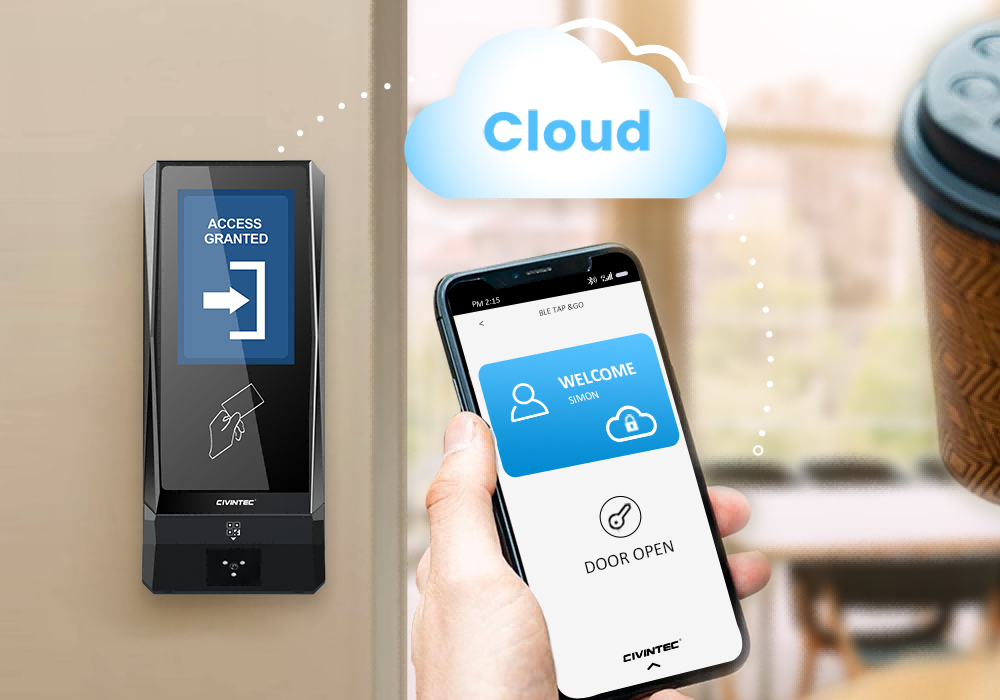
Long-Range BLE Mobile Access Control: Integrated BLE modules allow airport ground handlers operating luggage tugs and maintenance vehicles to trigger airside gate relays from several meters away without exiting vehicle cabs.
NFC Access Control Integration: Flight crews and airport administration staff tap their Android smartphones in close proximity to the terminal face for rapid, contact-free authentication.
Third-party cargo couriers, food supply vendors, and temporary construction workers receive time-restricted, encrypted QR codes on their mobile devices prior to arriving on site:
The driver presents the digital pass to the terminal's integrated QR code module.
The access control terminal decodes the credential, captures an automated photo snapshot of the person scanning the code, verifies the time-restricted access window, and unlocks the cargo door.
[block1]
Airport perimeter portals, tarmac boarding gates, and maintenance hangars are harsh physical environments. CIVINTEC terminals are built with industrial-grade mechanical reinforcement to withstand severe weather and physical abuse.
IK07 Impact Resistance Rating: Both the CIVINTEC CT11 and CIVINTEC CT10 feature reinforced structural enclosures certified to an IK07 impact resistance rating. The housing withstands heavy mechanical impacts from baggage carts, maintenance equipment, and physical abuse without operational disruption.
IP65 Ingress Protection: All internal printed circuit boards are encapsulated in an electrically potted epoxy layer. The complete terminal assembly delivers an IP65 waterproof and dustproof rating, protecting sensitive electronics against heavy rain, blowing dust, de-icing chemical mist, and high humidity on open airport aprons.
UV-Resistant Protective Hardening: Exterior gate terminals exposed to direct sunlight feature UV-resistant front casings and anti-glare touchscreens, preventing housing degradation, yellowing, and touchscreen failure in sun-drenched tarmac installations.
The table below maps airport operational zones to security risks, authentication methods, and optimal CIVINTEC hardware configurations:
Airport Operational Zone | Environmental & Security Challenges | Primary Authentication Modality | Automated Safety & Alarm Logic | Recommended CIVINTEC Hardware |
Zone 1: Landside Check-In & Admin Offices | High foot traffic, visitor processing, staff administrative entry | Dynamic QR codes, NFC & BLE mobile access control, RFID cards | Remote cloud door unlock, VoIP audio intercom, photo audit logs | |
Zone 2: Aircrew Bypass & Sterile Gates | Massive throughput, shift turnaround, strict anti-passback rules | 0.015s Facial recognition, MIFARE DESFire smart cards | Dual-camera anti-spoofing, instant relay speed-turnstile release | |
Zone 3: Baggage Makeup & Conveyor Halls | High mechanical dust, vibration, heavy tug vehicle traffic | 100% Touchless facial recognition, PIN code backup | IP65 epoxy-potted board, IK07 impact resistance rating, function keys | |
Zone 4: Airside Apron & Perimeter Gates | Extreme weather, jet fuel mist, lack of wired Ethernet cabling | Long-range BLE mobile access control, dynamic QR codes | 4G LTE cellular telemetry, GPS asset tracking, internal tamper alarm | |
Zone 5: ATC Tower & Avionics Server Vaults | Zero-Trust compliance, state-level cyber threats, high asset value | Multi-Factor Authentication: Biometrics + DESFire EV3 SAM card + PIN | Multi-door interlock mantrap, photo capture on all entry attempts | |
Zone 6: Air Cargo Docks & Logistics Depots | Third-party freight drivers, temporary delivery contractors | Dynamic QR codes via mobile app, touch keypad PIN code | Photo capture of person scanning, "DOOR NOT CLOSED" alarm (15s) |
To assist aviation security consultants and airport systems integrators in specifying the optimal terminal models, the matrix below details the technical specifications across CIVINTEC's enterprise product line:
Technical Parameter | CIVINTEC CT11 | CIVINTEC CT10 | CIVINTEC CT9 PRO |
Primary Design Focus | Touchless 5-in-1 Biometric Facial Recognition Access Control and VoIP Intercom PDF+ 1 | Advanced Touchscreen Hub with Integrated Event Capture Camera and 4G Telemetry | Touchscreen Multi-Credential Access Control Hub |
User Interface Hardware | 3.5" Touch Screen Linux OS with SDK | 3.5-inch Interactive Toucher UI display | 3.5-inch Color Touchscreen UI display |
Biometric / Capture Core | 2MP Dual-Camera Visual/IR Engine with Anti-Spoofing | Automated Event-Driven Verification Camera | None (External Hub Format) |
Supported Credentials | Face, RFID (125KHz/13.56MHze), BLE, NFC, QR Code, PIN | RFID (125KHz/13.56MHz), NFC, BLE, QR Code, PIN | RFID (125KHz/13.56MHz DESFire with SAM), BLE, NFC, QR Code, PIN |
Intercom Core Modality | Native VoIP Intercom Support via RTSP Protocol | Native VoIP Intercom Support via RTSP Protocol | None |
Network Interfaces | TCP/IP Ethernet (PoE), Wi-Fi, 4G LTE + GPS, LoRaWAN | TCP/IP Ethernet (PoE), Wi-Fi, 4G LTE + GPS LoRaWAN
| TCP/IP Ethernet (PoE), Wi-Fi, 4G LTE |
Detailed Product Link |
An Airport Access Control System must maintain airport security while instantly adapting to emergency evacuation scenarios and detecting unauthorized physical intrusion.
During an aviation emergency, structural fire, or terminal hazard, preserving human life is paramount. CIVINTEC access control hardware features dedicated hardware input interfaces that wire directly to airport fire alarm control panels (FACP). Upon receiving an emergency trigger, the terminal overrides locked states instantly, unlocking electromechanical and magnetic door locks across all designated passenger and employee evacuation routes.
In remote tarmac areas, perimeter gates, and unattended baggage tunnels, bad actors may attempt to pry access terminals off mounting posts. CIVINTEC terminals incorporate an internal tamper switch. If an intruder attempts to dislodge the terminal housing from its mounting plate, the unit immediately activates a high-decibel local audible siren while transmitting an urgent tamper alert packet—containing the terminal ID, timestamp, and GPS coordinates—over secure HTTP/HTTPS protocols to the airport security console.
A common physical vulnerability in airport facilities occurs when workers wedge open airside doors to move equipment, creating unauthorized access corridors. CIVINTEC terminals interface directly with magnetic door position sensors to track door states in real time. If a secure airside door remains open beyond a pre-configured time threshold (e.g., 15 seconds), the terminal logs a "DOOR NOT CLOSED" alarm, sounds a local audible alert, and pushes an immediate notification to the central security dashboard for rapid guard dispatch.
To comply with aviation oversight audits, every credential verification event—whether successful, rejected, or triggering an alarm—automatically prompts the CT11 or CT10 camera to capture a high-resolution photo snapshot of the person authenticating. These immutable image logs are indexed alongside user data and timestamps, providing comprehensive evidentiary support for security audits and post-incident forensic reviews.
Integrating access control hardware into an airport's complex IT infrastructure demands open system architecture, flexible communication interfaces, and stringent cryptographic data protection.
CIVINTEC access control hardware adapts seamlessly to diverse airport networking environments:
Wired TCP/IP Ethernet with PoE: Connects directly via standard RJ45 ports, delivering network connectivity and electrical power over a single Cat6 cable (PoE IEEE802.3af) for speed gates and permanent terminal portals.
2.4GHz Wi-Fi Connectivity: Built-in Wi-Fi stacks (IEEE802.11 b/g/n) connect terminals in renovated terminal areas where pulling new Ethernet cables is impractical.
4G LTE Cellular & GPS Asset Telemetry: Embedded cellular modems provide independent cloud connectivity for remote perimeter gates, airfield guard huts, and distant fuel storage depots without requiring local network drops.
LoRaWAN IoT Connectivity: Long-range, low-bandwidth wireless technology transmits lightweight access telemetry across extensive airport runways and fuel farms spanning several kilometers back to a central gateway.
CIVINTEC operates as an enterprise access control hardware manufacturer. Rather than locking aviation clients into proprietary, closed software ecosystems, CIVINTEC provides an open, stable Software Development Kit (SDK) and comprehensive API libraries for its embedded Linux terminals.
Aviation software engineers and enterprise system integrators can program directly to the device layer using the open SDK to:
Customize touchscreen user interfaces, company branding, flight crew welcome screens, and multi-language prompts.
Transmit real-time transaction telemetry directly to the client's own cloud system via secure HTTP/HTTPS communication protocols.
Issue remote cloud commands to toggle terminal operational modes (e.g., Emergency Lockdown Mode, Free-Pass Evacuation Mode, Normal Access Control Mode).
Execute remote firmware upgrades across thousands of distributed terminals over TCP/IP, Wi-Fi, or 4G LTE, or via BLE OTA (Over-the-Air) using an authorized smartphone app.
Deploying a multi-zone Airport Access Control System across a complex international aviation hub requires a structured, phase-based engineering roadmap:
Conduct Comprehensive Aviation Zone Audits: Map every access portal across the airport, including public landside doors, sterile concourse turnstiles, baggage makeup tunnels, ramp gates, and ATC tower interlocks. Identify physical environmental stresses (jet fuel fumes, weather, solar exposure) at each location.
Define Multi-Role Access Control Policies: Establish granular clearance levels for flight crews, ground handlers, customs agents, airport retail workers, and temporary contractors. Configure role-based time schedules, holiday rules, and escort-required parameters.
Select Hardware Models & Credential Modalities:
Aircrew bypass & sterile concourse speed gates: Specify CIVINTEC CT11 for sub-0.015s biometric facial verification and duplex VoIP intercom communication.
Remote perimeter gates & cargo logistics docks: Specify CIVINTEC CT10 with 4G LTE, GPS telemetry, QR code module, and IK07 impact resistance rating.
Avionics server vaults & ATC data centers: Specify CIVINTEC CT9 PRO with EAL5+ SAM slot protection for encrypted MIFARE DESFire EV3 smart cards.
Deploy Network Interfaces & Cloud Protocols: Establish wired TCP/IP PoE connections for main terminal portals, configure encrypted Wi-Fi for concourses, and insert SIM cards for remote 4G LTE perimeter gates. Ensure all endpoints communicate with the client's cloud system via encrypted HTTP/HTTPS protocols.
Execute Validation & Emergency Testing: Validate offline fail-safe caching by disconnecting network lines. Verify fire alarm auto-unlock triggers, test the internal tamper switch alarm sirens, and confirm "DOOR NOT CLOSED" notifications before commissioning the facility.
[block2]
Implementing an advanced Airport Access Control System is critical to safeguarding national aviation infrastructure, preventing unauthorized airside intrusions, and optimizing employee throughput. By deploying CIVINTEC enterprise-grade access control hardware, airport authorities and security integrators eliminate credential sharing, establish unalterable photo audit trails, and maintain 24/7 operational continuity across demanding physical environments.
With the flagship CIVINTEC CT11 delivering sub-0.015s dual-camera biometric facial recognition, duplex VoIP audio intercom capabilities, IK07 impact resistance rating, IP65 weatherproofing, and an open Linux SDK for client cloud integration, CIVINTEC provides the dependable physical foundation for modern aviation security.
Ready to upgrade your airport physical security infrastructure? Contact CIVINTEC's technical engineering team today to request hardware evaluation packages, discuss custom SDK integrations, or receive a comprehensive project quote.
Initiate Technical Consultation: Contact CIVINTEC Project Engineers
Explore Product Specifications: Browse CIVINTEC Access Control Hardware Line


 Home >
  Share
Share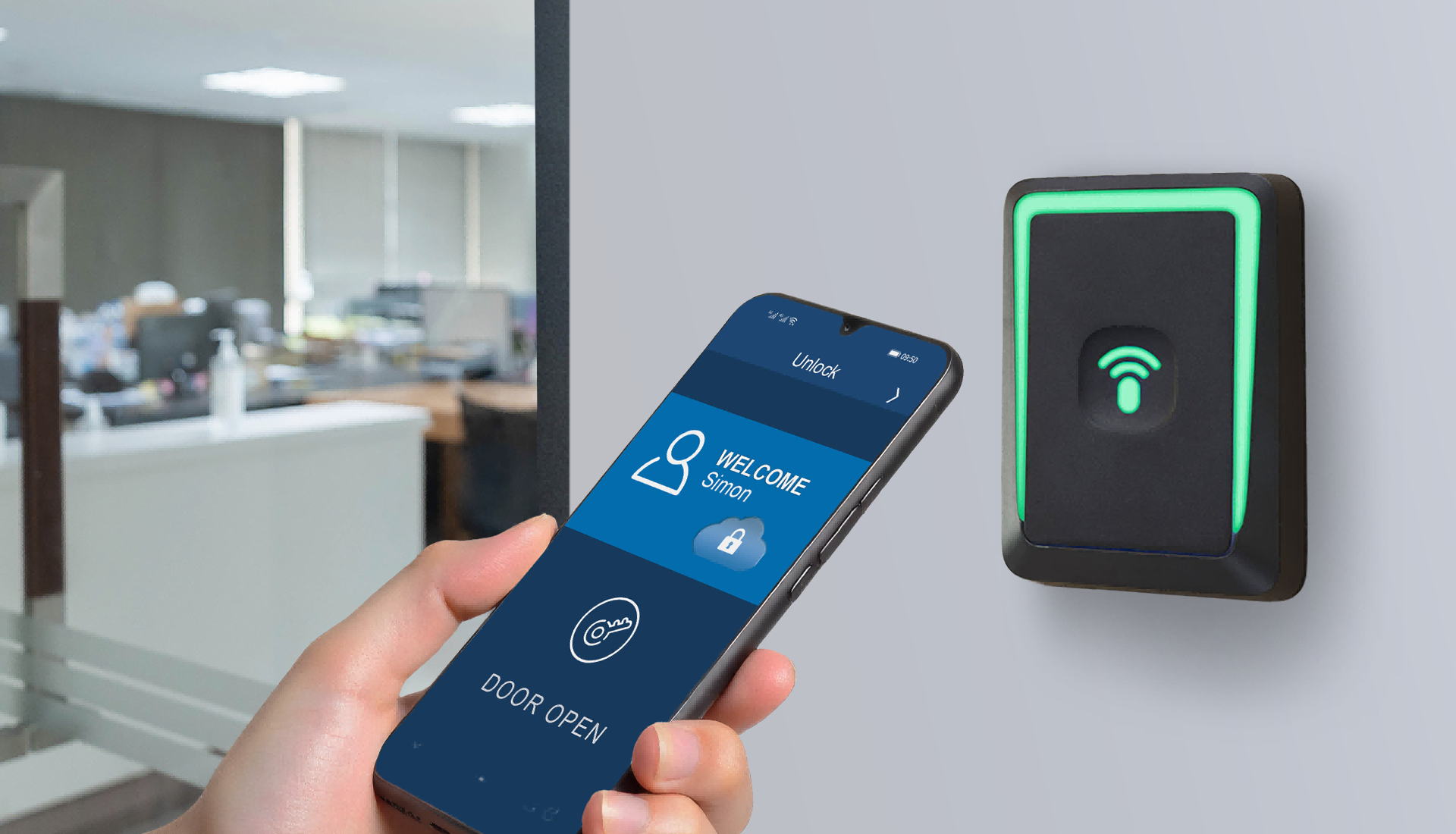




 Contact Us